
Old World swallowtail vs Scarce swallowtail
These two are easy to mix up. Here's how to tell an old World swallowtail from a scarce swallowtail, and whether either one bites or stings.
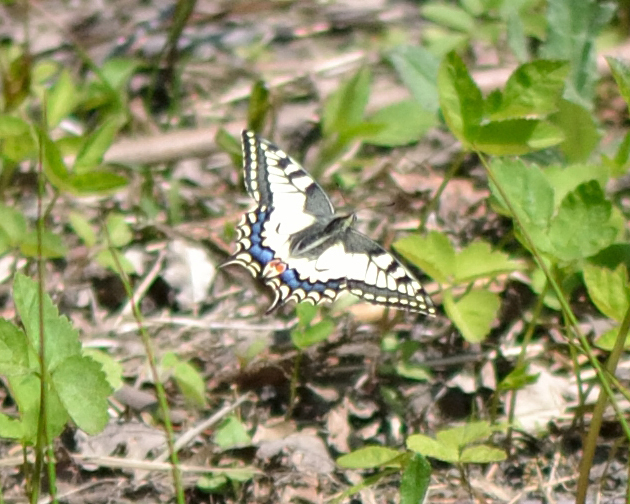
Old World swallowtail
Papilio machaon
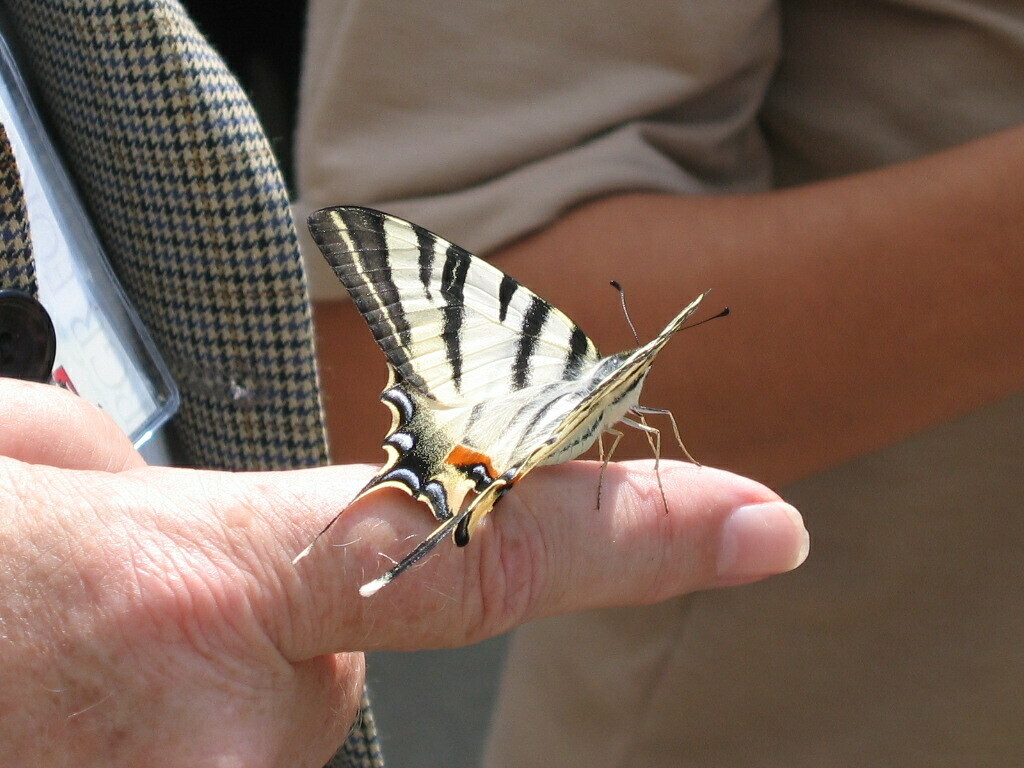
Scarce swallowtail
Iphiclides podalirius
≠The key differences
Scarce swallowtail has narrower, paler yellow wings with long pointed tails and diagonal black stripes rather than the bold venation of P. machaon.
Papilio machaon has broader yellow panels, different black banding, and shorter hindwing tails; overall pattern differs and the hindwing eyespots are arranged differently.
⚖︎Side by side
| Old World swallowtail | Scarce swallowtail | |
|---|---|---|
| To humans | Non-toxic | Non-toxic |
| Size | 65-86 mm wingspan (regional variation exists) | 60-90 mm wingspan |
| Colours | Yellow, Black, Blue, Red-Orange | Pale yellow, Jet black, Sky blue, Orange red |
| Family | Papilionidae | Papilionidae |
| Habitat | Flower-rich meadows, grasslands, river valleys, coastal marshes, gardens and roadside verges | Open woodland edges, orchards, hedgerows, scrubby hillsides, gardens with nectar sources and host trees |
| Range | Holarctic: much of Europe, North Africa, temperate Asia (east to Japan), and in North America where closely related subspecies occur | Much of central and southern Europe (absent from the far north; replaced in Iberia and southern France by the closely related Iberian scarce swallowtail), Turkey, the Middle East and temperate Asia east to western China |
| Active | Primarily spring and summer (one to three broods depending on latitude); diurnal, most active on warm, sunny days | Spring to early autumn; usually one brood in cooler areas and two broods in warmer regions; diurnal, most active in warm sunny weather |
| Pest? | No | No |
🔍How to spot an old World swallowtail
- Large yellow butterfly with bold black veins and marginal black banding on forewings
- Hindwings bear a tail-like extension and a line of blue spots plus a red-orange eyespot near the rear margin
- Distinctive swallowtail shape — look for the tails on the hindwings
🔍How to spot a scarce swallowtail
- Pale yellow/cream wings with 6-8 oblique black tiger stripes on the forewing
- Long, pointed tail-like projections on each hindwing with blue crescents and an orange eyespot near the tail
- Broad black hindwing margin and black-striped body
- Wingspan 60-90 mm; strong, fast, fluttering flight
?Frequently asked questions
What is the difference between an old World swallowtail and a scarce swallowtail?
Scarce swallowtail has narrower, paler yellow wings with long pointed tails and diagonal black stripes rather than the bold venation of P. machaon. Papilio machaon has broader yellow panels, different black banding, and shorter hindwing tails; overall pattern differs and the hindwing eyespots are arranged differently.
Is an old World swallowtail or a scarce swallowtail more dangerous?
Old World swallowtail: Non-toxic. Scarce swallowtail: Non-toxic. Harmless to people: adults do not bite or sting. Harmless to people.
Identification from photos is never certain: don't handle insects you can't identify, and get medical advice for bites, stings or allergic reactions.