
Eastern tent caterpillar moth vs Forest tent caterpillar moth
These two are easy to mix up. Here's how to tell an eastern tent caterpillar moth from a forest tent caterpillar moth, and whether either one bites or stings.
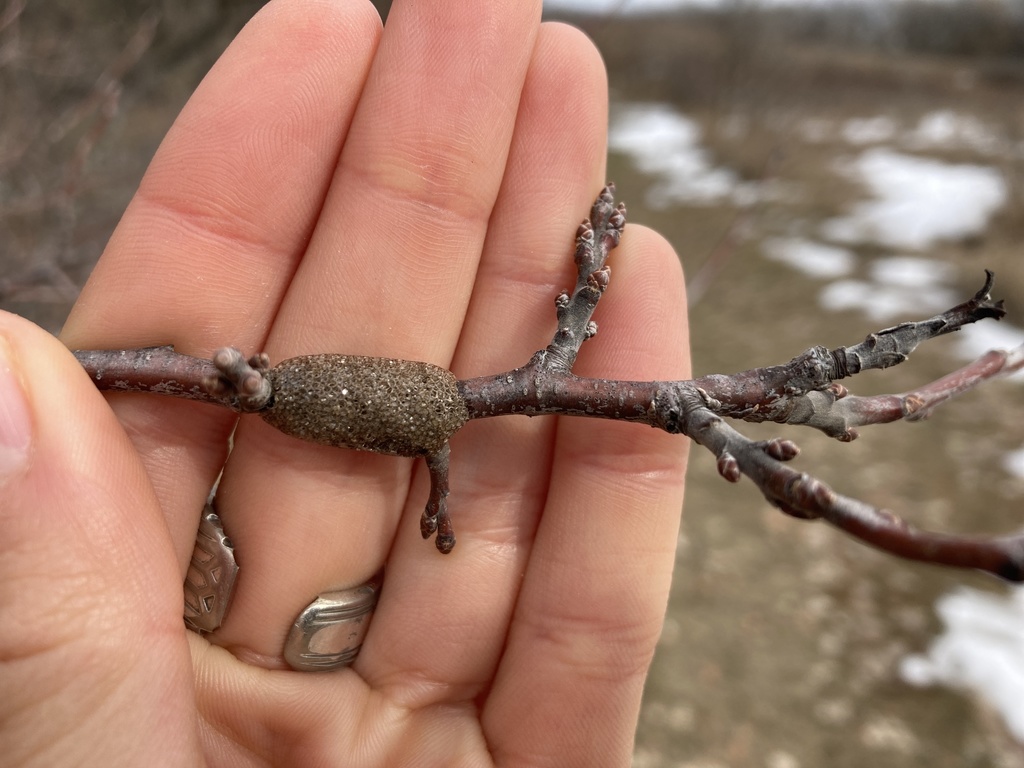
Eastern tent caterpillar moth
Malacosoma americana
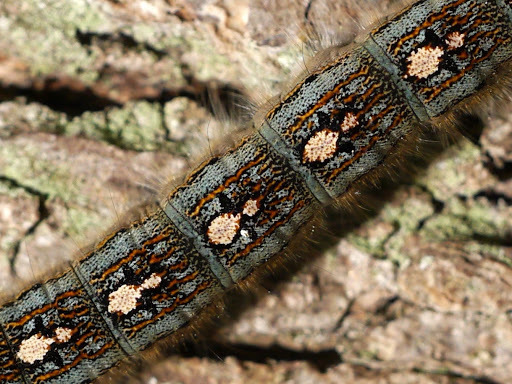
Forest tent caterpillar moth
Malacosoma disstria
≠The key differences
Forest tent caterpillar does not build above-branch tents; larvae have a series of keyhole-shaped pale spots along the back instead of a single continuous pale dorsal stripe.
⚖︎Side by side
| Eastern tent caterpillar moth | Forest tent caterpillar moth | |
|---|---|---|
| To humans | Irritating hairs | Irritating hairs |
| Size | 2.5-4 cm wingspan | 25-45 mm wingspan |
| Colours | Black, Cream/white, Blue (bluish spots), Chestnut orange | Brown, Pale cream, Black, Blue-grey |
| Family | Lasiocampidae | Lasiocampidae |
| Habitat | Deciduous woodlands, orchards, shade and ornamental trees, hedgerows and suburban yards where host trees occur. | Deciduous forests, mixed woodlands, urban trees and orchards where host trees occur |
| Range | Eastern and central North America, from the Gulf states north into southern Canada and west to parts of the Midwest. | Widespread across much of North America, from Canada through the United States; range varies regionally with host availability |
| Active | Larvae: early spring (shortly after trees leaf out). Adults: late spring to early summer. Larvae are active during daylight and at night when feeding. | Larvae active in spring and early summer (varies by latitude); adults on the wing in late spring to early summer, mostly dusk and night |
| Pest? | Yes | Yes |
🔍How to spot an eastern tent caterpillar moth
- Look for white silk tents in the forks of deciduous trees in spring where caterpillars cluster.
- Caterpillars are black with a distinct broad white/cream dorsal stripe, bluish lateral spots and chestnut-orange markings.
- Egg masses are glossy, brownish bands wrapped around small twigs from the previous year.
- Adult moths are stout, furry, reddish-brown with two pale diagonal lines across each forewing; wingspan about 2.5-4 cm.
🔍How to spot a forest tent caterpillar moth
- Caterpillars have a row of pale, elongated keyhole- or footprint-shaped dorsal spots on a dark body — distinctive for this species.
- Unlike eastern tent caterpillar (Malacosoma americanum), forest tent caterpillar larvae do not build permanent silk tents in branches; they make ground or trunk mats.
- Adults are small brown moths with faint darker lines and a paler median band on the forewings; identification to species is easiest by larval characters.
?Frequently asked questions
What is the difference between an eastern tent caterpillar moth and a forest tent caterpillar moth?
Forest tent caterpillar does not build above-branch tents; larvae have a series of keyhole-shaped pale spots along the back instead of a single continuous pale dorsal stripe.
Is an eastern tent caterpillar moth or a forest tent caterpillar moth more dangerous?
Eastern tent caterpillar moth: Irritating hairs. Forest tent caterpillar moth: Irritating hairs. Eastern tent caterpillars are not venomous and do not bite or sting, but their hairs can cause mild skin irritation or a rash in sensitive people after handling. Adults are harmless.
Identification from photos is never certain: don't handle insects you can't identify, and get medical advice for bites, stings or allergic reactions.