
Spongy moth vs Forest tent caterpillar moth
These two are easy to mix up. Here's how to tell a spongy moth from a forest tent caterpillar moth, and whether either one bites or stings.
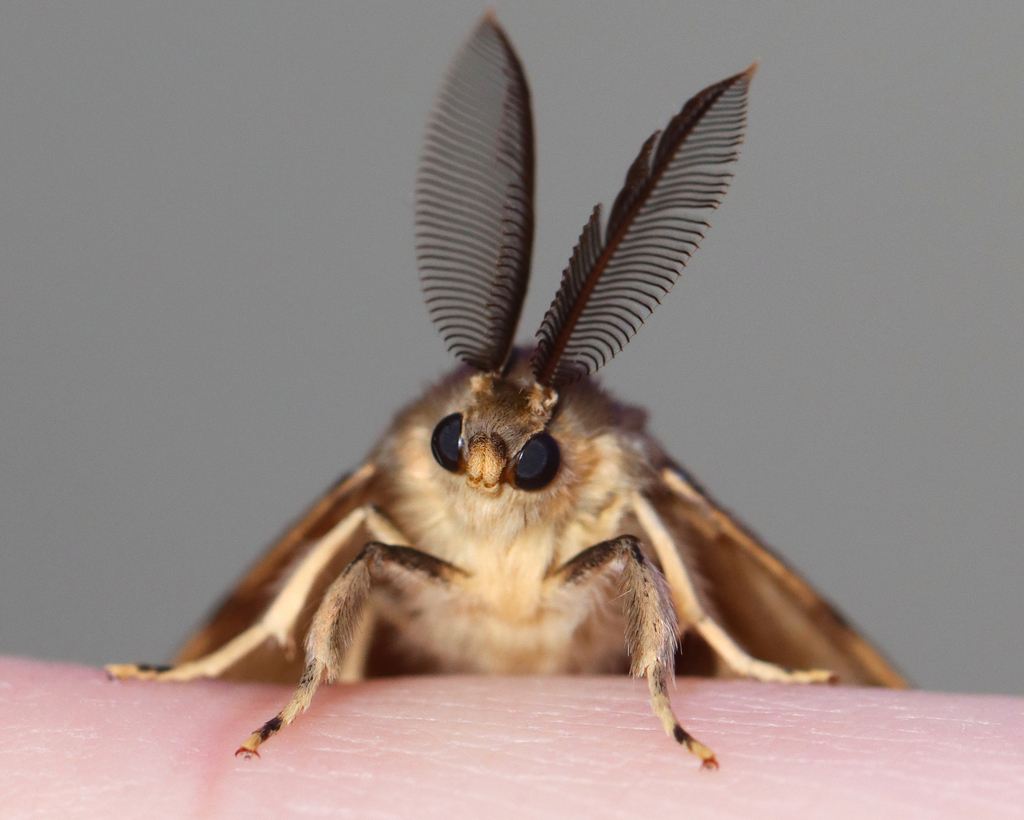
Spongy moth
Lymantria dispar
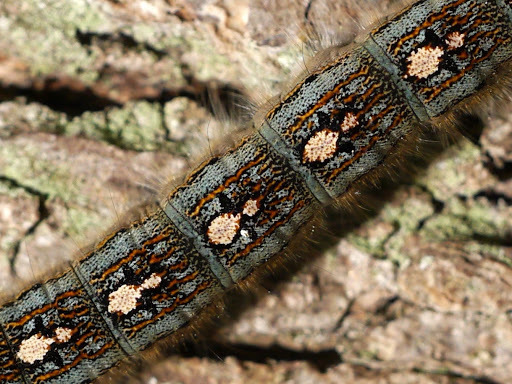
Forest tent caterpillar moth
Malacosoma disstria
≠The key differences
Forest tent caterpillar has a keyhole-shaped dorsal series of spots rather than the blue/red paired spots of spongy moth; forest tent caterpillar eggs are laid in hard bands around twigs rather than in spongy masses.
⚖︎Side by side
| Spongy moth | Forest tent caterpillar moth | |
|---|---|---|
| To humans | Irritating hairs | Irritating hairs |
| Size | Male wingspan 35-50 mm; female wingspan 50-75 mm | 25-45 mm wingspan |
| Colours | Brown, Cream, Black, Blue (larval spots), Red (larval spots) | Brown, Pale cream, Black, Blue-grey |
| Family | Erebidae | Lasiocampidae |
| Habitat | Forests, woodlands, parks and urban areas where host trees are present | Deciduous forests, mixed woodlands, urban trees and orchards where host trees occur |
| Range | Native to Europe, parts of Asia and North Africa; established as an invasive species in eastern North America, with isolated introductions elsewhere | Widespread across much of North America, from Canada through the United States; range varies regionally with host availability |
| Active | Caterpillars active in spring and early summer; adults emerge mid to late summer depending on climate | Larvae active in spring and early summer (varies by latitude); adults on the wing in late spring to early summer, mostly dusk and night |
| Pest? | Yes | Yes |
🔍How to spot a spongy moth
- Caterpillars with five pairs of blue dorsal spots followed by six pairs of red dorsal spots.
- Spongy, tan egg masses 40-70 mm long attached to bark, wood, vehicles or outdoor objects.
- Adult females are white or cream with dark markings and often poor fliers; males are brown and fly readily.
🔍How to spot a forest tent caterpillar moth
- Caterpillars have a row of pale, elongated keyhole- or footprint-shaped dorsal spots on a dark body — distinctive for this species.
- Unlike eastern tent caterpillar (Malacosoma americanum), forest tent caterpillar larvae do not build permanent silk tents in branches; they make ground or trunk mats.
- Adults are small brown moths with faint darker lines and a paler median band on the forewings; identification to species is easiest by larval characters.
?Frequently asked questions
What is the difference between a spongy moth and a forest tent caterpillar moth?
Forest tent caterpillar has a keyhole-shaped dorsal series of spots rather than the blue/red paired spots of spongy moth; forest tent caterpillar eggs are laid in hard bands around twigs rather than in spongy masses.
Is a spongy moth or a forest tent caterpillar moth more dangerous?
Spongy moth: Irritating hairs. Forest tent caterpillar moth: Irritating hairs. Caterpillar hairs and scales can cause skin irritation or an itchy rash (contact dermatitis) in sensitive people; inhalation of large numbers of hairs or scales may irritate the respiratory tract. Adults are harmless.
Identification from photos is never certain: don't handle insects you can't identify, and get medical advice for bites, stings or allergic reactions.