
Eastern tailed-blue vs Spring azure
These two are easy to mix up. Here's how to tell an eastern tailed-blue from a spring azure, and whether either one bites or stings.
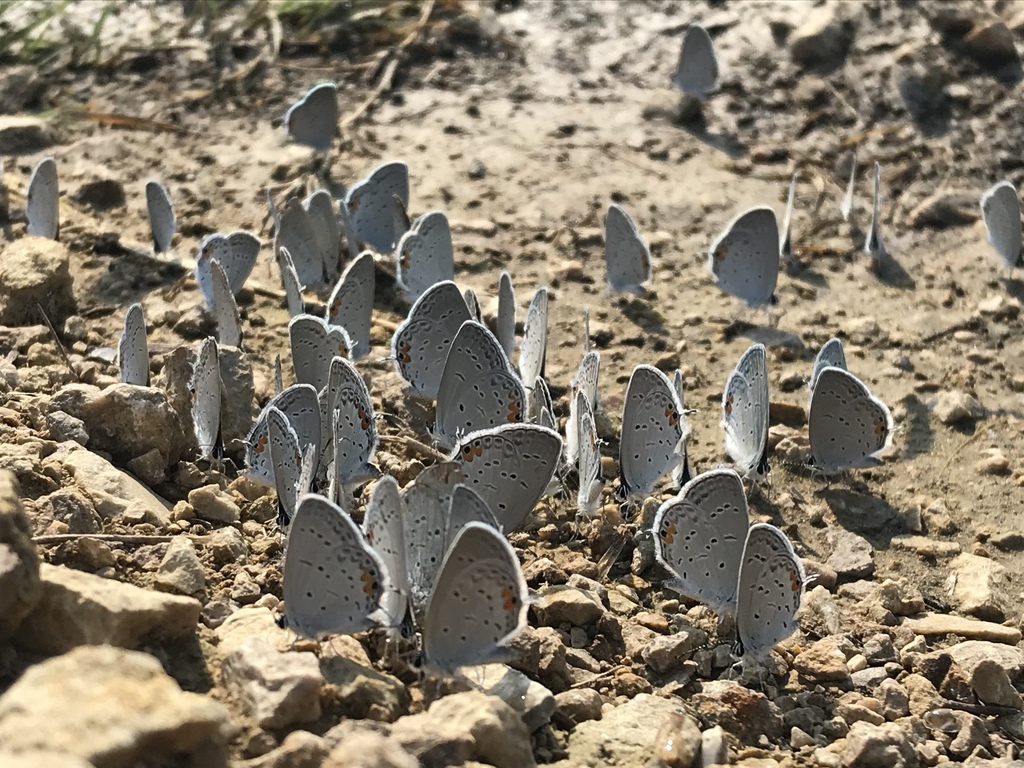
Eastern tailed-blue
Cupido comyntas
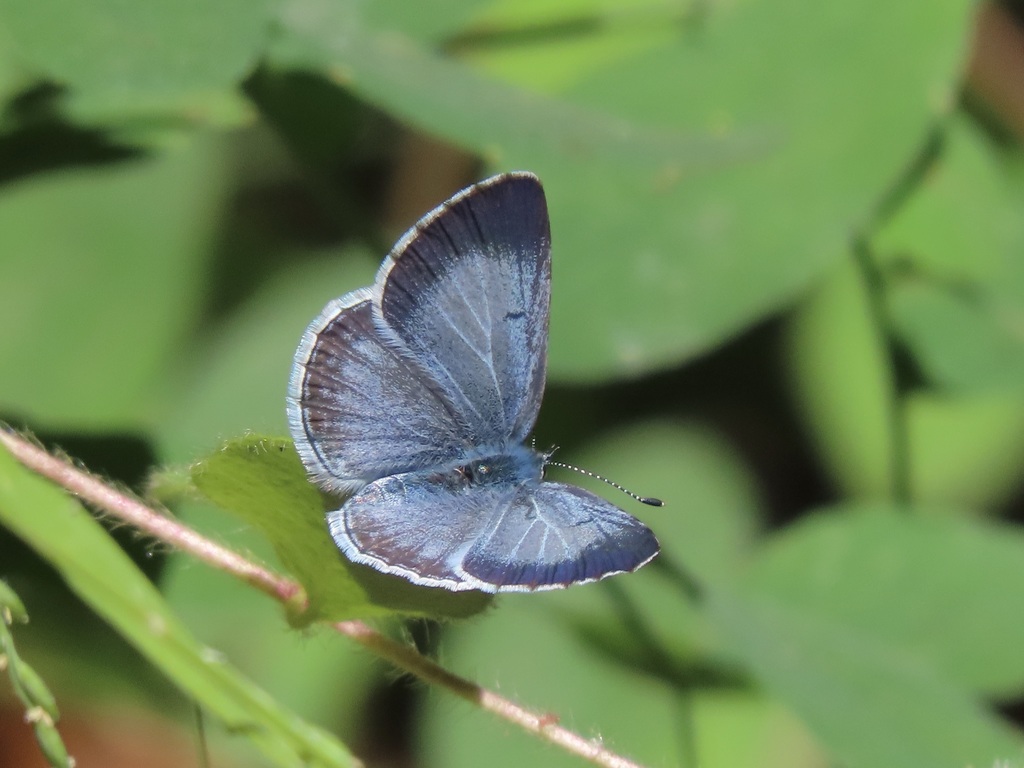
Spring azure
Celastrina ladon
≠The key differences
Typically larger, with a chalky pale gray underside and no tails or orange spots near the hindwing edge.
Tailed-blue has tiny tails on the hindwing and more distinct underside spotting; spring azure lacks tails.
⚖︎Side by side
| Eastern tailed-blue | Spring azure | |
|---|---|---|
| To humans | Non-toxic | Non-toxic |
| Size | Wingspan 18-30 mm | 22-35 mm wingspan |
| Colours | Sky blue, Warm brown, Pale gray, Orange | Pale blue, White, Gray-brown |
| Family | Lycaenidae | Lycaenidae |
| Habitat | Open, sunny places: fields, meadows, roadsides, lawns, gardens, and disturbed sites | Open woodlands, forest edges, scrub, gardens and hedgerows where host shrubs and early flowers occur |
| Range | Widespread across eastern and central North America: from eastern Canada south through the eastern and central United States and into parts of Mexico. Less common or replaced by similar species in far western North America. | Eastern and central North America: from southern Canada through the eastern United States (populations and exact boundaries vary with taxonomy) |
| Active | Spring through fall (earliest broods in spring, continuing into autumn); active during daylight, especially in sunny conditions | Early spring into early summer; in many areas one main spring brood with occasional later broods |
| Pest? | No | No |
🔍How to spot an eastern tailed-blue
- Very small wingspan (about 18-30 mm) — noticeably smaller than many other common blues
- Tiny tail-like projection on each hindwing plus an orange submarginal spot near the tail on the underside
- Males bluish upperside with narrow dark border; females brownish with blue dusting
- Underside pale gray with small dark spots; check hindwing for the orange spot and short tail
🔍How to spot a spring azure
- Small size with a wingspan around 22-35 mm; much smaller than most white or sulphur butterflies
- Upperside pale blue (males) with narrow dark margins; underside pale gray to off-white with faint small spots
- Flight is low, quick and fluttering in early spring near host shrubs and woodland edges
?Frequently asked questions
What is the difference between an eastern tailed-blue and a spring azure?
Typically larger, with a chalky pale gray underside and no tails or orange spots near the hindwing edge. Tailed-blue has tiny tails on the hindwing and more distinct underside spotting; spring azure lacks tails.
Is an eastern tailed-blue or a spring azure more dangerous?
Eastern tailed-blue: Non-toxic. Spring azure: Non-toxic. Eastern tailed-blues do not bite or sting and are harmless to people. Harmless to people.
Identification from photos is never certain: don't handle insects you can't identify, and get medical advice for bites, stings or allergic reactions.