
Eastern tailed-blue
Cupido comyntas · Gossamer-winged butterflies
A very small North American blue butterfly with tiny hindwing tails and a characteristic orange spot near the tail, common in open, disturbed areas.
!Is the eastern tailed-blue dangerous?
No. Eastern tailed-blues do not bite or sting and are harmless to people. No venom or known toxic chemicals of concern. Handle gently if necessary; their wings are delicate and can be damaged.
Pets
Harmless to pets. Not known to cause poisoning or transmission of disease.
📖Overview
The Eastern tailed-blue is a small, widespread butterfly in the family Lycaenidae. It frequents open habitats such as fields, roadsides, lawns and gardens and is one of the most commonly encountered 'blues' in eastern and central North America. Multiple broods are produced in a year in warm areas, and the species develops on a variety of legumes and other low-growing host plants. It is harmless to people and pets and is not considered an agricultural pest in most situations.
🔍How to identify an eastern tailed-blue
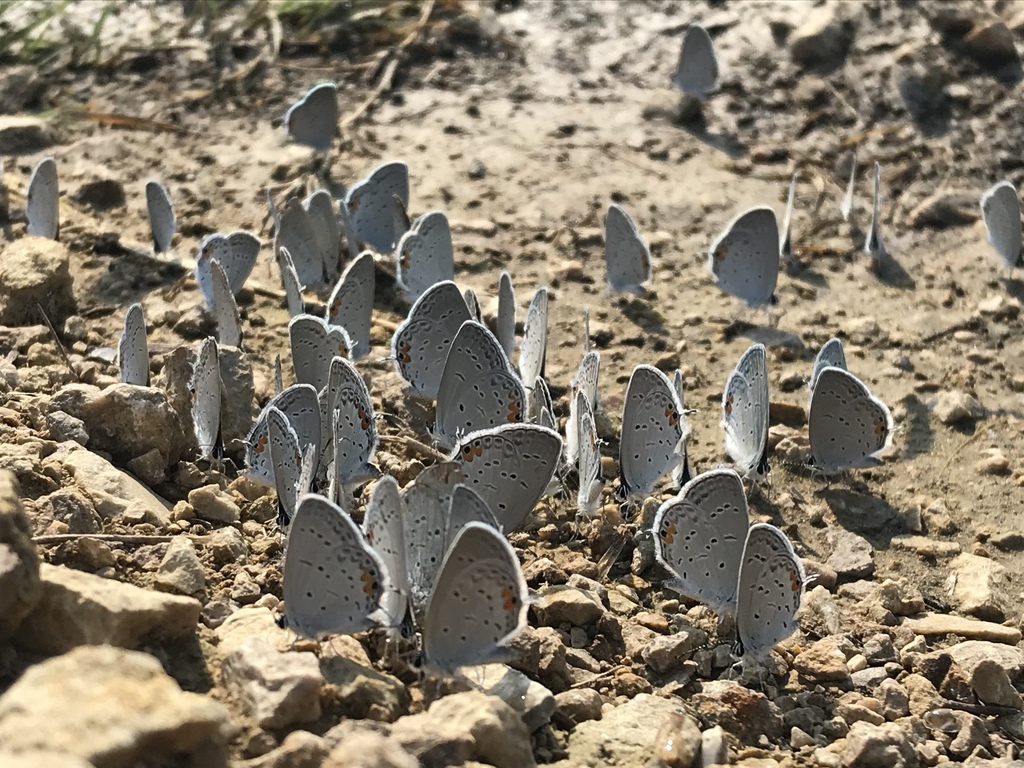
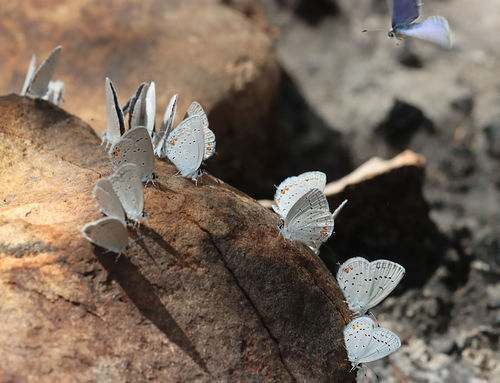
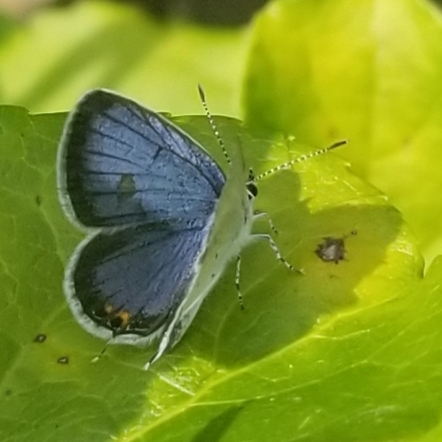
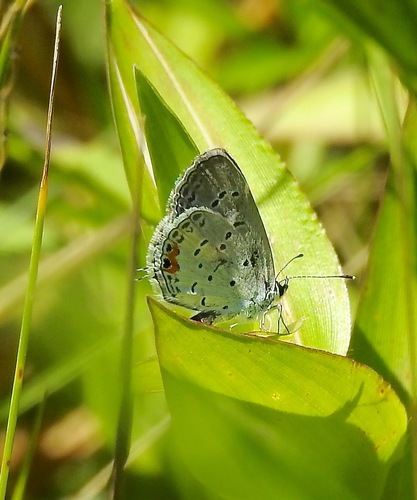
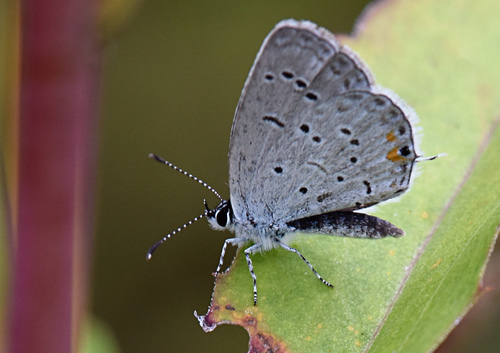
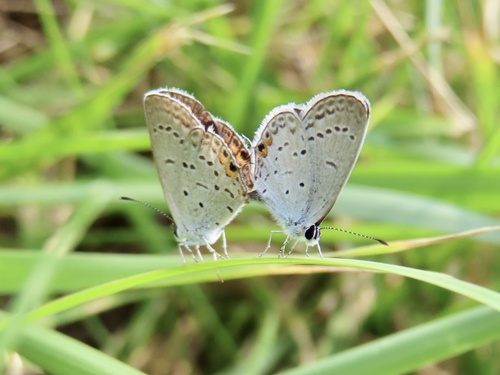
Wingspan is small (see characteristics). Males show bright to pale blue uppersides with a dark narrow border; females are usually brownish on the upperside with variable blue dusting. The underside of both sexes is pale gray to off-white with small dark spots; notable features are a tiny tail-like projection on each hindwing and an orange submarginal spot near the tail on the underside of the hindwing. The tails are short and sometimes hard to see in worn individuals.
- Very small wingspan (about 18-30 mm) — noticeably smaller than many other common blues
- Tiny tail-like projection on each hindwing plus an orange submarginal spot near the tail on the underside
- Males bluish upperside with narrow dark border; females brownish with blue dusting
- Underside pale gray with small dark spots; check hindwing for the orange spot and short tail
Lookalikes
Summer azure Celastrina ladon
Typically larger, with a chalky pale gray underside and no tails or orange spots near the hindwing edge.
Western tailed-blue Cupido amyntula
Slightly larger, with a whiter underside, fainter spots and usually only one small orange spot (or none) near the tail; mainly found in western and northern North America.
American copper (small individuals) Lycaena phlaeas
Copper has a distinctive orange upper surface and different underside spotting; no hindwing tails.
↻Life cycle
Egg
Tiny, pale eggs laid singly on the leaves, stems or flower buds of host plants.
Larva (caterpillar)
Small, slug-shaped, finely hairy caterpillars that feed on flowers, seeds and leaves of host plants; coloration varies but is often greenish to match the plant. Development is relatively quick in warm weather, and the last generation overwinters as mature caterpillars in seedpods.
Pupa (chrysalis)
Chrysalis is attached to vegetation or plant stems; pupation lasts days to weeks depending on temperature and generation.
Adult (butterfly)
Short-lived, winged adult that nectars at flowers, mates and lays eggs to start the next generation.
🍃Diet and predators
Young eat
Leaves, flowers and developing seedpods of legumes and other low herbs (e.g., clover, vetch, tick-trefoil)
Adults eat
Nectar from a variety of small flowers such as clover, thistles, milkweeds and other nectar sources
Predators of the young
Small predators and parasites: wasps, flies, spiders and predatory insects
Predators of adults
Insectivorous birds, spiders, dragonflies and larger predatory insects
🌱Effect on plants and gardens
Caterpillars feed mainly on legumes (Fabaceae) such as clovers (Trifolium), vetches (Vicia), tick-trefoils (Desmodium) and other low-growing herbs and peas. Feeding rarely causes significant harm to garden plants.
📍Where and when to find it
Adults: nectar-feeding on low flowers in sunny open areas. Eggs and larvae: on leaves, buds and flowers of host legumes (clover, vetch, tick-trefoil). Pupae: attached to stems or low vegetation.
Best time
Spring through fall; peak activity on warm, sunny days. Several broods in a season in warmer regions.
Observation tips
Sit quietly at flower patches and watch for tiny, fast-flying blues. Use a macro lens or a small net for close photos; photograph the underside of the hindwing to show the orange spot and tiny tail for ID.
✨Fun facts
- Despite their delicate appearance, Eastern tailed-blues can be extremely abundant and may be seen in great numbers on warm days.
- The tiny tails and orange spot on the hindwing mimic the butterfly's head-end to draw attacks away from the body — predators may grab the tail area instead of the body.
?Frequently asked questions
Do Eastern tailed-blue butterflies bite or sting?
No. They do not bite or sting and are harmless to people.
Why are Eastern tailed-blues in my yard?
They are attracted by open, sunny areas with nectar flowers for adults and low-growing legumes or other host plants for their caterpillars, such as clover and vetch.
Are they harmful to gardens or crops?
No significant harm. Caterpillar feeding is usually light and rarely damages plants noticeably.
How can I encourage them in my garden?
Plant nectar sources (clover, native wildflowers) and leave patches of host plants like clover or vetch. Avoid broad-spectrum insecticides.
How do I get rid of them if I need to?
Control is rarely necessary. To reduce numbers, remove or reduce host plants (e.g., clover) and maintain less suitable habitat. Physical removal of caterpillars or targeted, garden-safe measures can be used, but pesticides are not recommended for small populations.
📷Photos of the eastern tailed-blue
More butterflies & moths
This guide was written with AI assistance and fact-checked, last updated 2026-10-10. Identification from photos is never certain: don't handle insects you can't identify, and get medical advice for bites, stings or allergic reactions. More about the eastern tailed-blue: iNaturalist, Wikipedia.