
Great spangled fritillary
Speyeria cybele · Fritillary butterflies
A large, orange-and-brown North American fritillary whose caterpillars eat violets and adults feed on nectar in meadows and edges.
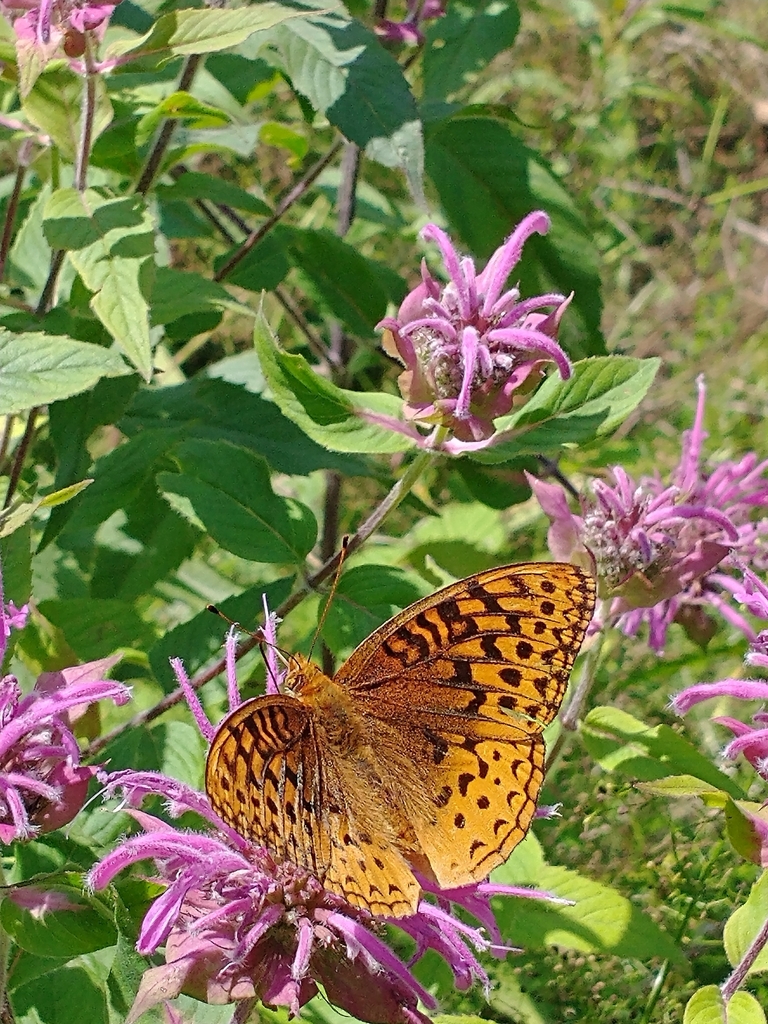
!Is the great spangled fritillary dangerous?
No. Not harmful to people. Adults do not bite or sting. Handle gently if necessary; caterpillars have tiny spines but do not deliver venom and rarely cause irritation.
Pets
Not dangerous to pets. Unlikely to be eaten by pets, but butterflies and caterpillars are not toxic to dogs or cats.
📖Overview
The great spangled fritillary (Speyeria cybele) is a widespread North American butterfly of open habitats such as meadows, prairies, and woodland edges. Adults are strong fliers that visit a variety of nectar flowers. Females lay eggs near host plants (violets); larvae overwinter and feed on violet leaves. Populations are generally stable across their range, though local declines can occur where habitat is lost.
🔍How to identify a great spangled fritillary
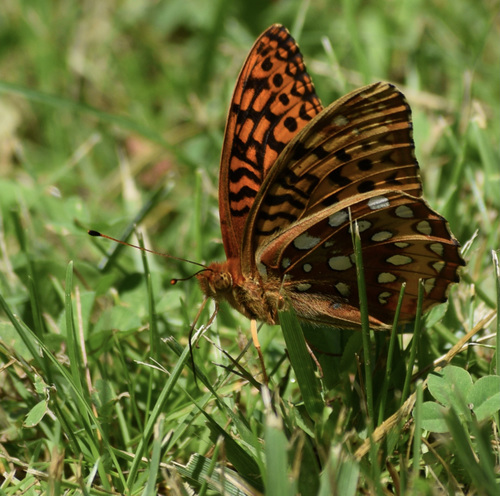
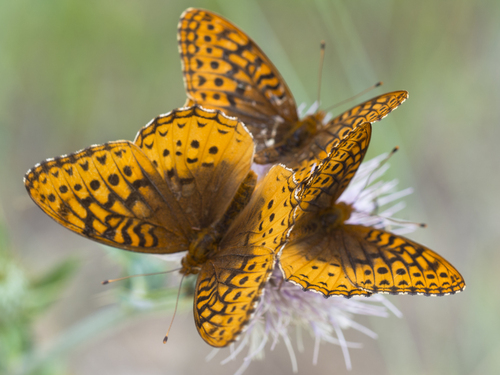
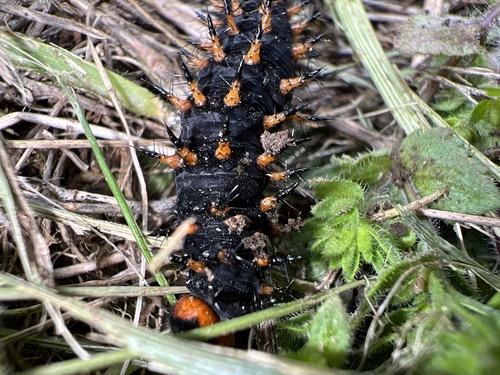
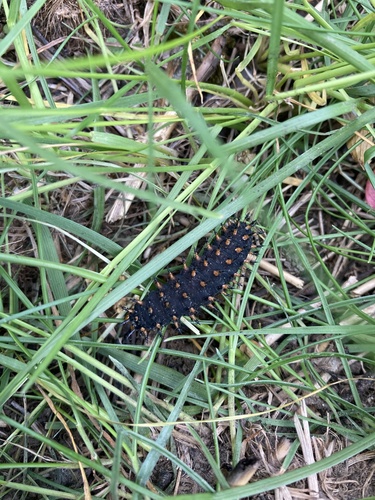
Adults have a large wingspan and richly patterned uppersides: orange background with bold black markings and a row of large silver or cream spots on the underside of the hindwing. The underside of the hindwing shows prominent silvery or cream spots set on reddish-brown and orange. Females are usually slightly larger and may have broader markings. Caterpillars are spiny, dark (brown to black) with lighter tubercles and feed on violet leaves. Pupae are compact and brownish, attached to vegetation or leaf litter.
- Large wingspan (60-90 mm) with orange upperwings and bold black markings.
- Underside of hindwing has large cream or silvery spots set in reddish-brown background.
- Row of conspicuous silver/cream spots (great spangled pattern) distinguishes it from smaller fritillaries.
- Habitat: look in meadows and edges where violets grow, especially during warm, sunny days.
Lookalikes
Aphrodite fritillary Speyeria aphrodite
Similar orange-and-black pattern; Aphrodite often has more extensive black markings and differences in the size and arrangement of underside silver spots—careful comparison needed.
Variegated fritillary Euptoieta claudia
Smaller, with a mottled hindwing underside that lacks silver spots entirely; variegated fritillary also has a different wing shape and more checkerboard patterning.
↻Life cycle
Egg
In late summer, females lay small eggs singly on or near violets, often in leaf litter; the tiny caterpillars hatch in autumn and overwinter without feeding.
Larva (caterpillar)
Spiny, dark caterpillars feed on violet leaves. In many regions young larvae overwinter and resume feeding in spring.
Pupa (chrysalis)
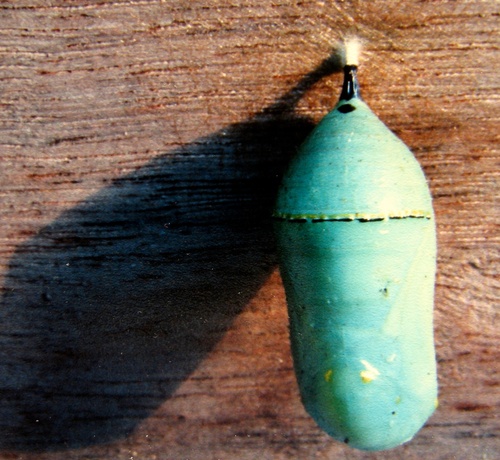
Chrysalis is compact and brownish, formed in vegetation or leaf litter; metamorphosis takes days to weeks depending on temperature.
Adult (butterfly)
Winged adults emerge to feed on nectar, mate, and continue the cycle; typically fly in sunny, warm weather.
🍃Diet and predators
Young eat
Leaves of violets (Viola species).
Adults eat
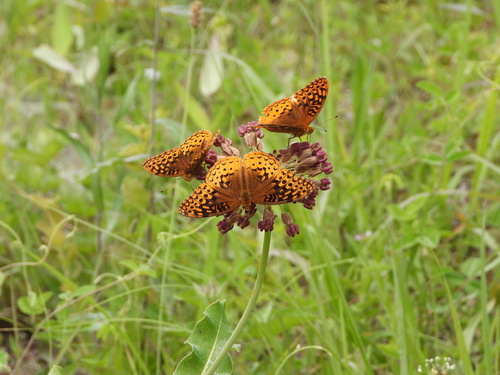
Nectar from a variety of meadow flowers including thistles, milkweed, joe-pye weed, knapweed and clover.
Predators of the young
Birds, small mammals, predatory insects and parasitic wasps.
Predators of adults
Birds, dragonflies, spiders such as crab spiders, and other insectivores.
🌱Effect on plants and gardens
Larvae feed almost exclusively on violets (Viola spp.). Adults visit nectar sources such as thistles, milkweed, joe-pye weed, clover and other large-flowered meadow species. They are pollinators rather than plant pests.
📍Where and when to find it
Adults: sunny meadows, roadsides, field edges visiting nectar flowers. Eggs and larvae: on or near violet plants, often at ground level in leaf litter or low stems.
Best time
Late spring through summer depending on latitude; observe on warm, sunny days, especially mid-morning to mid-afternoon.
Observation tips
Look for slow-flying orange butterflies visiting large composite flowers. Photograph underside by waiting for them to settle with wings closed on a flower or leaf.
✨Fun facts
- Caterpillars overwinter when small and resume feeding in spring, allowing the species to match spring violet growth.
- The 'spangled' name refers to the large silvery or cream spots on the hindwing underside that look like sparks or spangles.
- Adults can travel widely while searching for nectar and suitable violet patches for females to lay eggs.
?Frequently asked questions
Do great spangled fritillaries bite?
No. Adult butterflies do not bite. Caterpillars do chew violet leaves but are not harmful to people.
Do great spangled fritillaries sting?
No. They do not have stingers and are harmless to touch, though handle butterflies gently to avoid damaging their wings.
Why is this butterfly in my garden?
If you have nectar flowers and nearby violets (host plants), gardens provide food and egg-laying sites. Sunny spots and undisturbed edges attract them.
How can I attract great spangled fritillaries?
Plant native nectar-rich flowers (thistles, milkweed, joe-pye weed, coneflowers) and include violets for larvae. Provide sunny, sheltered spots and avoid heavy pesticide use.
How do I get rid of caterpillars eating violets?
They rarely cause serious damage. If control is desired, hand-pick caterpillars or relocate them. Avoid broad-spectrum insecticides which kill beneficial insects and pollinators.
Are they endangered?
No—Speyeria cybele is generally common and not globally threatened, though local habitat loss can reduce numbers.
📷Photos of the great spangled fritillary
More butterflies & moths
This guide was written with AI assistance and fact-checked, last updated 2026-10-10. Identification from photos is never certain: don't handle insects you can't identify, and get medical advice for bites, stings or allergic reactions. More about the great spangled fritillary: iNaturalist, Wikipedia.