
Hickory tussock moth
Lophocampa caryae · Tiger moths
A white-and-black tussock moth whose hairy caterpillars feed on hickory, walnut and other deciduous trees and can cause skin irritation on contact.
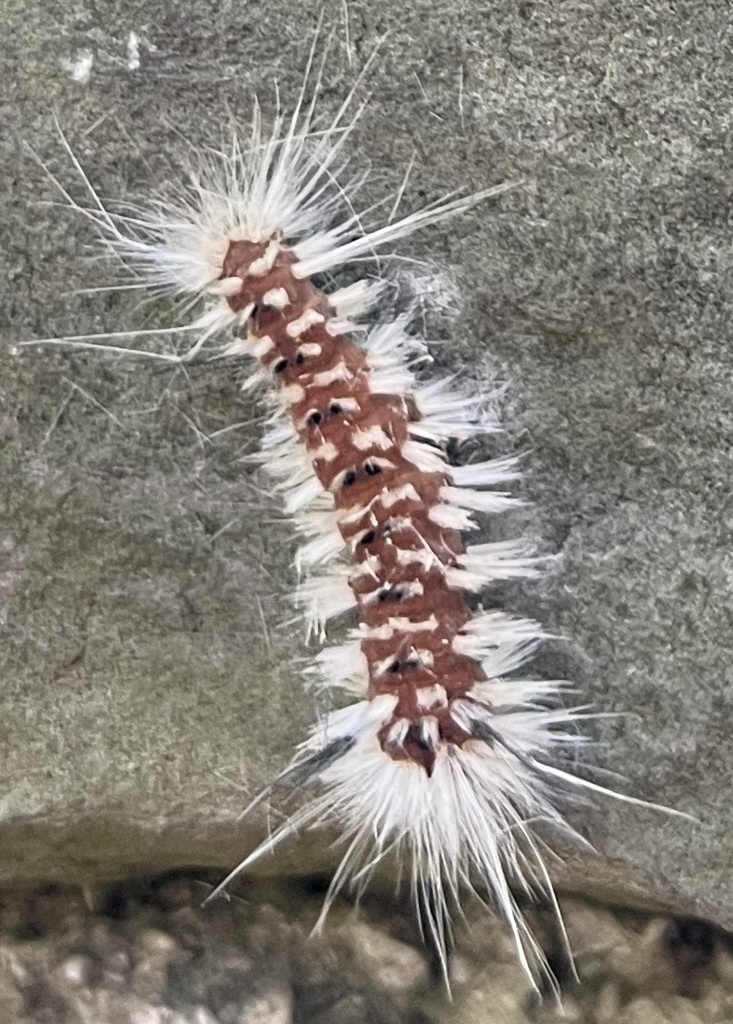
!Is the hickory tussock moth dangerous?
Only mildly. The caterpillar's hairs can cause mechanical irritation: red, itchy bumps or a rash for some people after handling or brushing against them. Reactions are usually localized and resolve in a few days. Severe allergic reactions are rare but possible; seek medical care for breathing difficulty, widespread swelling, or severe symptoms. Do not crush caterpillars against skin. First aid: remove hairs with adhesive tape, wash the area with soap and water, and apply cold compress or topical anti-itch remedies; see a doctor if symptoms worsen.
Pets
Pets that sniff, lick or bite these caterpillars can develop mouth or throat irritation, drooling, vomiting, or paw/face swelling. If a pet has significant symptoms, contact a veterinarian promptly.
📖Overview
Lophocampa caryae is a North American moth best known for its distinctive, hairy caterpillar stage. Adults are medium-sized tan to golden-brown moths with pale spots on the forewings; the caterpillars are white with black tufts along the back and long black hair pencils near the front and rear. Larvae feed on the leaves of hickory, walnut, ash, elm and other hardwoods and can cause localized defoliation during outbreak years. The caterpillar's hairs can cause an itchy rash or mild irritation in some people and pets.
🔍How to identify a hickory tussock moth
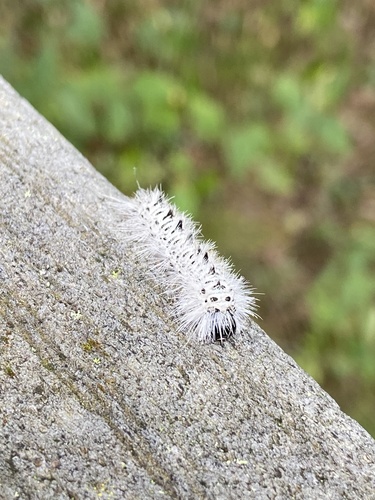
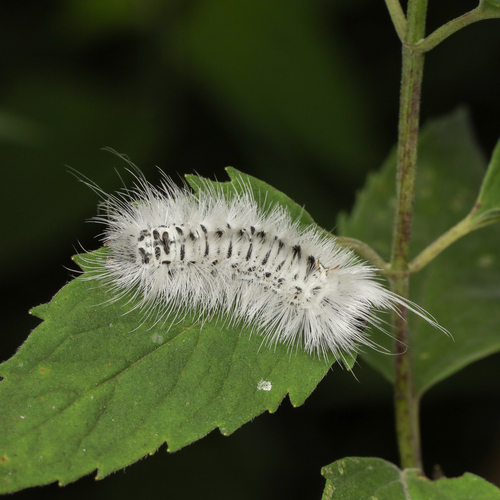
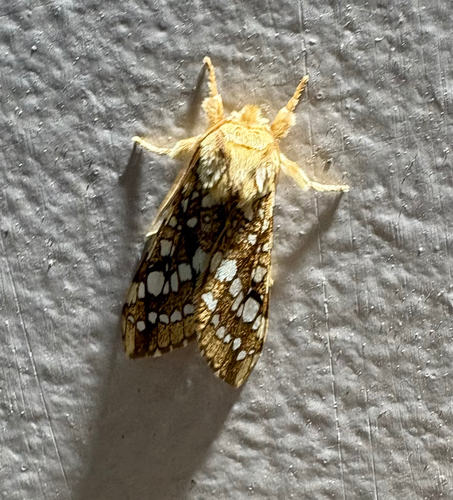
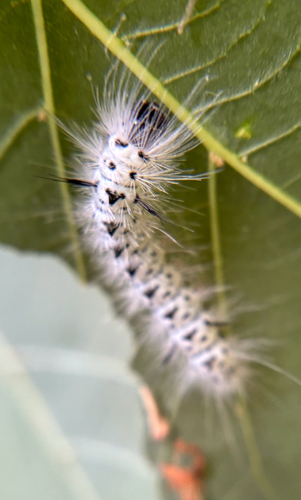
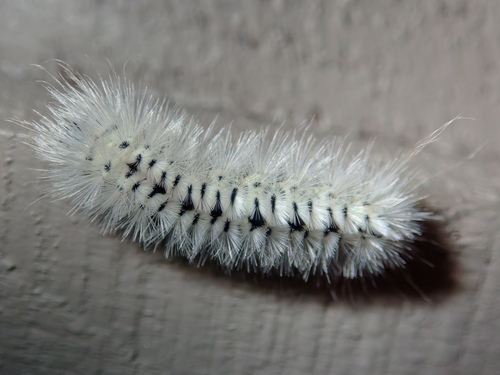
Adult hickory tussock moths have a wingspan of about 37-55 mm; forewings are tan to golden-brown with rows of pale cream spots, and the hindwings are pale. The caterpillar is very distinctive: mostly white and densely covered with long hairs, with a line of black tufts down the middle of the back and two pairs of long black hair pencils, one near the front and one near the rear. The head is black. The hairs give it a fuzzy, cottony look. Pupae are in loose cocoons mixed with hairs and debris.
- Look for a white, fuzzy caterpillar with a black head, a line of black tufts down the back and long black hair pencils near the front and rear.
- Adults are tan to golden-brown moths with rows of pale cream spots on the forewings and pale hindwings.
- Caterpillars often occur on hickory, walnut or other hardwood leaves and may be found singly or in small groups on branches.
Lookalikes
Spotted tussock moth Lophocampa maculata
Spotted tussock caterpillar has more yellow/orange tufts mixed with white and darker overall spotting; adult wing pattern differs with more distinct spots.
White-marked tussock moth Orgyia leucostigma
Orgyia caterpillars have a red head, four white to yellow toothbrush-like dorsal tussocks and red spots on the back; adult females are wingless and males are gray-brown.
↻Life cycle
Egg
Females lay clusters of eggs on the underside of host-tree leaves in late spring or early summer; eggs hatch within a few weeks.
Larva (tussock caterpillar)
The conspicuous hairy caterpillar goes through several molts; this is the feeding stage that causes defoliation and can cause skin irritation on contact.
Pupa (cocoon)
In autumn mature larvae spin loose cocoons of silk and interwoven hairs in leaf litter or bark crevices and overwinter there as pupae.
Adult (moth)
Adults are short-lived, mate, and females lay eggs to start the next generation; adults do not feed heavily.
🍃Diet and predators
Young eat
Leaves of hickory, walnut, ash, elm, oak and various other deciduous trees
Adults eat
Adults feed little or not at all; may visit flowers for nectar rarely
Predators of the young
Birds, predatory insects and parasitic wasps and flies
Predators of adults
Bats, night-active insectivores and predatory insects
🌱Effect on plants and gardens
Larvae feed on leaves of hickory, walnut, ash, elm, oak and other deciduous trees. Heavy local feeding can cause noticeable defoliation but trees typically recover unless repeated defoliation occurs.
How to get rid of hickory tussock moths
For single caterpillars, remove them carefully with gloved hands or a stick and place them in a container or on the ground away from people and pets. For small infestations, Bacillus thuringiensis var. kurstaki (Bt) applied to foliage can control young caterpillars; follow label instructions. Large outbreaks may be best left to natural enemies (birds, parasitoids) or municipal forestry programs. Avoid using bare hands; wear gloves and long sleeves. Do not burn or crush caterpillars where hairs can become airborne.
📍Where and when to find it
Look for caterpillars on leaves and branches of hickory, walnut, ash, elm and oak; adults can be seen around porch lights in summer. Pupae may be on trunks, twigs or leaf litter.
Best time
Late spring to mid-summer for larvae depending on region; adults mostly in summer evenings.
Observation tips
Photograph caterpillars from a safe distance or use gloves when handling. A macro lens helps capture hair and tuft details. Check host trees and the underside of leaves.
✨Fun facts
- The caterpillar's long hairs are not true stings but can mechanically irritate skin and stick into surface layers.
- Despite their dramatic appearance, these moths usually have only one generation per year in most of their range.
- Cocoons often incorporate some of the caterpillar's hairs, which can remain irritating until weathered away.
?Frequently asked questions
Do hickory tussock moth caterpillars sting?
They do not have a venomous sting like some caterpillars, but their hairs can cause an itchy, irritated rash when they break off into the skin.
Will a hickory tussock moth caterpillar kill my tree?
A few caterpillars usually cause minor damage; heavy defoliation in outbreak years can stress trees, but healthy mature trees typically recover.
How do I get rid of hickory tussock caterpillars in my yard?
Remove individual caterpillars wearing gloves or use a stick. For larger infestations, apply Bt (Bacillus thuringiensis kurstaki) to foliage when caterpillars are small, or consult local forestry services for advice.
Are hickory tussock moths common in houses?
Adults are attracted to lights at night and may enter houses occasionally, but the species is primarily associated with trees outdoors; finding caterpillars indoors is uncommon.
What should I do if I touch a caterpillar and my skin reacts?
Remove loose hairs with adhesive tape, wash the area with soap and water, apply a cold compress and an over-the-counter anti-itch cream. Seek medical care for severe or spreading reactions.
📷Photos of the hickory tussock moth
More butterflies & moths
This guide was written with AI assistance and fact-checked, last updated 2026-10-10. Identification from photos is never certain: don't handle insects you can't identify, and get medical advice for bites, stings or allergic reactions. More about the hickory tussock moth: iNaturalist, Wikipedia.