
Large white
Pieris brassicae · Whites and sulphurs
A common white butterfly whose caterpillars eat brassicas and can be a garden pest of cabbages and related crops.
!Is the large white dangerous?
No. Adults and caterpillars are not dangerous to people. Caterpillars have hairs and can cause mild skin irritation in sensitive individuals but severe reactions are rare. No medical emergency is expected; wash skin if irritation occurs and seek medical advice if symptoms worsen.
Pets
Not toxic to pets. Pets that eat large numbers of caterpillars may vomit or show mild gastrointestinal upset; consult a veterinarian if ingestion causes concern.
📖Overview
Pieris brassicae is a medium-large white butterfly common across the Palearctic region. Adults are active in several broods through spring to autumn in temperate areas. Females lay clusters of yellow eggs on plants in the cabbage family; the gregarious caterpillars feed heavily on leaves and can defoliate young brassica crops. Adults feed on nectar and are frequent visitors to gardens, meadows and hedgerows.
🔍How to identify a large white
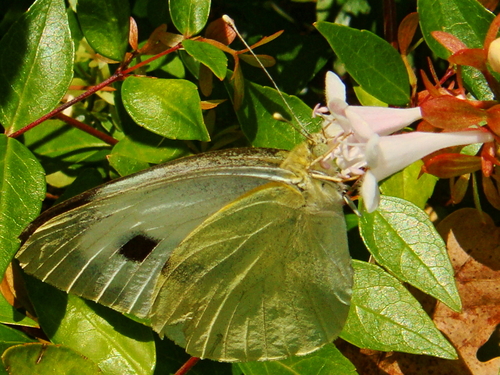
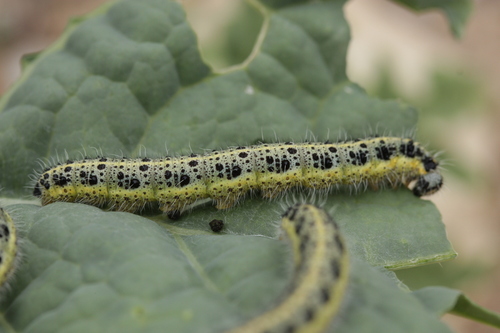
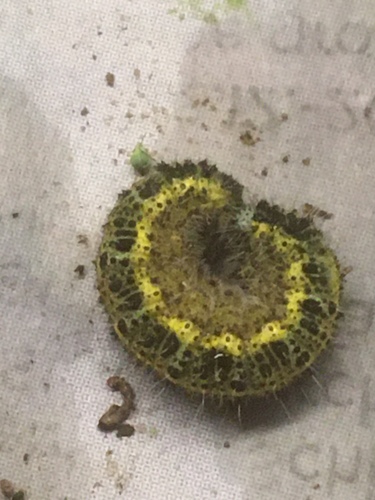
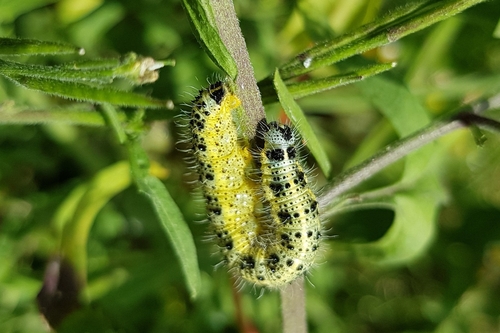
Adults are mostly white with bold black markings on the forewing tips and a pair of black spots on the forewings of females. Males lack these spots on the upperside. The hindwing often shows a pale yellow wash on the underside. Caterpillars are cylindrical and sparsely hairy, bluish-green to yellow with yellow lengthwise stripes and many black spots; they form communal groups when young. Pupae are angular and usually attached to stems or walls.
- Large white with 55-65 mm wingspan; bold black wingtips on forewings and two black spots on female forewings
- Males lack the black forewing spots on the upperside (females have two)
- Caterpillars are yellow and bluish-green with black spots and often feed in groups on brassica plants
Lookalikes
Small white Pieris rapae
Smaller (about 45-50 mm wingspan) and usually with single smaller black spot(s); forewing black tips less extensive than in Large white
Green-veined white Pieris napi
Shows distinct greenish veins on the underside of the hindwing and the black markings on upper forewing are usually weaker
↻Life cycle
Egg
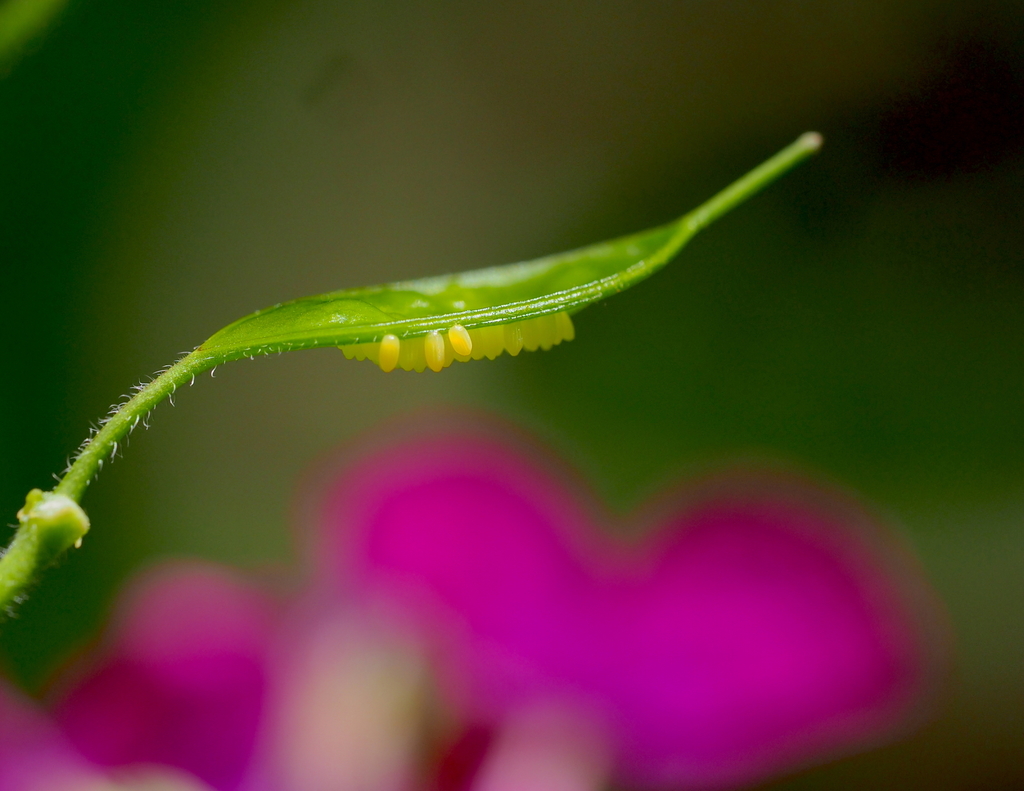
Females lay yellow eggs in clusters of 20-100 on the underside of host plant leaves. Eggs hatch in about 1 week depending on temperature.
Larva (caterpillar)
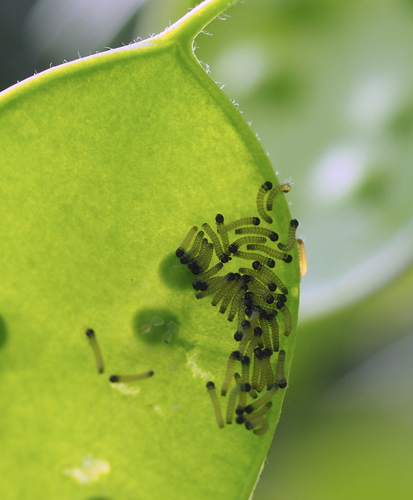
Gregarious caterpillars feed in groups on brassicas, passing through several instars over 2-4 weeks before pupating.
Pupa (chrysalis)
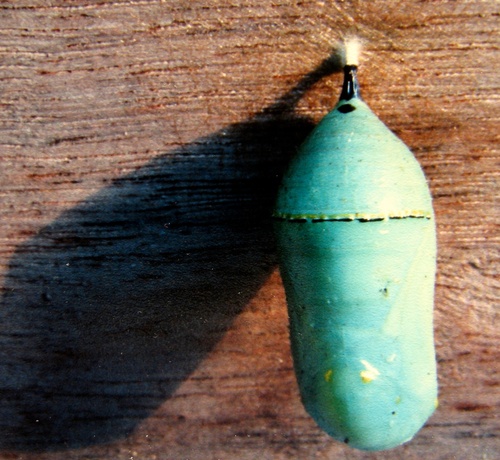
Pupae are attached to stems, fences or walls and metamorphose over 1-3 weeks; the timing depends on temperature and season.
Adult (butterfly)
Adults emerge, feed on nectar, mate and females lay eggs on host plants. There are multiple broods per year in warm regions.
🍃Diet and predators
Young eat
Leaves of Brassicaceae such as cabbage, kale, cauliflower, broccoli, wild mustard and related species
Adults eat
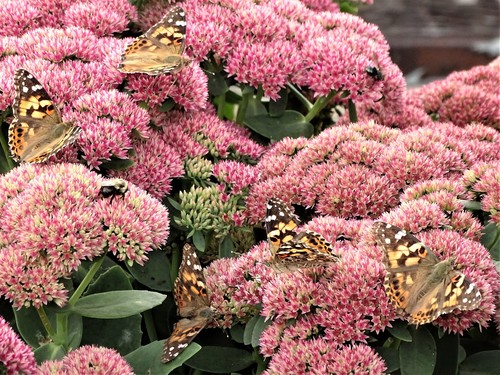
Nectar from a wide range of flowering plants, including knapweed, thistles, dandelion and garden flowers
Predators of the young
Parasitic wasps and flies, predatory beetles, spiders and birds
Predators of adults
Birds, dragonflies and other insectivorous predators
🌱Effect on plants and gardens
Larvae feed primarily on Brassicaceae such as cabbage, kale, cauliflower, broccoli and wild mustard. Heavy larval feeding can defoliate young plants and reduce yield.
How to get rid of large whites
Use physical barriers like fine mesh or floating row cover to keep butterflies from laying eggs. Hand-pick egg clusters and caterpillars or shake them into a container of soapy water. Encourage natural enemies such as parasitic wasps and birds. For larger crops, integrated pest management using targeted biological controls is preferred over broad-spectrum insecticides.
📍Where and when to find it
Adults on nectar-rich flowers in gardens, meadows and hedgerows; eggs and caterpillars on underside of brassica leaves; pupae on stems, fences or walls near host plants.
Best time
Spring to autumn; daytime on warm, sunny days. Look for clusters of yellow eggs or group-feeding caterpillars on brassicas.
Observation tips
Check underside of leaves of cabbages and mustard-family weeds for egg clusters. Photograph adults with a telephoto or approach slowly; caterpillars are easier to photograph on host plants but avoid touching them if you have sensitive skin.
✨Fun facts
- Large white caterpillars are gregarious when young and feed in groups, which can make damage easy to spot.
- The species gets the name 'cabbage white' because of its strong association with cultivated cabbages and other Brassica crops.
- Adults are strong fliers and may migrate locally to find suitable breeding and feeding sites.
?Frequently asked questions
Do large white butterflies bite or sting?
No. Adults do not bite or sting. Caterpillars do not have stings, though their hairs can cause mild irritation to very sensitive people.
Are large white caterpillars harmful to my cabbages?
Yes. Caterpillars feed on brassica leaves and can severely damage or defoliate young plants if uncontrolled.
Why are large whites in my garden?
They are attracted to gardens with brassica plants for egg-laying and to flowers for nectar. If you grow cabbages, kale or similar crops, your garden is a suitable breeding site.
How can I get rid of large white caterpillars from my vegetables?
Use row covers to prevent egg-laying, remove egg clusters or caterpillars by hand, encourage natural predators, or use targeted biological controls on larger infestations. Avoid broad insecticides when possible.
When can I see large whites?
They are active from spring through autumn in temperate regions, most visible on warm, sunny days when adults fly and feed on nectar.
📷Photos of the large white
More butterflies & moths
This guide was written with AI assistance and fact-checked, last updated 2026-10-10. Identification from photos is never certain: don't handle insects you can't identify, and get medical advice for bites, stings or allergic reactions. More about the large white: iNaturalist, Wikipedia.