
Question mark
Polygonia interrogationis · Anglewing butterflies
A medium-sized North American anglewing butterfly with ragged wing edges and a small silvery question-mark shaped mark on the underside of the hindwing.
!Is the question mark dangerous?
No. Question mark butterflies do not sting or bite people. They are harmless; handle gently if necessary. No medical treatment is required for normal contact. As with all insects, avoid handling if you have severe insect allergies, though this species is not a known allergen.
Pets
Not dangerous to pets. Birds or other predators may catch them, but the butterfly itself poses no toxin risk to cats or dogs.
📖Overview
Polygonia interrogationis (Question mark) is a widespread North American brush-footed butterfly (family Nymphalidae) found in woodlands, forest edges, parks and gardens. Adults are strong, fast fliers and are often seen feeding on tree sap, rotting fruit and occasionally nectar. They overwinter as adults in sheltered sites and produce two or more broods per year depending on latitude. The species is not harmful to people.
🔍How to identify a question mark
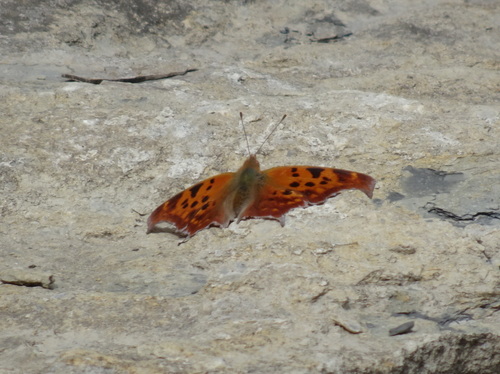
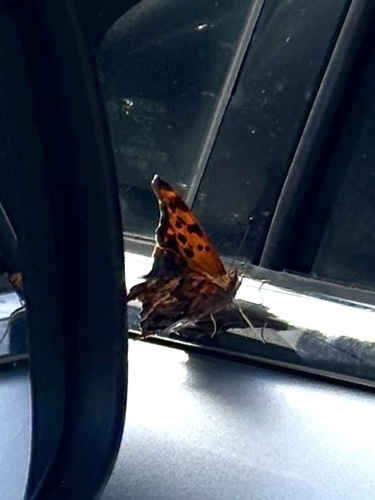
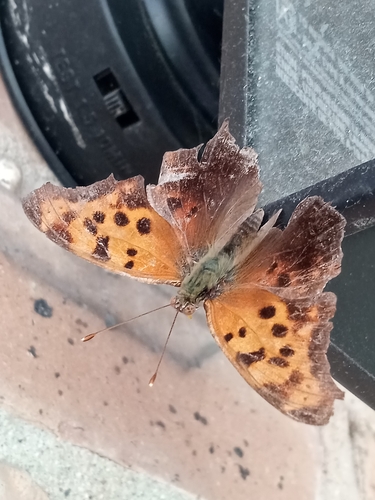
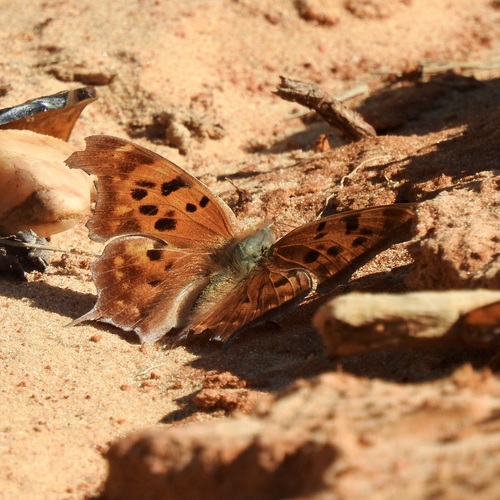
The upperside of the wings is orange-brown with darker spots and a broad dark border near the outer margin. Wings have distinctly irregular, ragged margins. The underside is cryptically colored brownish to gray-brown and resembles dead leaves. On the underside of the hindwing there is a small silvery mark that looks like a question mark (a curved silver 'comma' with a small separate silver dot) — this marking gives the species its common name and helps distinguish it from similar species.
- Look for ragged, irregular wing margins typical of anglewings.
- Upperside orange-brown with dark borders and spots; underside brownish, leaf-like.
- Check underside of hindwing for a small silvery mark shaped like a question mark (a curved silver mark plus a small dot).
- Wingspan about 5.5-7.5 cm; flight is quick and erratic.
Lookalikes
Eastern Comma Polygonia comma
Eastern Comma has a single silver 'comma' shaped mark without the separate dot; wing shape and coloration are similar but the silver marking is the clearest field distinction.
Green comma Polygonia faunus
Green Comma has a more ragged wing edge, a darker, greenish-marked underside and a single comma mark; it is a northern species whose range overlaps the Question Mark mainly in the northeastern US and southern Canada.
↻Life cycle
Egg
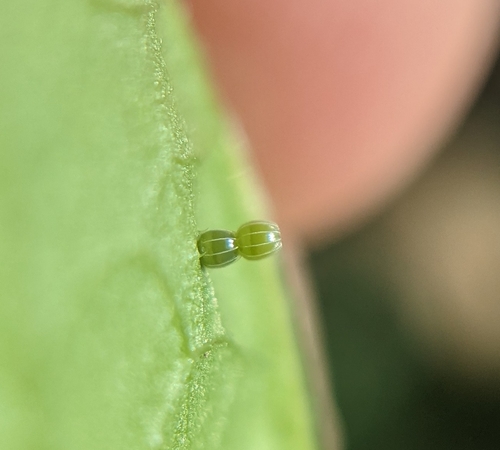
Females lay eggs singly on host plant leaves. Eggs hatch in about 1-2 weeks depending on temperature.
Larva (caterpillar)
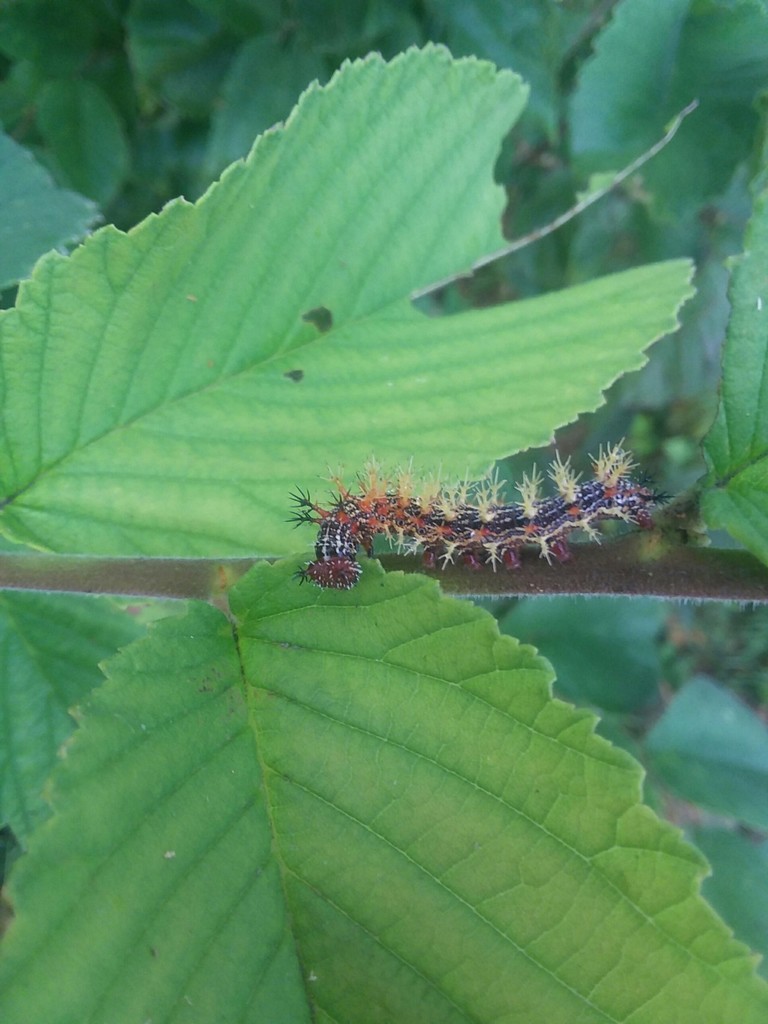
Spiny caterpillars feed on host plants listed above. They pass through several instars over 2-4 weeks before pupating.
Pupa (chrysalis)
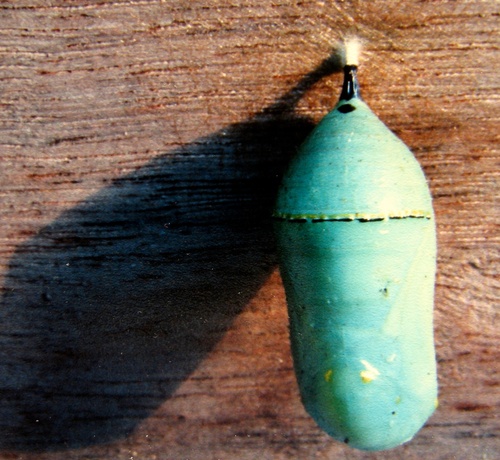
The chrysalis is attached to vegetation or other substrates; pupation lasts about 10-20 days in summer but may be longer in cool conditions.
Adult (butterfly)
Adults emerge and feed on liquids like sap and fermenting fruit; late-season adults seek sheltered sites to overwinter and resume activity in spring.
🍃Diet and predators
Young eat
Leaves of host plants such as elm, hackberry, nettles, false nettle and hops
Adults eat
Tree sap, rotting fruit, dung, carrion, and occasionally flower nectar
Predators of the young
Parasitic wasps, predatory bugs, birds and spiders
Predators of adults
Birds, spiders, dragonflies and mantids
🌱Effect on plants and gardens
Caterpillars feed on leaves of trees and herbaceous plants such as elm (Ulmus), nettles (Urtica), false nettle (Boehmeria), hops (Humulus) and hackberry (Celtis); adults feed on tree sap, rotting fruit, dung, carrion and sometimes nectar from flowers.
📍Where and when to find it
Adults: tree trunks, woodland edges, forest clearings, fruit-baited traps and puddling sites. Eggs and caterpillars: on leaves of host plants such as elm, hackberry, nettle and hops.
Best time
Spring through fall; best observed on warm, sunny days. Late summer and early fall are good for seeing many adults, and spring is good for freshly emerged overwintered individuals.
Observation tips
Look for them sunning on tree trunks or sipping at rotting fruit. Use fruit baits (overripe bananas or mashed berries) to attract adults for photos. Approach slowly and photograph with a long lens when possible.
✨Fun facts
- Adults overwinter and can survive several months in sheltered spots, then fly again in spring.
- The silvery question-mark marking on the underside is unique and inspired the common name.
- Seasonal forms differ: summer-form adults have mostly black hindwings above, while the fall (overwintering) form has more orange hindwings with longer, violet-tipped tails.
?Frequently asked questions
Do question mark butterflies sting or bite?
No. They do not sting or bite people and are harmless to handle gently, though you should avoid handling butterflies whenever possible.
Why is a question mark butterfly in my house?
Late-season adults seek sheltered overwintering sites and may enter houses, sheds or attics while searching for crevices to hibernate.
How do I get rid of a question mark butterfly in my house?
Open a window or door and gently coax it outside using a sheet or container; avoid killing it. Seal entry points to prevent future indoor overwintering.
Where does the caterpillar live and what does it eat?
Caterpillars live on host plants such as elm, hackberry, nettle, false nettle and hops and feed on the leaves.
How can I attract question mark butterflies to my garden?
Provide host plants for caterpillars, rotting fruit or fermenting fruit on a platform for adults, and native trees or shrubs for sap sources. Avoid heavy pesticide use.
How can I tell a question mark from an eastern comma?
Check the silver marking on the underside of the hindwing: question mark has a curved silver mark plus a separate dot (resembling a question mark), while the eastern comma has only a single comma-shaped silver mark.
📷Photos of the question mark
More butterflies & moths
This guide was written with AI assistance and fact-checked, last updated 2026-10-10. Identification from photos is never certain: don't handle insects you can't identify, and get medical advice for bites, stings or allergic reactions. More about the question mark: iNaturalist, Wikipedia.