
Mourning cloak vs Question mark
These two are easy to mix up. Here's how to tell a mourning cloak from a question mark, and whether either one bites or stings.
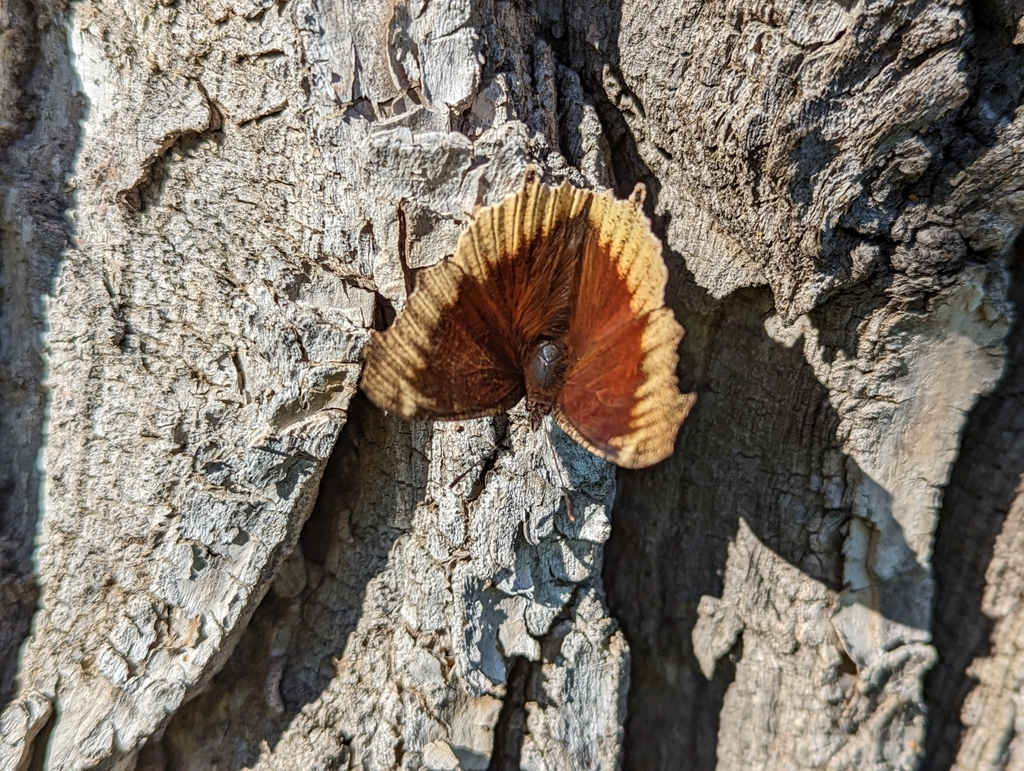
Mourning cloak
Nymphalis antiopa
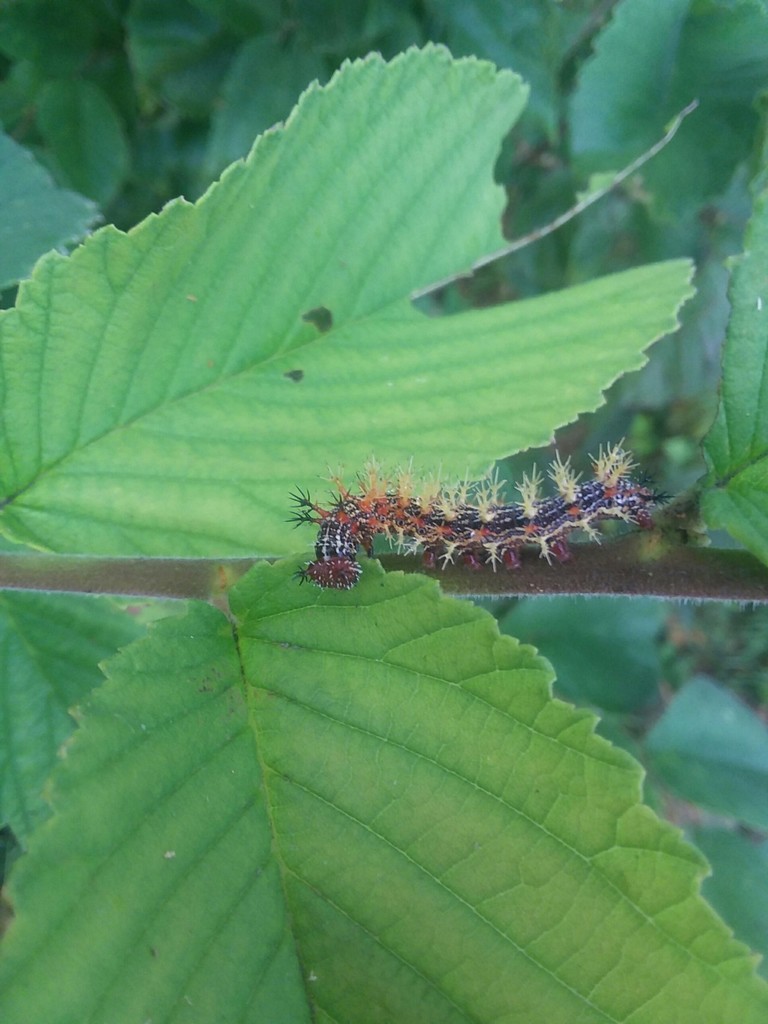
Question mark
Polygonia interrogationis
≠The key differences
Question Mark has angular, scalloped wings and a small silver 'question mark' mark on the underside; it lacks the broad pale outer border and uniform dark upper surface of the mourning cloak.
⚖︎Side by side
| Mourning cloak | Question mark | |
|---|---|---|
| To humans | Non-toxic | Non-toxic |
| Size | 6-8 cm wingspan (60-80 mm) | About 5.5-7.5 cm wingspan |
| Colours | Dark maroon, Pale yellow, Iridescent blue, Mottled gray-brown (underside) | Orange-brown, Dark brown, Black, Grey-brown (underside), Silver (marking) |
| Family | Nymphalidae | Nymphalidae |
| Habitat | Deciduous and mixed woodlands, riparian corridors, parks, orchards and suburban areas with host trees | Deciduous woodlands, forest edges, riparian areas, parks and suburban gardens |
| Range | Holarctic: widespread across North America (including Alaska and much of Canada), parts of Europe and temperate Asia; occasional vagrants elsewhere. | Found across much of North America: from southern Canada through the continental United States; more common east of the Rockies but present in parts of the west |
| Active | Adults are active spring through autumn; single or multiple broods depending on region. Adults are diurnal and most active on warm sunny days. | Spring through fall; adults are diurnal and most active on warm, sunny days |
| Pest? | No | No |
🔍How to spot a mourning cloak
- Large wingspan (about 6-8 cm) with uniformly dark maroon-brown upper wings
- Broad pale yellow to cream border along the wing edges with a row of blue spots inside the border
- Underside heavily mottled gray-brown, resembling tree bark when wings are closed
- Rounded wing tips without tails or strong angular projections
🔍How to spot a question mark
- Look for ragged, irregular wing margins typical of anglewings.
- Upperside orange-brown with dark borders and spots; underside brownish, leaf-like.
- Check underside of hindwing for a small silvery mark shaped like a question mark (a curved silver mark plus a small dot).
- Wingspan about 5.5-7.5 cm; flight is quick and erratic.
?Frequently asked questions
What is the difference between a mourning cloak and a question mark?
Question Mark has angular, scalloped wings and a small silver 'question mark' mark on the underside; it lacks the broad pale outer border and uniform dark upper surface of the mourning cloak.
Is a mourning cloak or a question mark more dangerous?
Mourning cloak: Non-toxic. Question mark: Non-toxic. Mourning cloaks are harmless to people; adults do not bite or sting. Question mark butterflies do not sting or bite people.
Identification from photos is never certain: don't handle insects you can't identify, and get medical advice for bites, stings or allergic reactions.