
Large skipper
Ochlodes sylvanus · Skipper butterflies
A compact, fast-flying orange-brown skipper butterfly common in grassy rides, hedgerows and meadows across much of Europe.
!Is the large skipper dangerous?
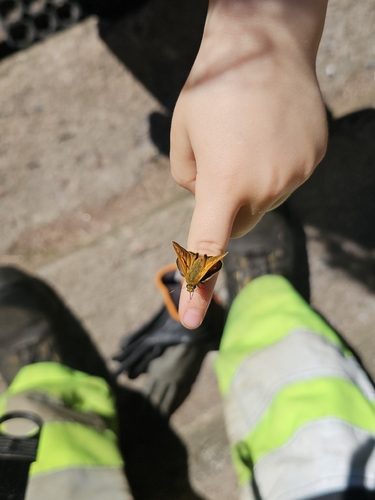
No. Harmless to people. Does not bite or sting; will not spread disease. Handle gently if necessary—like all butterflies it is fragile and can lose scales or wing pieces if squeezed.
Pets
Not toxic or dangerous to pets. Small and harmless if a pet snatches one, though choking or digestive upset from ingesting insects is possible in some cases.
📖Overview
The Large skipper is a small to medium-sized butterfly in the skipper family (Hesperiidae). It favours sunny, sheltered grassy habitats such as woodland edges, hedgerows, meadow margins and road verges where its larval food grasses grow. Males are territorial and will perch on vegetation and dart out to investigate passing insects or intruders. Adults visit a variety of flowers for nectar and are most noticeable during late spring and summer.
Ochlodes sylvanus is widely distributed in temperate Europe and parts of western Asia and is generally common where suitable habitat persists. Populations can be local and fluctuate with changes in grassland management; it is not considered globally threatened but can decline where hedgerow and meadow habitats are lost.
🔍How to identify a large skipper
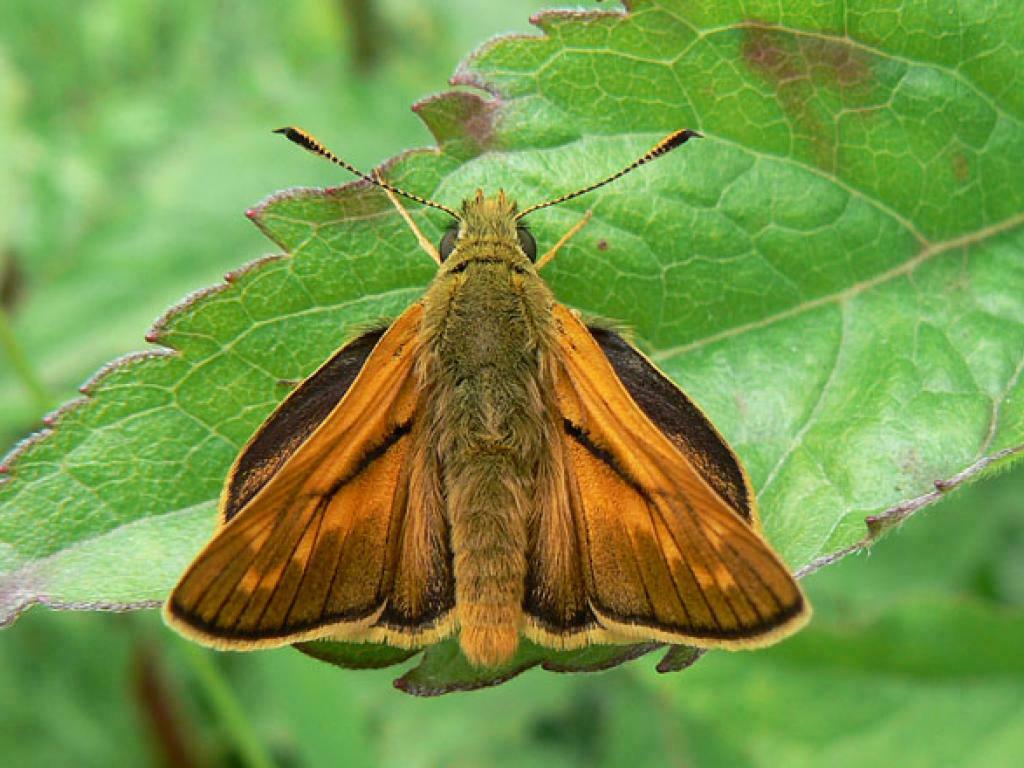
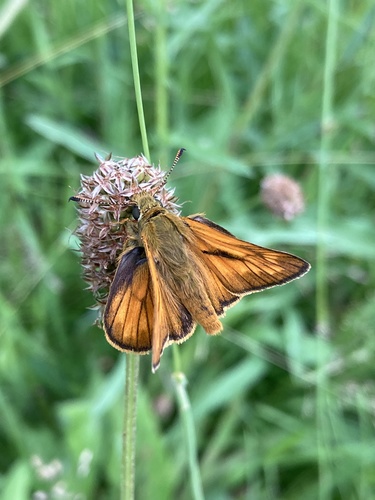
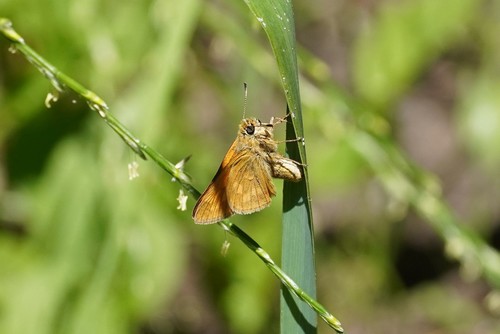
Wings compact with a pale fringe; upperside orange-brown with darker brown borders and a pattern of faint paler orange spots. Forewings of males usually show a short, dark, hair-lined stigma (scent brand) near the leading edge. Underside of hindwing is greenish-yellow to olive with faint pale yellow spots. The wings have rounded forewing tips compared with some other skippers. Body stout and hairy, with relatively short antennae ending in hooked clubs like other skippers.
- Orange-brown wings with darker brown borders and faint paler orange spots on the upperside.
- Male often shows a short dark scent brand (stigma) on the forewing; females lack or have it less distinct.
- Rounded forewing tips and a compact, stocky skipper shape; wingspan 32-37 mm (larger than Small Skipper).
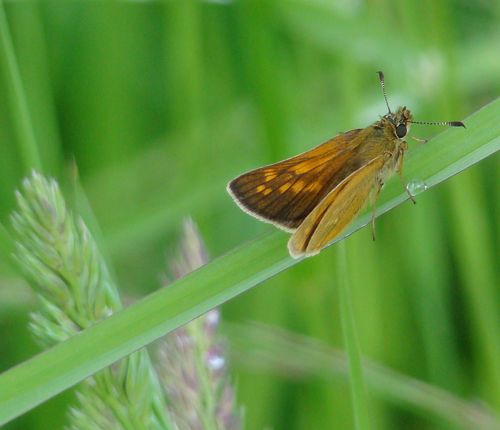
- Underside of hindwing greenish-yellow with faint pale spots; look at wing pattern and size to separate from similar skippers.
Lookalikes
Small skipper Thymelicus sylvestris
Smaller (wingspan 25-30 mm), brighter orange with less brown mottling and a more uniformly orange underside; antenna clubs often more uniformly orange.
Essex skipper Thymelicus lineola
Smaller (about 25-30 mm) and plainer orange without the faint pale spots of the Large skipper; the tips of its antennae are black underneath, whereas the Small skipper's are orange-brown.
Silver-spotted skipper Hesperia comma
Different patterning with distinctive silver or pale spots on the under hindwing and a more strongly marked underside; overall appearance and range of markings differ noticeably.
↻Life cycle
Egg
Females lay single eggs on grass blades or stems near the base. Eggs are small and pale until they hatch.
Larva (caterpillar)
Green caterpillars feed on grasses and create shelters by folding or binding grass blades with silk. Larval development occurs through several instars and the species overwinters as a partially grown caterpillar inside a grass-blade shelter.
Pupa (chrysalis)
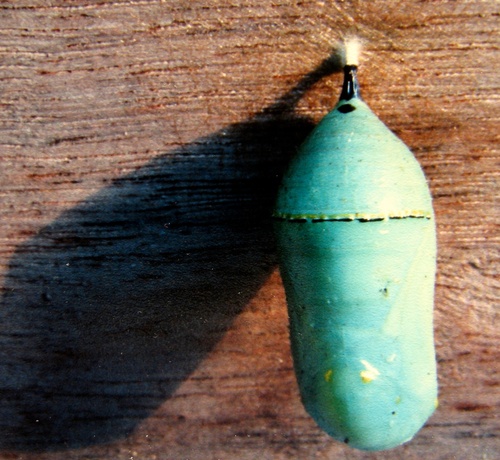
Pupation occurs in a loose cocoon-like structure among grass stems or leaf litter; pupae are compact and inconspicuous.
Adult (butterfly)
Adults emerge in late spring to summer, feed on nectar, mate, and the females lay eggs to start the next generation.
🍃Diet and predators
Young eat
Grasses (e.g., Dactylis, Molinia and other common meadow grasses).
Adults eat
Nectar from a variety of flowers such as bramble, thistles, knapweed and bugle.
Predators of the young
Predatory insects (wasps, robber flies), spiders, small birds and parasitic wasps.
Predators of adults
Birds, dragonflies and other aerial predators; also spiders and insectivorous mammals when resting.
🌱Effect on plants and gardens
Larvae feed on various grasses (for example cock's-foot Dactylis, purple moor-grass Molinia, tussock grasses and other common meadow grasses). Adults nectar on flowers such as bramble, thistles, knapweed and bugle.
📍Where and when to find it
Look along sunny grassy rides, hedgerows, meadow edges and roadside verges. Adults perch on grass stems or low vegetation; caterpillars hide in folded grass blades.
Best time
May to August in most of its range; best observed on warm, calm, sunny days and during mid-morning to late afternoon.
Observation tips
Walk slowly along sunny grassy edges, scan for perching males on grass stems. Use a long lens or low angle for photos to avoid disturbing them; note the chequered wing pattern and scent brand on males for ID.
✨Fun facts
- Males are territorial and will perch repeatedly on a favoured grass stem or twig and dash out to investigate passing insects.
- Caterpillars make portable shelters by folding grass blades and fastening them with silk.
- Although called the Large skipper, it is still a relatively small butterfly compared with many non-skipper species.
?Frequently asked questions
Is the Large skipper dangerous?
No. It is harmless to people and pets. It does not bite or sting.
Why is a Large skipper in my garden?
If you have sunny grassy spots, hedgerows or flower-rich edges, those provide nectar for adults and grasses for larvae, attracting Large skippers.
Do Large skipper caterpillars damage lawns or crops?
No significant damage. Caterpillars feed on common grasses at low densities and are not a pest of lawns or crops.
How can I encourage Large skippers in my garden?
Leave some unmown grassy margins with native grasses for caterpillars and plant nectar-rich flowers such as bramble, knapweed and thistles for adults.
When will I see Large skippers?
Mainly in late spring and summer (typically May to August), on warm sunny days when they are active and nectaring.
📷Photos of the large skipper
More butterflies & moths
This guide was written with AI assistance and fact-checked, last updated 2026-10-10. Identification from photos is never certain: don't handle insects you can't identify, and get medical advice for bites, stings or allergic reactions. More about the large skipper: iNaturalist, Wikipedia.