
Milkweed tussock moth
Euchaetes egle · Tiger and tussock moths
A common North American moth whose hairy, orange-black-white caterpillars feed on milkweed and store plant toxins as a defense.
!Is the milkweed tussock moth dangerous?
Only mildly. Caterpillar hairs can cause mild skin irritation or a rash in sensitive people if handled; not known to be venomous. Adults do not bite or sting. Wash the affected skin with soap and water and avoid rubbing; seek medical advice if a severe reaction occurs.
Pets
Unpalatable to many predators because larvae sequester milkweed toxins; pets are unlikely to eat them because of bitter taste and hairs, but ingestion could cause mild stomach upset. If a pet swallows many caterpillars or shows symptoms, consult a veterinarian.
📖Overview
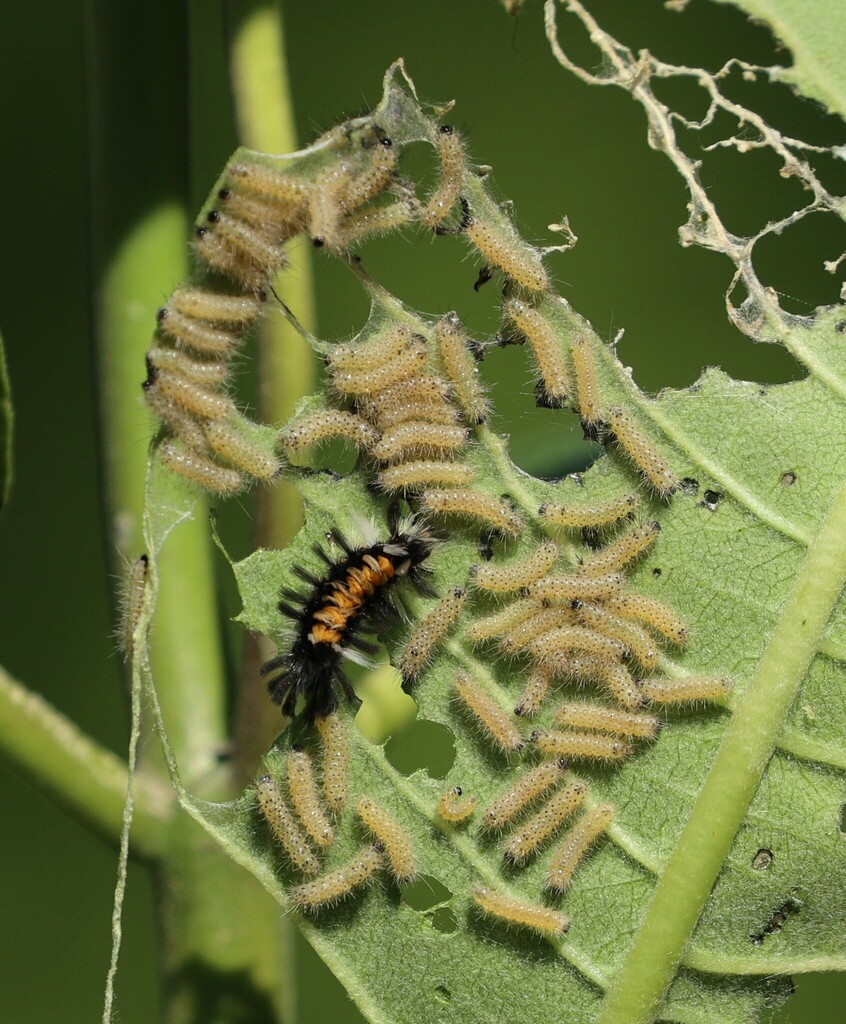
Euchaetes egle is a moth found across much of eastern and central North America. The larval stage (the milkweed tussock caterpillar) is distinctive and often seen feeding in groups on milkweed plants. Caterpillars sequester cardiac glycosides from milkweed, which makes them distasteful to predators and supported by their bright warning colours. Adults are modest, furry moths that do not feed on plants in damaging numbers and are not considered agricultural pests.
🔍How to identify a milkweed tussock moth
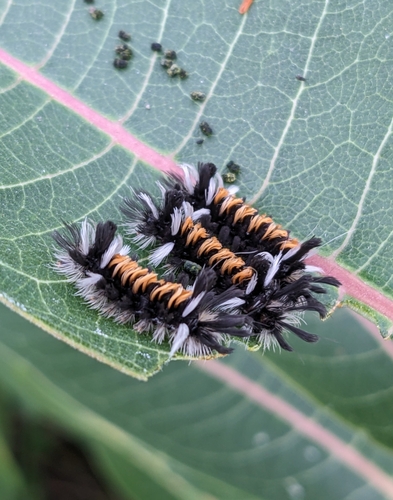
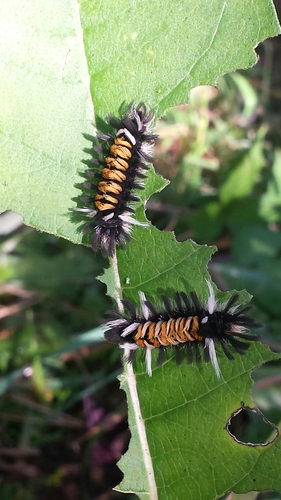
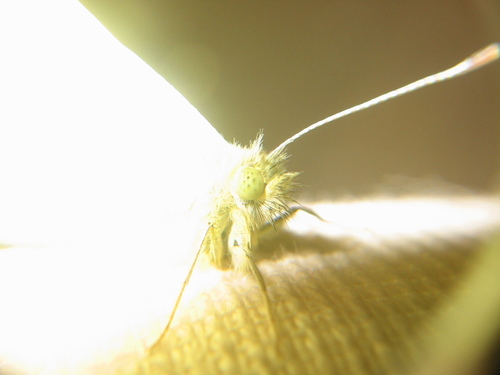
Adult milkweed tussock moths are medium-sized, stout-bodied moths with plain mouse-grey forewings and paler hindwings. The abdomen is yellow with a row of black spots along the top. The caterpillar (larva) is the most noticeable stage: a densely tufted larva with clusters of black, white and orange hairs arranged in rows along the body.
- Look for dense tufts of long hairs on caterpillars with a pattern of black, orange and white tufts arranged along the body.
- Larvae often feed gregariously on milkweed leaves and may be seen in groups on the same plant.
- Adults are plain mouse-grey moths with a yellow, black-spotted abdomen; they lack the bright wing patterns of many related tiger moths.
Lookalikes
Monarch caterpillar Danaus plexippus
Monarchs are smooth-bodied with distinct black white and yellow striping, not hairy tussocks; monarch caterpillars lack the dense tufts of hairs.
Yellow woolly bear Spilosoma virginica
Yellow woolly bear and other tussock-like larvae may share hairiness but differ in tuft arrangement and colour pattern; Euchaetes egle often shows specific black and orange tuft pattern and association with milkweed.
↻Life cycle
Egg
Females lay small clusters of eggs on the underside of milkweed leaves; eggs hatch in about 4-10 days depending on temperature.
Larva (tussock caterpillar)
Several instars; larvae are hairy, gregarious when young, and feed on milkweed leaves, sequestering plant toxins for defense.
Pupa (cocoon)
Larvae pupate inside a silk-and-hair cocoon in leaf litter, on stems or hidden debris; pupation lasts days to weeks depending on season.
Adult moth
Short-lived winged moths that mate and the females lay eggs to start the next generation.
🍃Diet and predators
Young eat
Leaves of milkweeds (Asclepias spp.) and sometimes other Apocynaceae; they ingest and store cardiac glycosides.
Adults eat
Adults may sip nectar but feed little; they do not damage plants.
Predators of the young
Birds, predatory insects and parasitoid wasps and flies; sequestration of milkweed toxins and hairiness reduce predation.
Predators of adults
Bats, nocturnal insectivorous birds, and predatory insects; adult moths are less palatable due to toxins carried over from the larval host in some cases.
🌱Effect on plants and gardens
Larvae feed primarily on milkweed (Asclepias spp.) and sometimes related plants; heavy local feeding can defoliate individual plants but usually does not kill mature plants and is part of natural herbivore pressure.
📍Where and when to find it
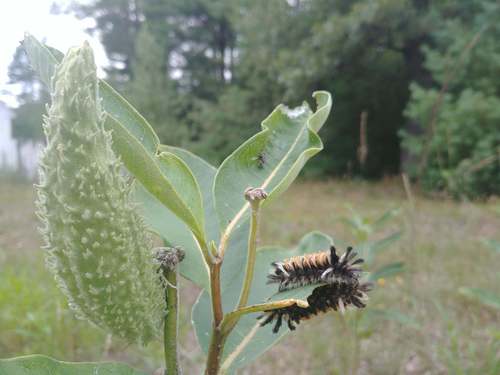
Search milkweed plants (Asclepias species) for eggs and larvae; adults may be seen resting on vegetation at night or near milkweed stands.
Best time
Late spring through summer is best for larvae and adults; daytime for finding clustered larvae on leaves, night for moth activity.
Observation tips
Wear gloves when handling caterpillars or egg masses. Photograph larvae at close range from the side to show tuft arrangement; check the undersides of milkweed leaves for eggs.
✨Fun facts
- Milkweed tussock caterpillars sequester toxic compounds from their host plants to become distasteful to predators.
- Young caterpillars often feed together in groups on the same milkweed plant.
- Their hairy appearance and bright colours are a warning signal to predators (aposematism).
?Frequently asked questions
Do milkweed tussock caterpillars sting?
They do not sting like wasps, but their hairs can cause mild skin irritation or a rash in sensitive people if handled.
Are milkweed tussock moths harmful to milkweed?
They can defoliate individual plants if abundant, but they seldom kill established milkweed and are a natural part of the ecosystem.
How do I get rid of milkweed tussock caterpillars on my plants?
Hand-pick caterpillars or remove leaves with groups of young larvae while wearing gloves. Avoid Bt and other insecticides on milkweed, which also kill monarch caterpillars.
Will these caterpillars harm my pets or children?
They are not venomous. Hairs may irritate sensitive skin if touched; keep children and pets from handling them and wash skin if contact occurs.
Why are they on my milkweed plants?
Milkweed is their preferred food plant. Females lay eggs there so larvae have an immediate food source.
📷Photos of the milkweed tussock moth


More butterflies & moths
This guide was written with AI assistance and fact-checked, last updated 2026-10-10. Identification from photos is never certain: don't handle insects you can't identify, and get medical advice for bites, stings or allergic reactions. More about the milkweed tussock moth: iNaturalist, Wikipedia.