
Virginian tiger moth vs Milkweed tussock moth
These two are easy to mix up. Here's how to tell a virginian tiger moth from a milkweed tussock moth, and whether either one bites or stings.
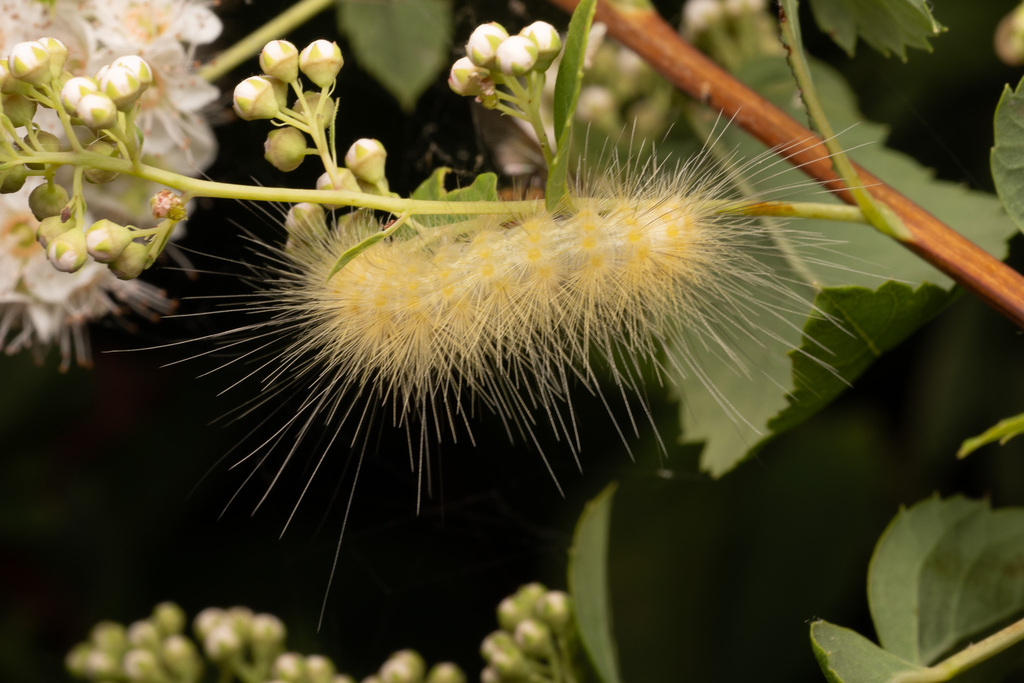
Virginian tiger moth
Spilosoma virginica
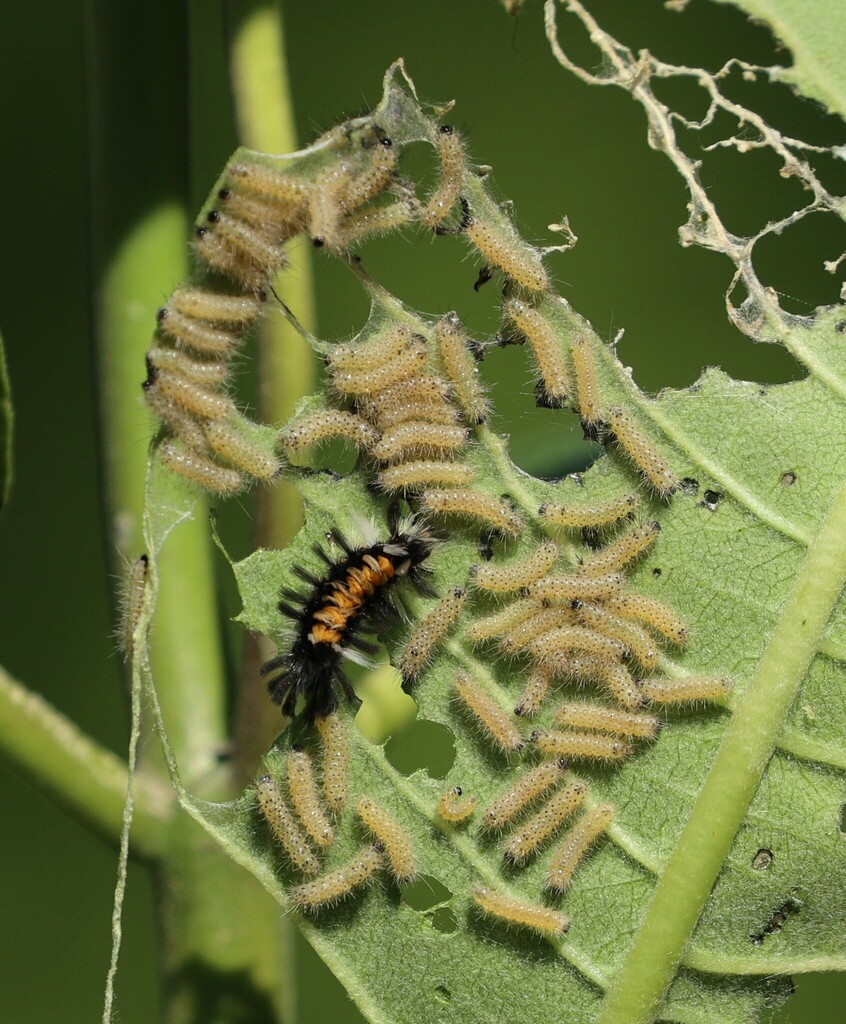
Milkweed tussock moth
Euchaetes egle
≠The key differences
Yellow woolly bear and other tussock-like larvae may share hairiness but differ in tuft arrangement and colour pattern; Euchaetes egle often shows specific black and orange tuft pattern and association with milkweed.
⚖︎Side by side
| Virginian tiger moth | Milkweed tussock moth | |
|---|---|---|
| To humans | Irritating hairs | Irritating hairs |
| Size | 30-50 mm wingspan | Wingspan about 30-40 mm |
| Colours | Cream, White, Pale yellow, Rusty orange (larva), Black (larva) | White, Light grey, Black, Orange |
| Family | Erebidae | Erebidae |
| Habitat | Open woodlands, gardens, fields, roadsides and disturbed areas; larvae feed on a wide range of herbaceous and woody plants. | Open fields, meadows, roadsides and gardens where milkweed (Asclepias) grows; also edges of woodlands. |
| Range | Across most of North America, from southern Canada south through the United States; widespread in suitable habitats. | Much of eastern and central North America, from southern Canada through the United States; records extend into parts of the central plains. |
| Active | Spring through fall; adults mainly at night (nocturnal) and attracted to lights. Multiple generations per year in warmer parts of its range. | Larvae most often seen late spring through summer; adults fly in late spring and summer (varies by latitude). Mostly nocturnal but can be found at rest by day. |
| Pest? | Yes | No |
🔍How to spot a virginian tiger moth
- Adults: white moth with a 30-50 mm wingspan, a few small black dots on the wings, and a yellow-orange abdomen with rows of black spots.
- Larvae: very hairy 'woollybear' caterpillar, colour variable from orange/rust to black and densely covered in long setae.
- Cocoon: loose silk cocoon incorporating larval hairs in soil or leaf litter.
- Flight: nocturnal and commonly attracted to porch and street lights in summer.
🔍How to spot a milkweed tussock moth
- Look for dense tufts of long hairs on caterpillars with a pattern of black, orange and white tufts arranged along the body.
- Larvae often feed gregariously on milkweed leaves and may be seen in groups on the same plant.
- Adults are plain mouse-grey moths with a yellow, black-spotted abdomen; they lack the bright wing patterns of many related tiger moths.
?Frequently asked questions
What is the difference between a virginian tiger moth and a milkweed tussock moth?
Yellow woolly bear and other tussock-like larvae may share hairiness but differ in tuft arrangement and colour pattern; Euchaetes egle often shows specific black and orange tuft pattern and association with milkweed.
Is a virginian tiger moth or a milkweed tussock moth more dangerous?
Virginian tiger moth: Irritating hairs. Milkweed tussock moth: Irritating hairs. Adults are harmless and do not bite or sting. Caterpillar hairs can cause mild skin irritation or a rash in sensitive people if handled; not known to be venomous.
Identification from photos is never certain: don't handle insects you can't identify, and get medical advice for bites, stings or allergic reactions.