
Virginian tiger moth vs Giant leopard moth
These two are easy to mix up. Here's how to tell a virginian tiger moth from a giant leopard moth, and whether either one bites or stings.
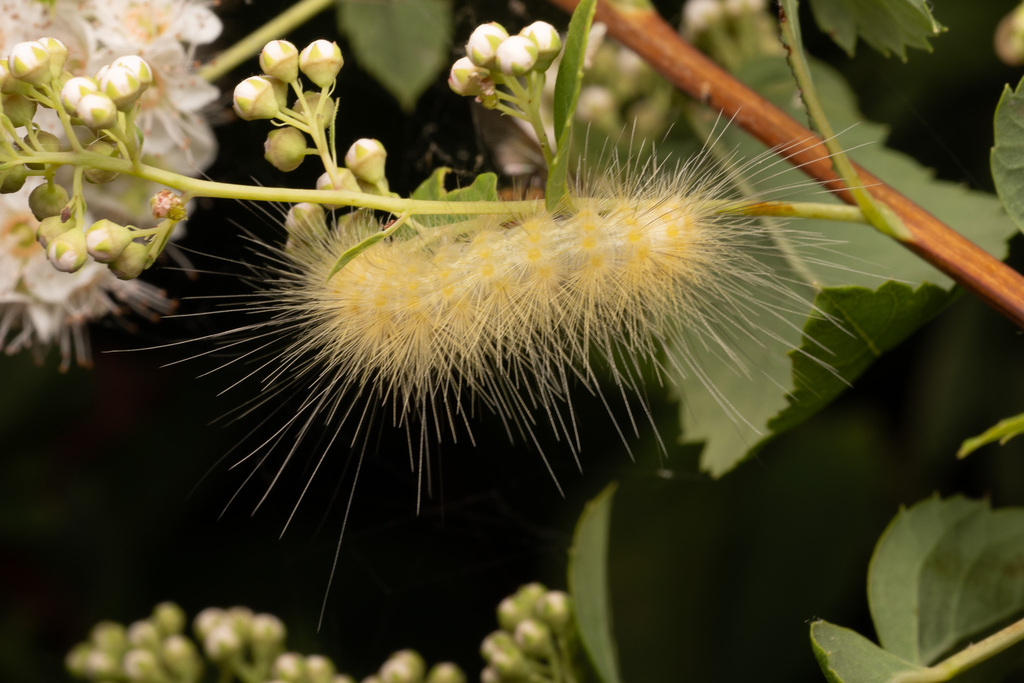
Virginian tiger moth
Spilosoma virginica
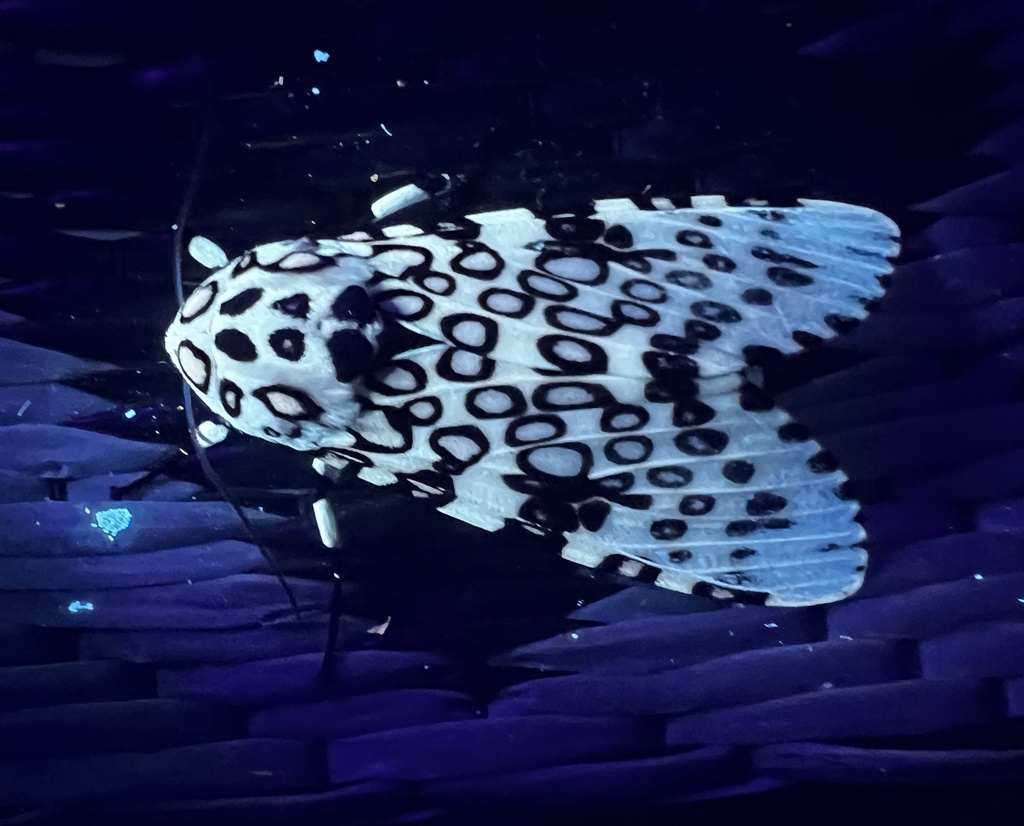
Giant leopard moth
Hypercompe scribonia
≠The key differences
Virginian tiger moths are smaller, mostly plain white with only a few tiny black dots, and have a yellow abdomen with black spots instead of the blue-black and orange abdomen of Hypercompe scribonia.
⚖︎Side by side
| Virginian tiger moth | Giant leopard moth | |
|---|---|---|
| To humans | Irritating hairs | Non-toxic |
| Size | 30-50 mm wingspan | About 60-90 mm wingspan |
| Colours | Cream, White, Pale yellow, Rusty orange (larva), Black (larva) | White, Black, Red-orange, Cream |
| Family | Erebidae | Erebidae |
| Habitat | Open woodlands, gardens, fields, roadsides and disturbed areas; larvae feed on a wide range of herbaceous and woody plants. | Woodland edges, gardens, fields, suburban areas where larval host plants are available |
| Range | Across most of North America, from southern Canada south through the United States; widespread in suitable habitats. | Eastern and southern North America, from southern Ontario through the eastern and southern United States, south through Mexico into Central America |
| Active | Spring through fall; adults mainly at night (nocturnal) and attracted to lights. Multiple generations per year in warmer parts of its range. | Adults are most often seen from spring through fall (region dependent), and are primarily nocturnal |
| Pest? | Yes | No |
🔍How to spot a virginian tiger moth
- Adults: white moth with a 30-50 mm wingspan, a few small black dots on the wings, and a yellow-orange abdomen with rows of black spots.
- Larvae: very hairy 'woollybear' caterpillar, colour variable from orange/rust to black and densely covered in long setae.
- Cocoon: loose silk cocoon incorporating larval hairs in soil or leaf litter.
- Flight: nocturnal and commonly attracted to porch and street lights in summer.
🔍How to spot a giant leopard moth
- Large white moth with bold irregular black rings and spots on the wings.
- Iridescent dark blue abdomen with orange markings, visible when wings are open or when disturbed.
- Larvae are black, bristly 'woolly bears' that curl into a ring when touched, revealing red bands between the segments.
- Wingspan about 60-90 mm — noticeably larger than many common white-and-black moths.
?Frequently asked questions
What is the difference between a virginian tiger moth and a giant leopard moth?
Virginian tiger moths are smaller, mostly plain white with only a few tiny black dots, and have a yellow abdomen with black spots instead of the blue-black and orange abdomen of Hypercompe scribonia.
Is a virginian tiger moth or a giant leopard moth more dangerous?
Virginian tiger moth: Irritating hairs. Giant leopard moth: Non-toxic. Adults are harmless and do not bite or sting. Adults do not bite or sting.
Identification from photos is never certain: don't handle insects you can't identify, and get medical advice for bites, stings or allergic reactions.