
Cabbage white vs Box tree moth
These two are easy to mix up. Here's how to tell a cabbage white from a box tree moth, and whether either one bites or stings.
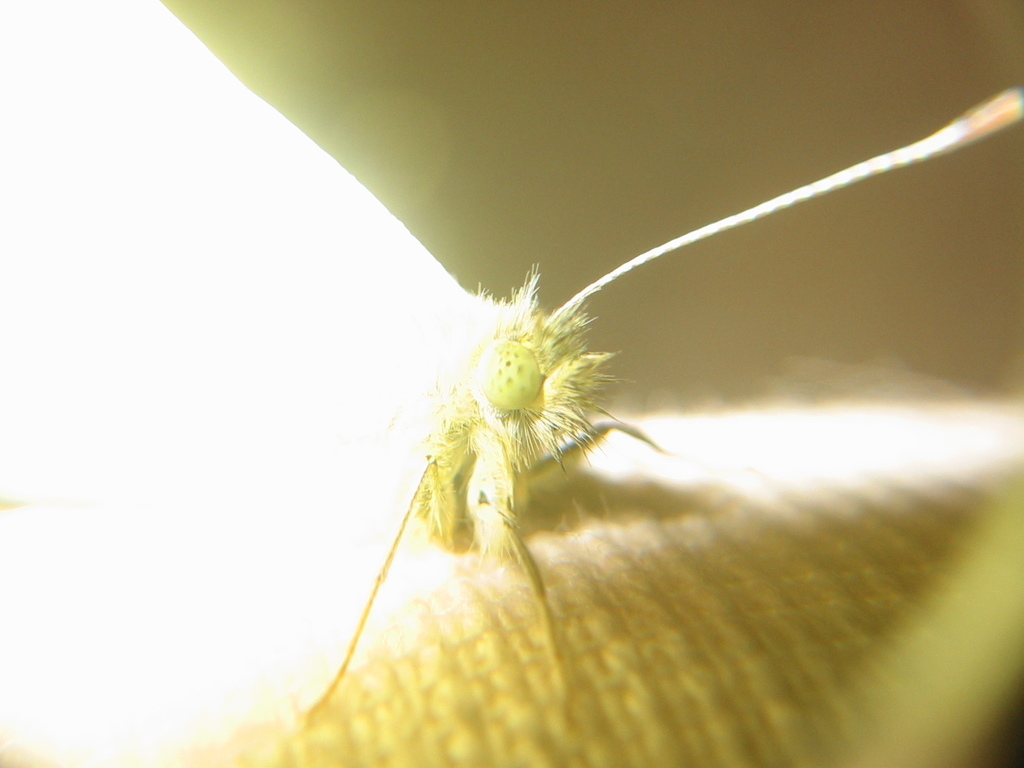
Cabbage white
Pieris rapae
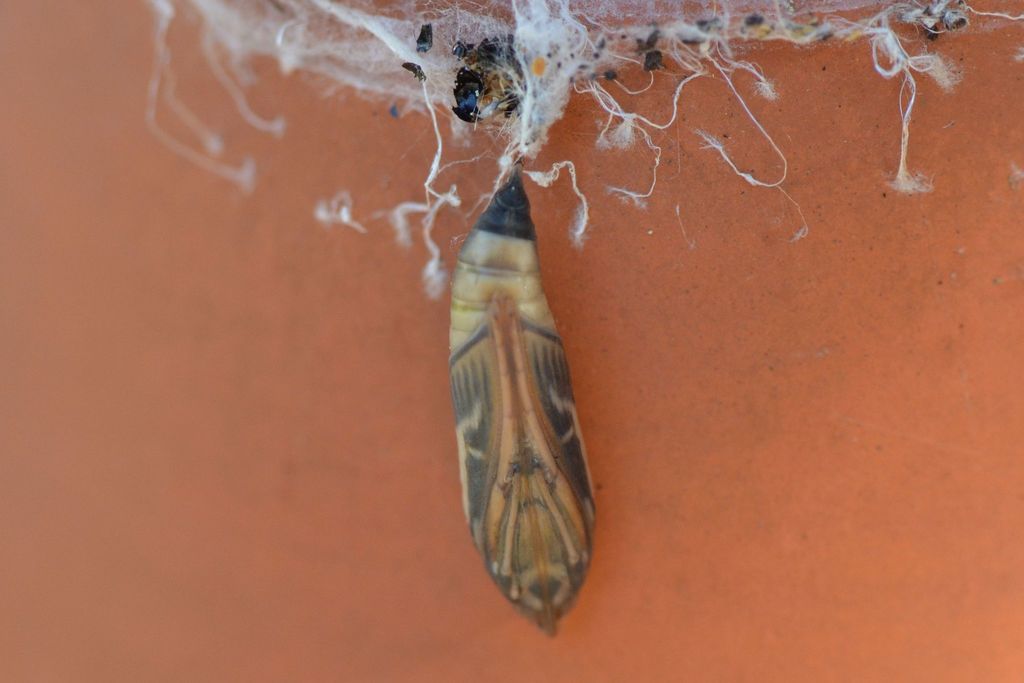
Box tree moth
Cydalima perspectalis
≠The key differences
Pieris has plain white wings with black tips or spots and lacks the dark marginal band and central discal spot pattern seen on Cydalima perspectalis; Pieris caterpillars feed on brassicas, not boxwood.
⚖︎Side by side
| Cabbage white | Box tree moth | |
|---|---|---|
| To humans | Non-toxic | Non-toxic |
| Size | 32-47 mm wingspan | 35-45 mm wingspan |
| Colours | White, Black, Pale yellow, Green (caterpillar) | White, Dark brown (wing border), Purple sheen (iridescence), Green (larva), Yellow (larva pale forms), Black (spots) |
| Family | Pieridae | Crambidae |
| Habitat | Open areas, gardens, agricultural fields, roadsides, parks and wasteland where host brassicas grow | Where boxwood grows: gardens, hedges, parks, and woodland edges where Buxus species are present |
| Range | Native to Eurasia and North Africa; introduced and now common across North America, Australia, New Zealand and parts of South America and other temperate areas | Native to East Asia; invasive across much of Europe since the 2000s and reported in parts of North America (first records in the 2010s). Spread follows areas where boxwood is cultivated. |
| Active | Spring to autumn (multiple broods in warm regions); diurnal, most active in warm sunny weather | Multiple generations in spring through autumn (typically April-October in temperate regions); adults fly mainly at dusk and night |
| Pest? | Yes | Yes |
🔍How to spot a cabbage white
- White wings with a dark black apex on the forewing
- One black spot on each forewing in males; females have two black spots
- Underside of hindwing pale yellow to greenish
- Green smooth caterpillars on brassica leaves
🔍How to spot a box tree moth
- Adults: white wings with a broad dark brown border and a small white crescent-shaped spot in the brown band on each forewing (some moths are almost entirely brown)
- Larvae: green to yellow-green caterpillars up to about 40 mm with a black head, dark and white stripes and rows of black spots, often feeding with webbing and frass
- Damage: rapid defoliation of Buxus shrubs with brown frass and silky webbing visible on affected plants
- Flight time and habitat: nocturnal adults near boxwood plantings and crowded hedges
?Frequently asked questions
What is the difference between a cabbage white and a box tree moth?
Pieris has plain white wings with black tips or spots and lacks the dark marginal band and central discal spot pattern seen on Cydalima perspectalis; Pieris caterpillars feed on brassicas, not boxwood.
Is a cabbage white or a box tree moth more dangerous?
Cabbage white: Non-toxic. Box tree moth: Non-toxic. Adults and caterpillars are not venomous and do not bite or sting. Box tree moth is not dangerous or venomous to people.
Identification from photos is never certain: don't handle insects you can't identify, and get medical advice for bites, stings or allergic reactions.