
Cabbage white
Pieris rapae · White butterflies
A small white butterfly whose green caterpillars commonly feed on cabbages and other brassicas and are a frequent garden pest.
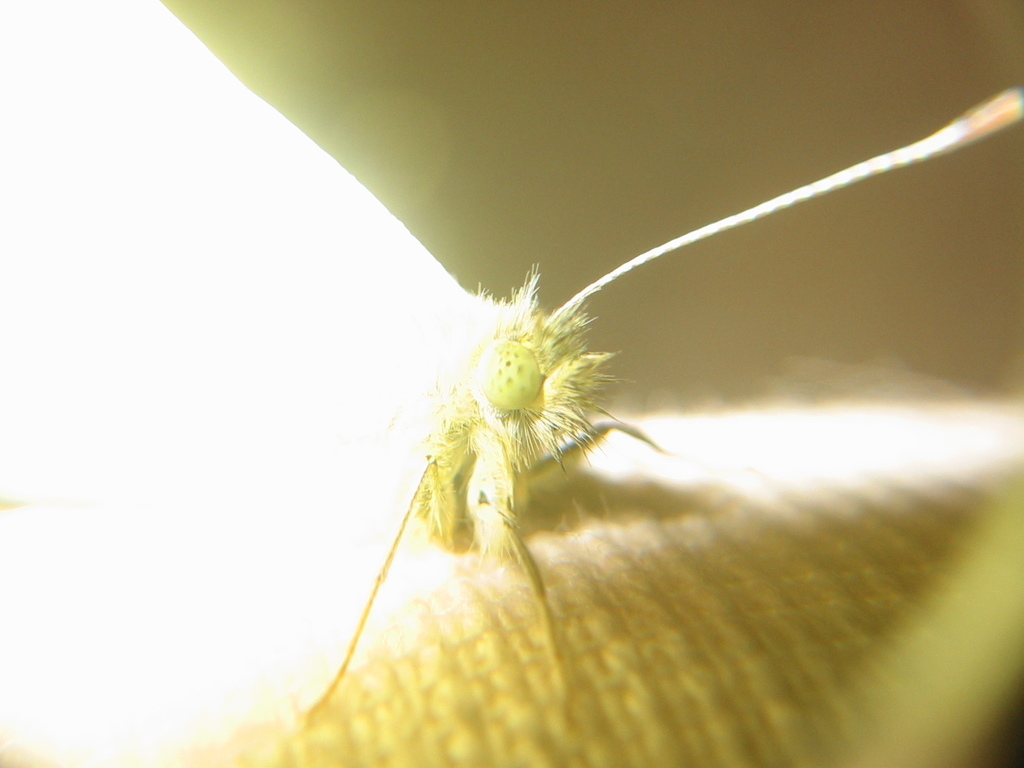
!Is the cabbage white dangerous?
No. Adults and caterpillars are not venomous and do not bite or sting. The caterpillars have only short, velvety hairs that are not irritating. No first aid is needed.
Pets
Not toxic to pets. Eating many caterpillars could upset a pet's stomach but they are not known to be poisonous.
📖Overview
Pieris rapae is a small, widespread white butterfly originally from Eurasia that has been introduced to North America, Australia, New Zealand and other temperate regions. Adults are active in daylight, feed on flower nectar, and lay eggs on brassica plants. The larvae (caterpillars) are green and feed on leaves of cabbage, kale, broccoli and related crops, sometimes causing noticeable damage in gardens and farms. Multiple generations occur each year in warm climates.
🔍How to identify a cabbage white
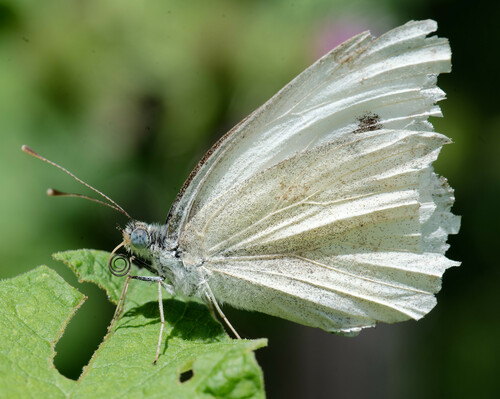
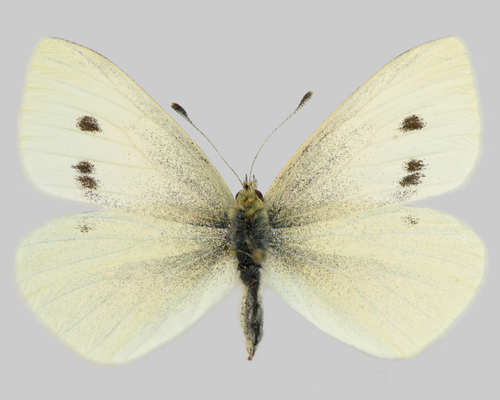
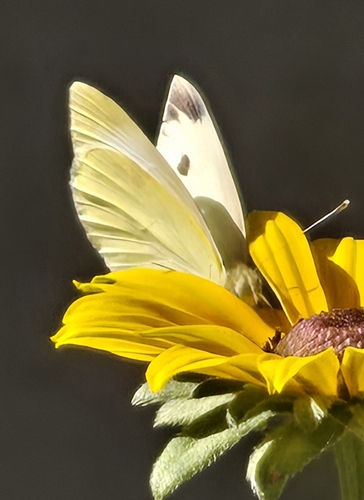
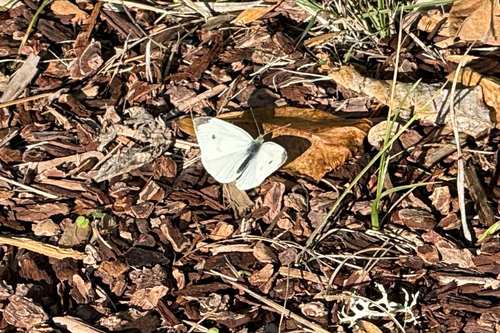
Adults are mostly white with rounded wings. Forewings have a dark (black) apex patch; females show two black spots on each forewing (males one). The undersides of the hindwings are pale yellow to greenish, more noticeable in worn specimens. The caterpillars are smooth, pale to bright green with faint yellowish stripes and a tapered shape. Pupae are compact, green or brownish chrysalises often attached to stems or structures.
- White wings with a dark black apex on the forewing
- One black spot on each forewing in males; females have two black spots
- Underside of hindwing pale yellow to greenish
- Green smooth caterpillars on brassica leaves
Lookalikes
Large white Pieris brassicae
Larger (wingspan about 55-65 mm) with a bolder black forewing tip that extends down the outer edge; males lack upperside forewing spots, while females have two.
Green-veined white Pieris napi
Underside of hindwing has distinct greenish veins; wing tips less uniformly dark than Pieris rapae.
↻Life cycle
Egg
Tiny yellow to orange, conical eggs laid singly on the undersides of host plant leaves; hatch in about 4-8 days depending on temperature.
Larva (caterpillar)
Green smooth caterpillars that feed on leaves for 2-4 weeks through several instars; this stage does most plant damage.
Pupa (chrysalis)
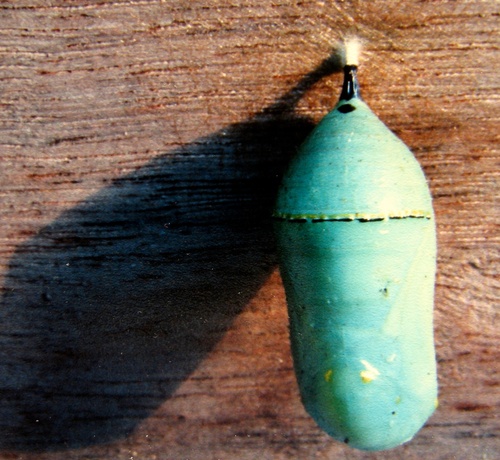
Pupa is a compact chrysalis attached to stems, leaves or man-made structures; transformation to adult takes about 1-2 weeks depending on conditions.
Adult (butterfly)
Adults fly, mate and visit flowers for nectar; females lay eggs on host plants and several generations can occur per year.
🍃Diet and predators
Young eat
Leaves of Brassicaceae (cabbage, kale, broccoli, mustard, canola) and related wild brassicas
Adults eat
Nectar from a variety of flowers (dandelion, clover, thistles and many garden flowers)
Predators of the young
Parasitoid wasps, predatory insects, birds and small mammals
Predators of adults
Birds, dragonflies, spiders and other insectivores
🌱Effect on plants and gardens
Larvae feed on Brassicaceae (cabbage, kale, broccoli, mustard, canola and related weeds). Heavy infestations can defoliate plants and reduce crop quality.
How to get rid of cabbage whites
Use row covers to prevent egg-laying, hand-pick caterpillars and eggs from plants, encourage natural enemies (parasitoid wasps, birds), crop rotation and remove weeds in the mustard family. Bacillus thuringiensis kurstaki (Bt) targets lepidopteran larvae and is effective when applied to young caterpillars; use according to label. Chemical insecticides are available but follow integrated pest management principles and local regulations.
📍Where and when to find it
Adults: visiting flowers in gardens, parks and fields. Eggs and caterpillars: undersides of brassica leaves. Pupae attached to stems, fences or buildings.
Best time
Spring through early autumn; sunny warm days when butterflies are active, typically late morning to mid-afternoon.
Observation tips
Look on undersides of brassica leaves for small yellow eggs and green caterpillars; photograph adults on flowers from a short distance with minimal disturbance.
✨Fun facts
- Pieris rapae was accidentally introduced to North America in the 19th century and spread rapidly across the continent.
- Because they use cultivated brassicas, they are one of the most familiar butterfly pests to gardeners and farmers.
- Adults can fly relatively long distances and produce several generations per year in warm climates.
?Frequently asked questions
Do cabbage white butterflies bite or sting?
No. Adults do not bite or sting; they only feed on nectar. Caterpillars do not bite people.
Are cabbage white caterpillars harmful to my garden?
Yes, their caterpillars feed on leaves of cabbages, kale, broccoli and related crops and can cause significant damage if numerous.
How do I get rid of cabbage white caterpillars?
Use physical barriers like row covers, hand-pick caterpillars and eggs, encourage natural enemies, or apply Bt (Bacillus thuringiensis kurstaki) to young caterpillars. Follow integrated pest management practices.
Why are these butterflies in my house?
Adults may enter houses accidentally while searching for nectar or shelter; caterpillars are usually found only on host plants, not indoors.
How many generations do they have per year?
Multiple generations per year (often 2-4) in temperate regions; more generations are possible in warmer climates.
📷Photos of the cabbage white
More butterflies & moths
This guide was written with AI assistance and fact-checked, last updated 2026-10-09. Identification from photos is never certain: don't handle insects you can't identify, and get medical advice for bites, stings or allergic reactions.