
European peacock
Aglais io · Brush-footed butterflies
A striking, common European butterfly with large eye spots on red-orange wings; larvae feed on nettles and adults hibernate over winter.
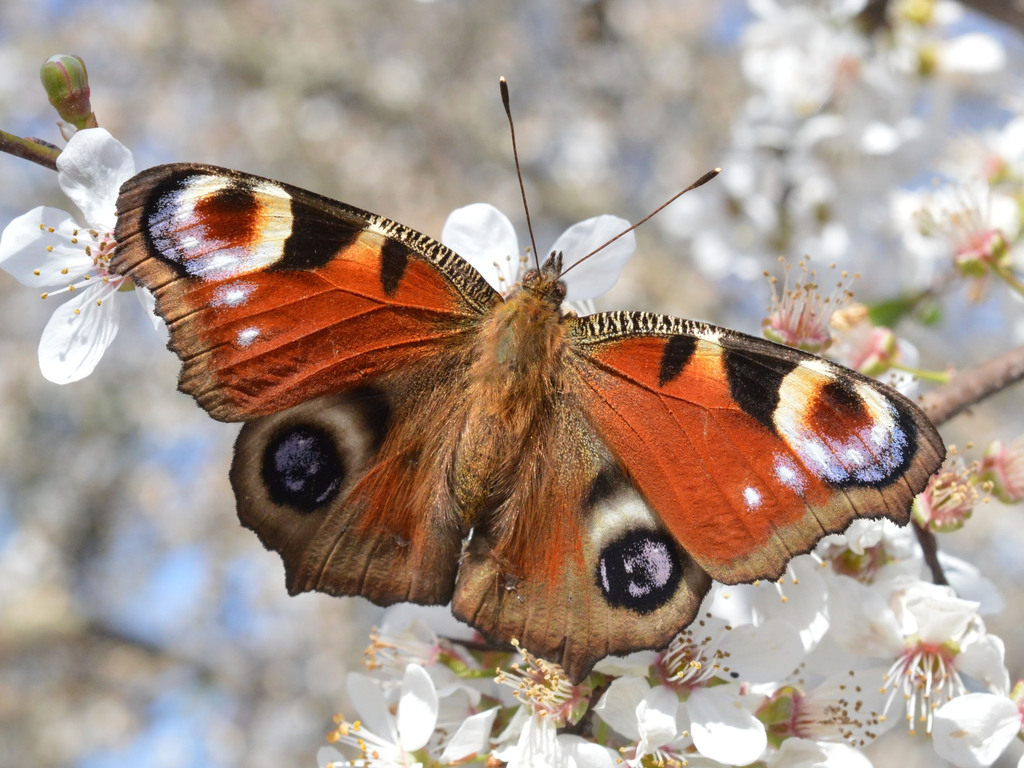
!Is the european peacock dangerous?
No. Does not bite or sting. Handling can damage the wings, so avoid touching the wing surfaces. If an adult is found indoors and appears torpid, move it gently outside on a warm day or provide a sheltered spot for release.
Pets
Not harmful to cats, dogs or other pets. Small children or pets could accidentally damage the butterfly but are unlikely to be affected themselves.
📖Overview
The European peacock (Aglais io) is a widespread and easily recognized butterfly across Europe and temperate parts of Asia. Adults are territorial, slow-flying and often seen sunning on warm days; they are important nectar feeders and pollinators. The species overwinters as an adult (hibernates) in sheltered places and usually has one brood per year, with a partial second brood in warmer areas. Larvae feed primarily on common nettles, so populations are frequently associated with nettle patches near gardens, hedgerows and wasteland.
Peacock butterflies are not dangerous to people. They do not sting or bite in any way that is harmful; their main defenses are startling eye spots and a hissing sound made by rubbing their wings together. They are not considered agricultural pests and are generally beneficial as pollinators and part of local biodiversity.
🔍How to identify a european peacock
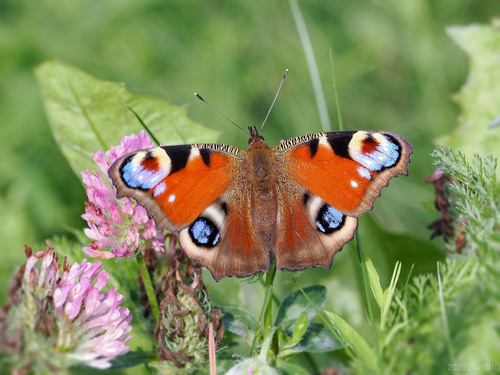
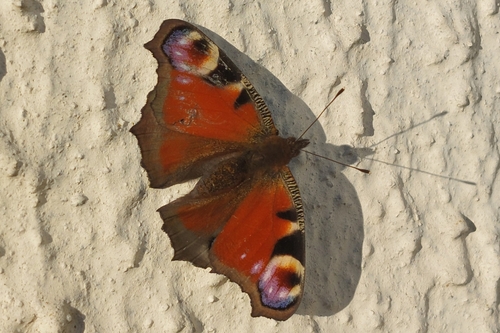
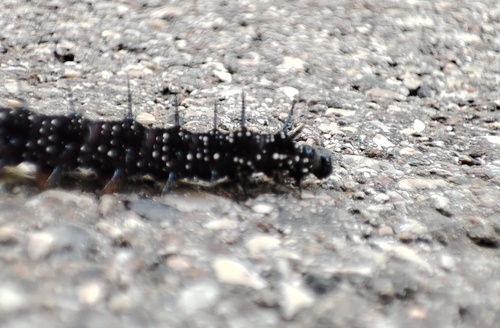
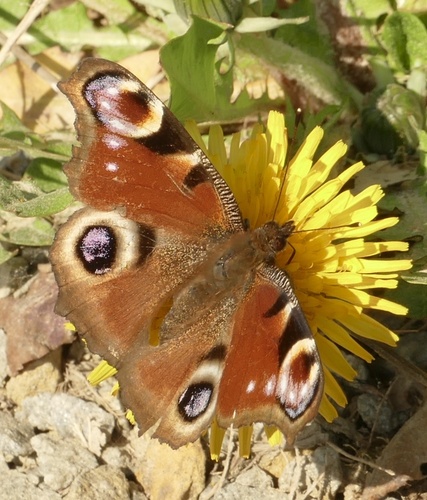
Adult peacock butterflies have a wide red-orange dorsal wing background with four prominent eye spots (one on each forewing and one on each hindwing). The wing margins are dark brown to black with a scalloped outline. The ventral (underside) wings are dark, cryptic and mottled, helping the butterfly blend in when its wings are closed. Body and legs are covered in fine dark hairs. Caterpillars are black with rows of small white dots and covered in short spines; they feed gregariously when young. Chrysalises are compact, angular and usually brown or greenish with metallic spots.
- Large, red-orange wings with four prominent blue-centered eye spots (one on each wing).
- Dark scalloped wing margins and a cryptic mottled underside when wings are closed.
- Wingspan about 50-70 mm; slow, direct flight and frequent sun-basking.
Lookalikes
Small tortoiseshell Aglais urticae
Smaller with more mottled orange and black pattern and less distinct round blue eye spots; wing edges more jagged.
Comma Polygonia c-album
Comma has angular wings and a pale 'comma' mark on the underside; lacks the large round eyespots of the peacock.
↻Life cycle
Egg
Females lay large batches of pale green eggs on the underside of nettle leaves near food for the hatchlings.
Larva (caterpillar)
Black, spiny caterpillars feed gregariously on nettles and grow through several instars over 2-4 weeks depending on temperature.
Pupa (chrysalis)
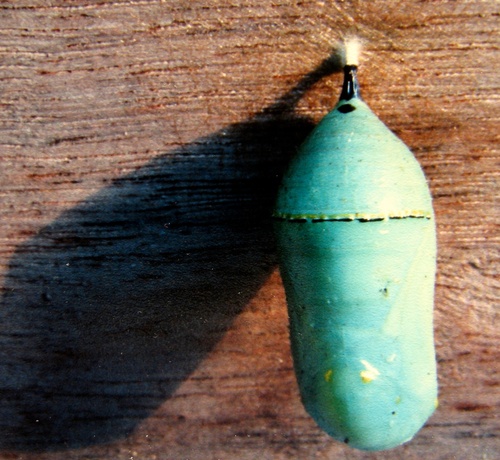
Pupation occurs on nearby stems or sheltered spots; the chrysalis is compact and often has metallic spots.
Adult (butterfly)
Adults emerge, feed on nectar, mate and may produce one or more broods per year; adults also hibernate through winter in sheltered sites.
🍃Diet and predators
Young eat
Leaves of nettles (Urtica dioica) and occasionally related plants.
Adults eat
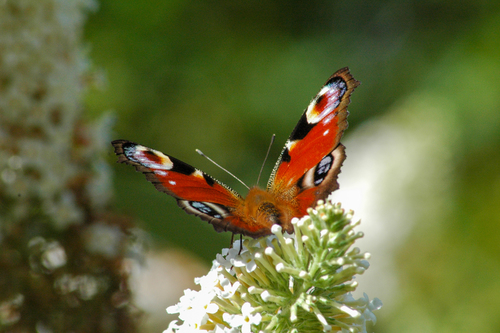
Nectar from a wide range of flowering plants such as buddleia, thistles, knapweeds and brambles.
Predators of the young
Predatory wasps, birds, spiders and parasitic flies and wasps.
Predators of adults
Birds, small mammals and predatory insects; adults flash their eye spots and make a hissing sound with their wings to deter predators.
🌱Effect on plants and gardens
Larvae feed mainly on common nettle (Urtica dioica) and sometimes on related plants; adults feed on nectar from a variety of flowers and act as pollinators.
📍Where and when to find it
Look for adults sunning on open, sheltered spots (walls, fence posts, flowers) and near nettle patches. Caterpillars and eggs are found on common nettles.
Best time
Best seen from spring through autumn on sunny days; hibernating adults may be found in autumn and winter in sheltered places.
Observation tips
Search nettle patches for clusters of eggs or group-feeding caterpillars. For photos, approach slowly and shoot in bright light or when the butterfly is basking with wings open.
✨Fun facts
- Peacock butterflies overwinter as adults and can survive cold months by sheltering in barns, hollow trees or buildings.
- When disturbed they flash their large eyespots and make a hissing sound by rubbing their wings together, which can scare off birds and mice.
- They are a common early spring sight because hibernating adults warm up and become active on sunny days.
?Frequently asked questions
Do peacock butterflies bite or sting?
No. They do not have biting or stinging structures dangerous to people.
Are peacock butterflies poisonous?
No. They are not poisonous to people or pets.
Why is a peacock butterfly in my house?
Adults sometimes enter buildings in autumn seeking sheltered hibernation spots or may accidentally get inside while nectaring or during warm spells.
How can I get rid of one in my house?
Gently capture it in a container and release it outside near flowers on a warm, sunny day. Avoid touching the wings to prevent damage.
Where does the peacock butterfly live?
It lives across Europe and temperate Asia in habitats with nettles and nectar sources: gardens, meadows, hedgerows and woodland edges.
📷Photos of the european peacock
More butterflies & moths
This guide was written with AI assistance and fact-checked, last updated 2026-10-09. Identification from photos is never certain: don't handle insects you can't identify, and get medical advice for bites, stings or allergic reactions.