
Saddleback caterpillar moth
Acharia stimulea · Slug caterpillars
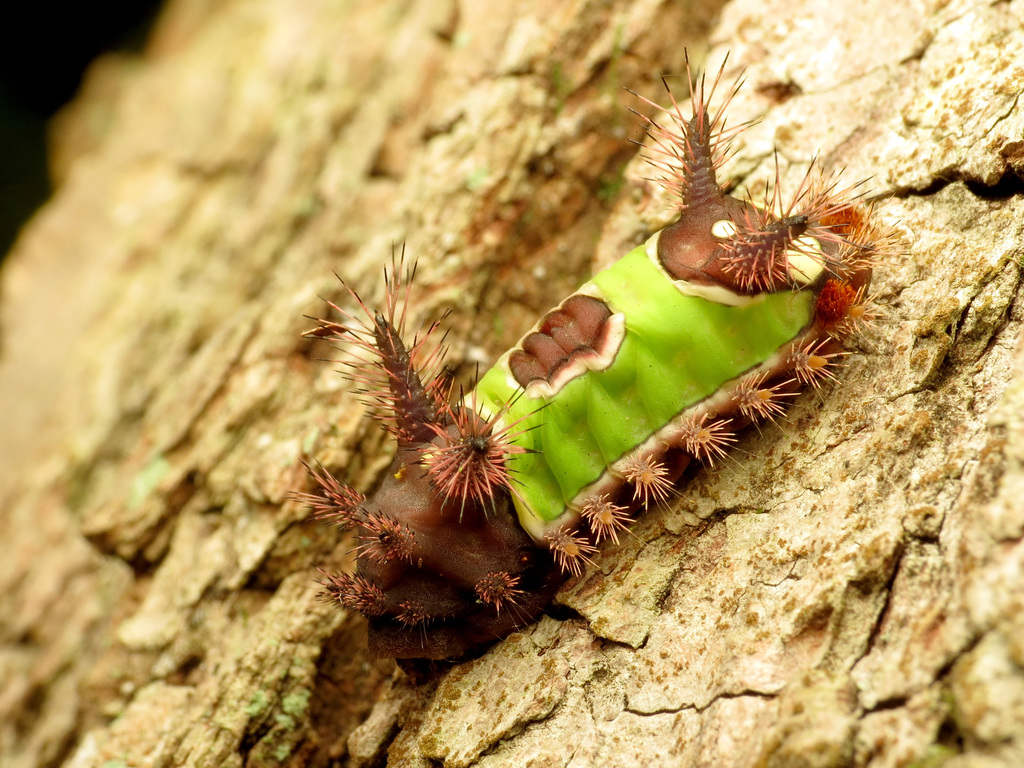
Distinctive green, brown-and-white 'saddle' caterpillar whose urticating spines deliver a painful sting and which feeds on many trees and shrubs.
!Is the saddleback caterpillar moth dangerous?
Yes, it can be. The caterpillar has hollow, venomous spines that can break off in skin and cause an immediate sharp pain followed by redness, swelling, itching, and sometimes blistering or a rash that can last several days. Severe allergic reactions are rare but possible. First aid: do not rub the area; remove spines with adhesive tape, wash with soap and water, apply cold compresses to reduce pain and swelling, use topical corticosteroid cream or oral antihistamines for itching. Seek medical attention if symptoms are severe, widespread, or if breathing or swallowing is affected.
Pets
Pets that mouth or handle the caterpillar can get painful localized reactions; small animals may be more affected. Contact a veterinarian if a pet shows swelling, difficulty breathing, excessive drooling, or signs of severe pain.
📖Overview
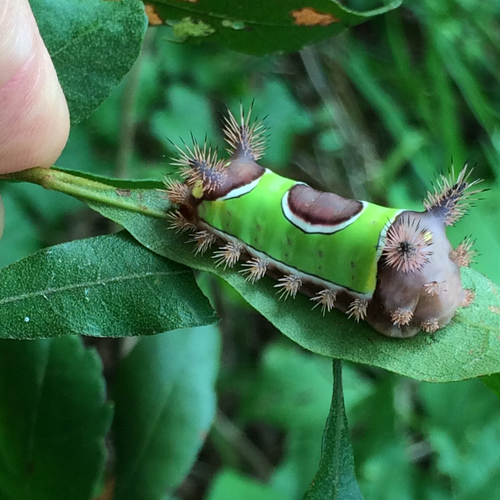
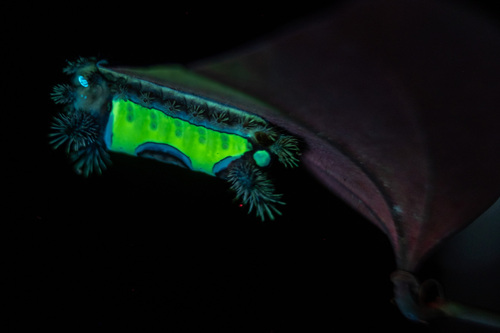
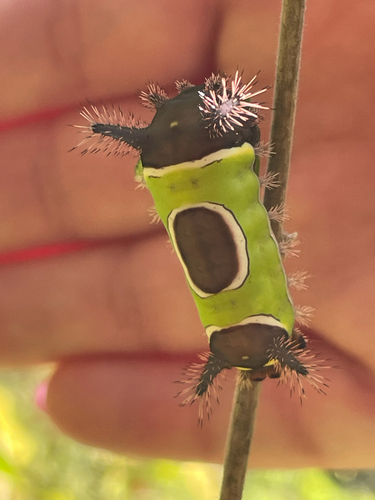
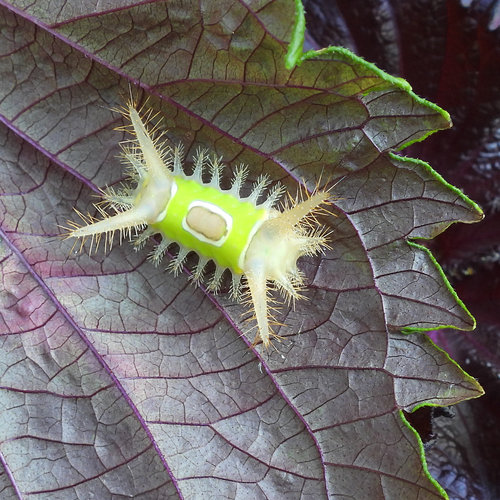
Acharia stimulea is a small moth (family Limacodidae) best known for its striking larval stage, the saddleback caterpillar. The caterpillar is broad and flattened with a bright green central patch and a contrasting brown "saddle" mark edged in white and purple; both ends bear clusters of venomous, hairlike spines. Adults are small, stout-bodied moths that are relatively inconspicuous. The species is polyphagous and occurs across much of the eastern United States. The caterpillar's sting can cause painful local reactions in people and pets, though serious systemic reactions are uncommon.
🔍How to identify a saddleback caterpillar moth
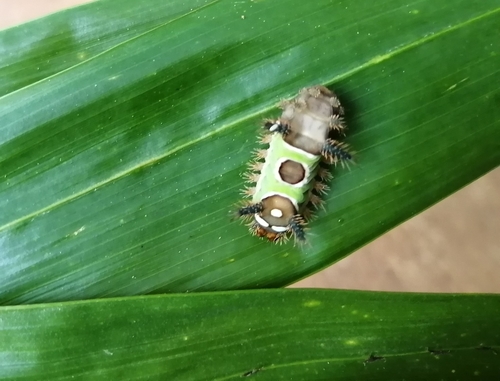
Larva: broad, flattened slug-like caterpillar about 2-3 cm long when mature, bright green in the middle with a distinct brown or reddish-brown oval 'saddle' patch surrounded by white and purple borders. Both anterior and posterior regions bear fleshy protuberances (called scoli) tipped with short, hollow urticating spines that break off and inject irritating toxins. Early instars are small and less colorful but already bear stinging spines. Adult moth: small (wingspan about 26-43 mm), forewings and hindwings plain brown to gray with subtle patterning; stout body and a typical moth posture when resting.
- Look for a bright green caterpillar with a distinct brown oval 'saddle' patch edged in white and purple on its back.
- Note the broad, flattened slug-like body and the clusters of short stinging spines at both ends (anterior and posterior).
- Adult moths are small, plain brown; identification is best done using the larval form.
Lookalikes
Hag moth caterpillar Phobetron pithecium
Hag moth larvae are brown and hairy with long, twisted fleshy lobes along the sides (resembling a shed tarantula skin), not the flat green-bodied 'saddle' pattern of Acharia stimulea; they can also sting.
Other slug caterpillars Family Limacodidae (various)
Many limacodid larvae have stinging spines but differ in color and pattern; the saddleback's central green field with a contrasting brown saddle and white border is diagnostic.
↻Life cycle
Egg
Females lay clusters of eggs on host plant leaves or stems; eggs hatch in several days to a couple of weeks depending on temperature.
Larva (saddleback caterpillar)
Several instars; caterpillars feed on foliage and grow to about 2-3 cm with the characteristic saddle marking and stinging spines.
Pupa (cocoon)
Larvae spin a silken cocoon attached to leaves or bark; pupation lasts from a couple of weeks to overwintering depending on generation.
Adult (moth)
Small brown moth emerges from the cocoon, mates, and the female lays eggs to start the next generation.
🍃Diet and predators
Young eat
Leaves of a wide variety of deciduous trees and shrubs (polyphagous)
Adults eat
Adults do not feed on foliage; like many moths they may drink nectar or not feed much at all
Predators of the young
Birds, predatory insects, parasitic wasps and flies (many parasitoids attack slug caterpillars)
Predators of adults
Bats, night-flying insectivorous birds, and nocturnal predators
🌱Effect on plants and gardens
Polyphagous: feeds on many trees and shrubs including oak, maple, elm, cherry, apple, rose, and many ornamentals. Heavy local feeding can defoliate branches but is rarely catastrophic for large trees.
How to get rid of saddleback caterpillar moths
For single caterpillars, remove by flicking them into a container using a stick or wearing gloves and using tweezers. For larger infestations, prune and destroy affected branches, use Bacillus thuringiensis kurstaki (Bt) products effective against many caterpillars (follow label), or apply appropriate insecticides labeled for caterpillar control. Always wear gloves and protective clothing when working near caterpillars to avoid stings.
📍Where and when to find it
Look on leaves and branches of host trees and shrubs (oak, maple, cherry, elm, apple, roses); caterpillars are most visible on foliage, adults may be attracted to lights at night.
Best time
Late spring through early fall for larvae; nighttime in warm months for adults.
Observation tips
When photographing or observing larvae, keep a safe distance and do not touch; use a long lens or zoom. If removing caterpillars, use tools or thick gloves to avoid being stung.
✨Fun facts
- The caterpillar's dramatic color pattern is a warning signal: those bright colors advertise its painful sting.
- Young caterpillars are small and less colorful than older ones, but they already carry stinging spines.
- Despite the caterpillar's notoriety, the adult moth is small and inconspicuous.
?Frequently asked questions
Does the saddleback caterpillar sting?
Yes. The caterpillar has hollow, venomous spines that can break off in skin and produce a painful sting with redness, swelling, and itching.
What should I do if I touch a saddleback caterpillar?
Do not rub the area. Remove spines with adhesive tape, wash with soap and water, apply a cold compress, and use topical steroid cream or oral antihistamines for itching. Seek medical help for severe reactions.
Why is a saddleback caterpillar on my houseplant or tree?
They are polyphagous folivores and will climb onto many kinds of trees and shrubs to feed. Garden and landscape plants are common food sources.
How do I safely get rid of saddleback caterpillars?
Wear gloves and remove individual caterpillars with a stick or tweezers into a container, prune and destroy heavily infested branches, or use Bt or approved insecticides for larger outbreaks; always follow label instructions and avoid direct contact.
Are saddleback caterpillars dangerous to pets?
They can cause painful stings if a pet mouths or bites them. Monitor pets for swelling, drooling, difficulty breathing, or signs of severe discomfort and contact a veterinarian if concerned.
📷Photos of the saddleback caterpillar moth
More butterflies & moths
This guide was written with AI assistance and fact-checked, last updated 2026-10-09. Identification from photos is never certain: don't handle insects you can't identify, and get medical advice for bites, stings or allergic reactions.