
Saddleback caterpillar moth vs Spiny oak-slug moth
These two are easy to mix up. Here's how to tell a saddleback caterpillar moth from a spiny oak-slug moth, and whether either one bites or stings.
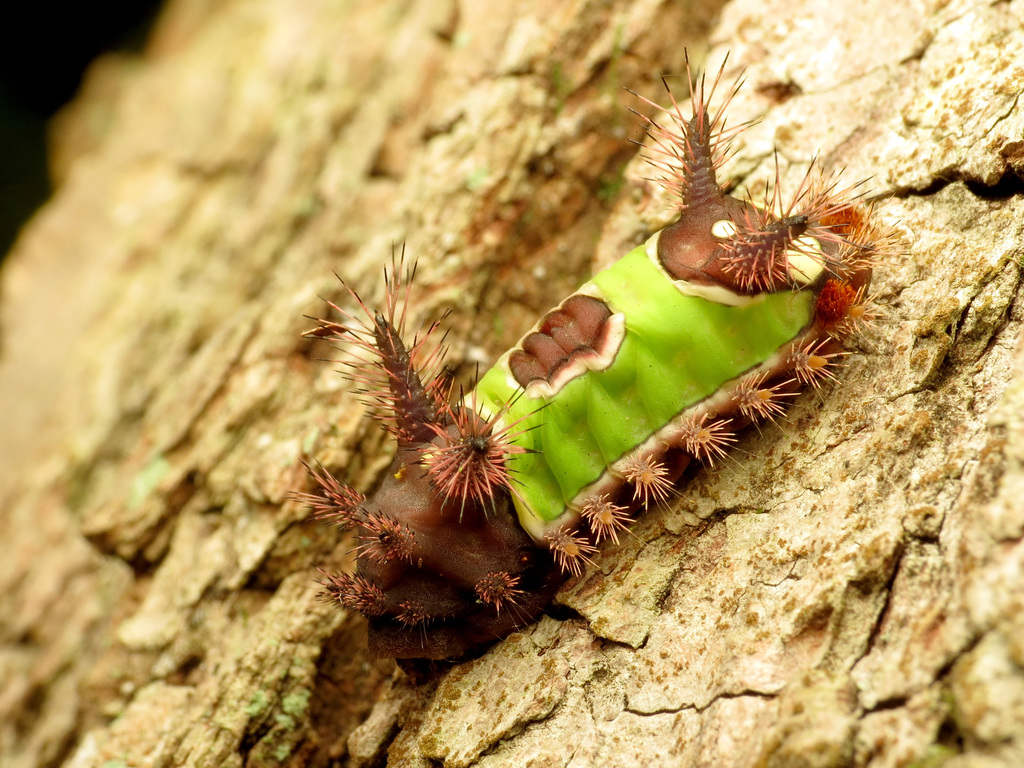
Saddleback caterpillar moth
Acharia stimulea
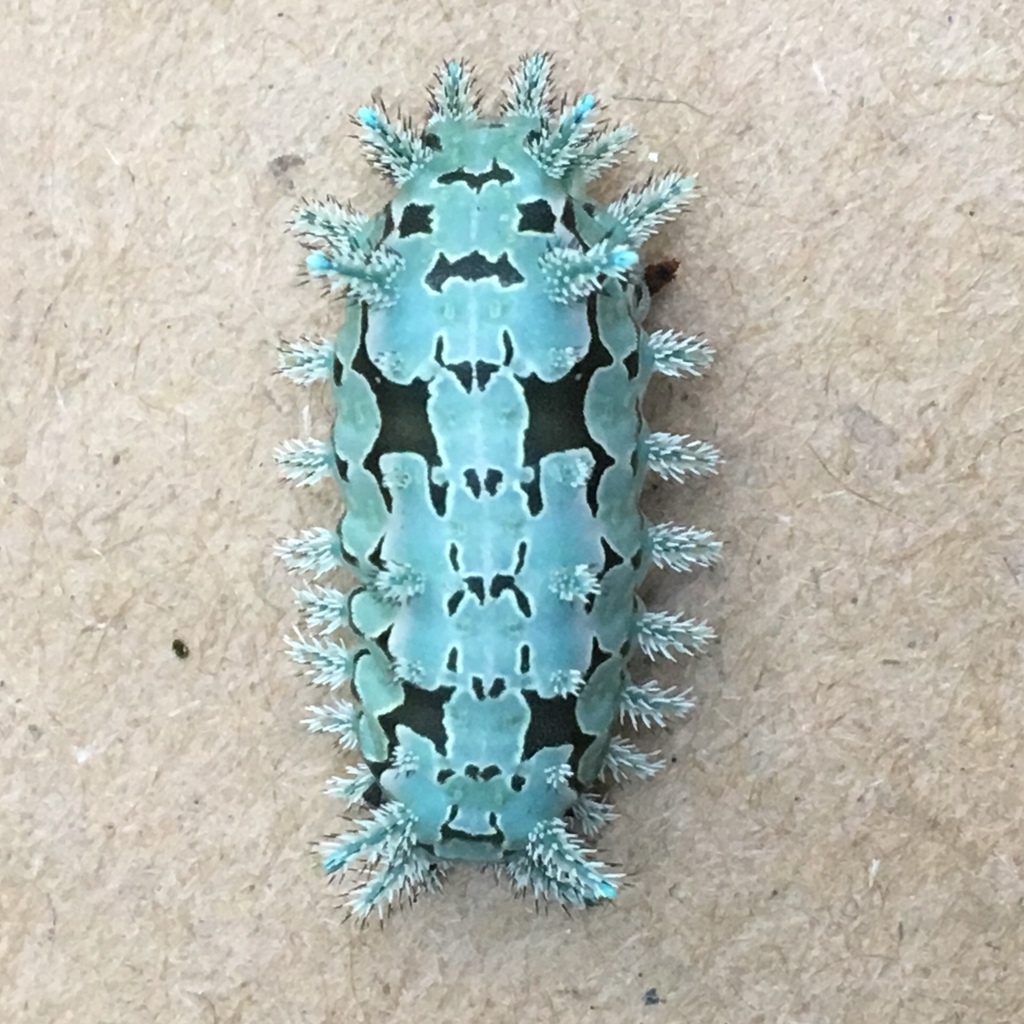
Spiny oak-slug moth
Euclea delphinii
≠The key differences
Saddleback has a distinctive saddle-shaped dark patch and more prominent dorsal white/green spot; both can sting but look different in pattern and shape.
⚖︎Side by side
| Saddleback caterpillar moth | Spiny oak-slug moth | |
|---|---|---|
| To humans | Stinging caterpillar | Stinging caterpillar |
| Size | About 26-43 mm wingspan | 18-30 mm wingspan |
| Colours | Green, Brown, White, Purple | Brown, Olive, Cream |
| Family | Limacodidae | Limacodidae |
| Habitat | Woodlands, gardens, orchards, parks and suburban landscapes where host trees and shrubs grow | Deciduous forests, woodland edges, suburban shade trees and gardens where host trees (especially oaks) grow |
| Range | Eastern United States, from Massachusetts and the Great Lakes region south to Florida and west to Texas, extending into Mexico | Eastern and central North America — from parts of southeastern Canada through much of the eastern United States |
| Active | Larvae most commonly seen late spring through early fall; adults fly at night in the warmer months | Spring and summer (typically late spring through summer); adults are nocturnal and attracted to lights |
| Pest? | Yes | Yes |
🔍How to spot a saddleback caterpillar moth
- Look for a bright green caterpillar with a distinct brown oval 'saddle' patch edged in white and purple on its back.
- Note the broad, flattened slug-like body and the clusters of short stinging spines at both ends (anterior and posterior).
- Adult moths are small, plain brown; identification is best done using the larval form.
🔍How to spot a spiny oak-slug moth
- Look for broad, flattened slug-like caterpillars with short stinging spines — unlike typical caterpillars with conspicuous prolegs.
- Larvae are often brightly coloured or patterned and move in a slow, gliding fashion.
- Adults are small, stout, brown moths with green patches on the forewings and a rounded wing shape; they fly at night and come to lights.
- If you find the caterpillar, treat it as a stinging species and avoid direct contact.
?Frequently asked questions
What is the difference between a saddleback caterpillar moth and a spiny oak-slug moth?
Saddleback has a distinctive saddle-shaped dark patch and more prominent dorsal white/green spot; both can sting but look different in pattern and shape.
Is a saddleback caterpillar moth or a spiny oak-slug moth more dangerous?
Saddleback caterpillar moth: Stinging caterpillar. Spiny oak-slug moth: Stinging caterpillar. The caterpillar has hollow, venomous spines that can break off in skin and cause an immediate sharp pain followed by redness, swelling, itching, and sometimes blistering or a rash that can last several days. Larvae have urticating spines that inject irritating compounds; contact can cause immediate pain, burning, redness, swelling and a localized rash that may last hours to a few days.
Identification from photos is never certain: don't handle insects you can't identify, and get medical advice for bites, stings or allergic reactions.