
Giant peacock moth vs Emperor moth
These two are easy to mix up. Here's how to tell a giant peacock moth from an emperor moth, and whether either one bites or stings.
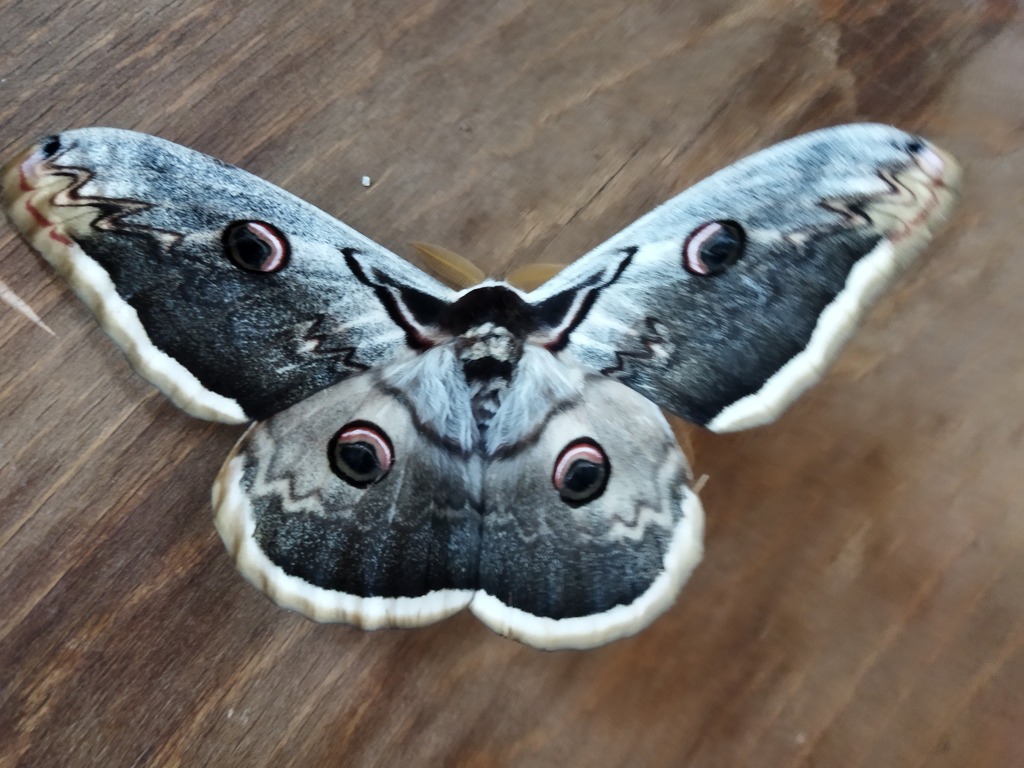
Giant peacock moth
Saturnia pyri
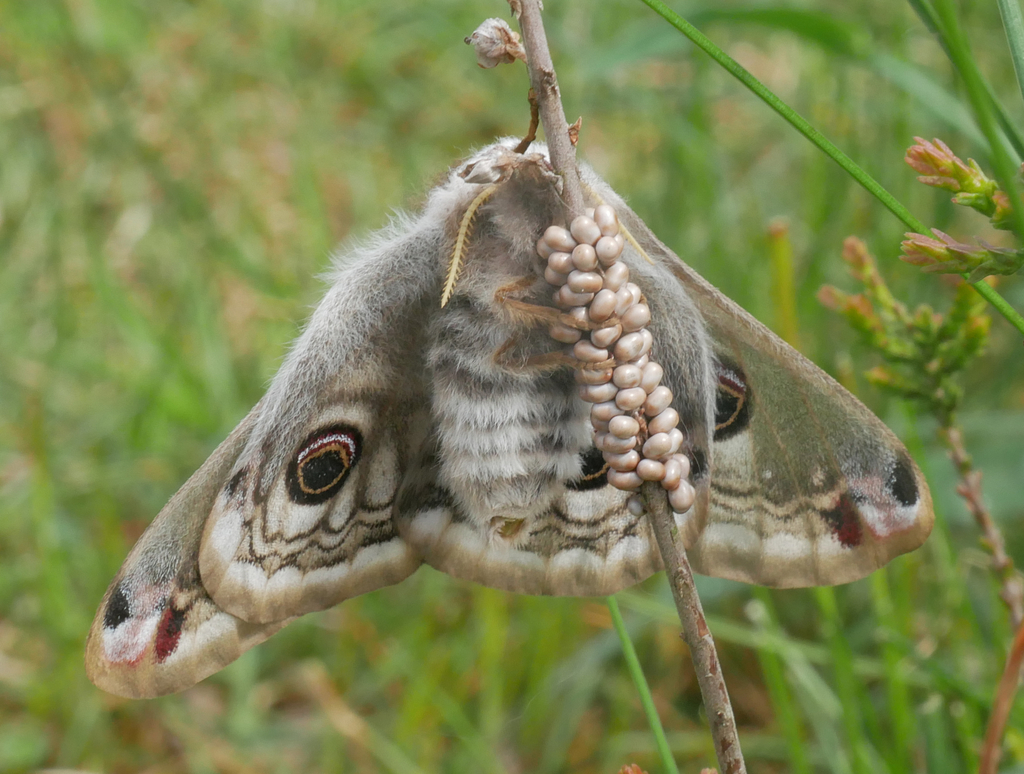
Emperor moth
Saturnia pavonia
≠The key differences
Much smaller (wingspan around 60-80 mm) with different patterning; eye-spots are smaller and colours differ.
Saturnia pyri is much larger (wingspan often over 120 mm), mostly brown-grey, and occurs in southern Europe; Saturnia pavonia is smaller and the males have orange hindwings.
⚖︎Side by side
| Giant peacock moth | Emperor moth | |
|---|---|---|
| To humans | Irritating hairs | Non-toxic |
| Size | Wingspan typically 100-150 mm (exceptionally larger) | Wingspan 50-80 mm (males usually smaller than females) |
| Colours | Reddish brown, Cream/buff, Deep blue (eye-spot), Black, Reddish (eye-spot center) | Brown, Orange-brown, Grey, Blue (eye spot), Black |
| Family | Saturniidae | Saturniidae |
| Habitat | Open woodlands, orchards, hedgerows, gardens and scrubland where host trees/shrubs grow. | Open sunny sites: heath, moorland, rough grassland, hedgerows, woodland edge and scrub |
| Range | Southern Europe (north to central France and Austria), the Balkans, North Africa, Asia Minor and the Middle East. | Western Palearctic: widely across Europe into western Asia (temperate regions) |
| Active | Adults fly in late spring to early summer (varies by region), strictly nocturnal and attracted to light. | Spring (typically March to May depending on latitude); males fly in sunshine by day, females mainly at night |
| Pest? | No | No |
🔍How to spot a giant peacock moth
- Very large wingspan (commonly 120-160 mm) — largest moth regularly seen in Europe.
- Each wing has a large concentric eye-spot with blue/black center and reddish/brown rings.
- Mottled reddish-brown and cream wing ground colour with rounded wing margins.
- Males have strongly feathered antennae; females' antennae are less comb-like.
🔍How to spot an emperor moth
- Look for conspicuous eye spots on each wing: dark central spot with blue and pale rings.
- Males have very feathery antennae, grey-brown forewings and orange hindwings; females are larger and mostly grey.
- Spring flight time (March-May) distinguishes it from many summer saturniids.
- Older caterpillars are bright green with black bands and colourful bristly warts; young ones are black.
?Frequently asked questions
What is the difference between a giant peacock moth and an emperor moth?
Much smaller (wingspan around 60-80 mm) with different patterning; eye-spots are smaller and colours differ. Saturnia pyri is much larger (wingspan often over 120 mm), mostly brown-grey, and occurs in southern Europe; Saturnia pavonia is smaller and the males have orange hindwings.
Is a giant peacock moth or an emperor moth more dangerous?
Giant peacock moth: Irritating hairs. Emperor moth: Non-toxic. Adults are harmless and cannot bite or sting. Emperor moths are harmless to people.
Identification from photos is never certain: don't handle insects you can't identify, and get medical advice for bites, stings or allergic reactions.