
Gulf fritillary
Dione vanillae · Fritillary butterflies
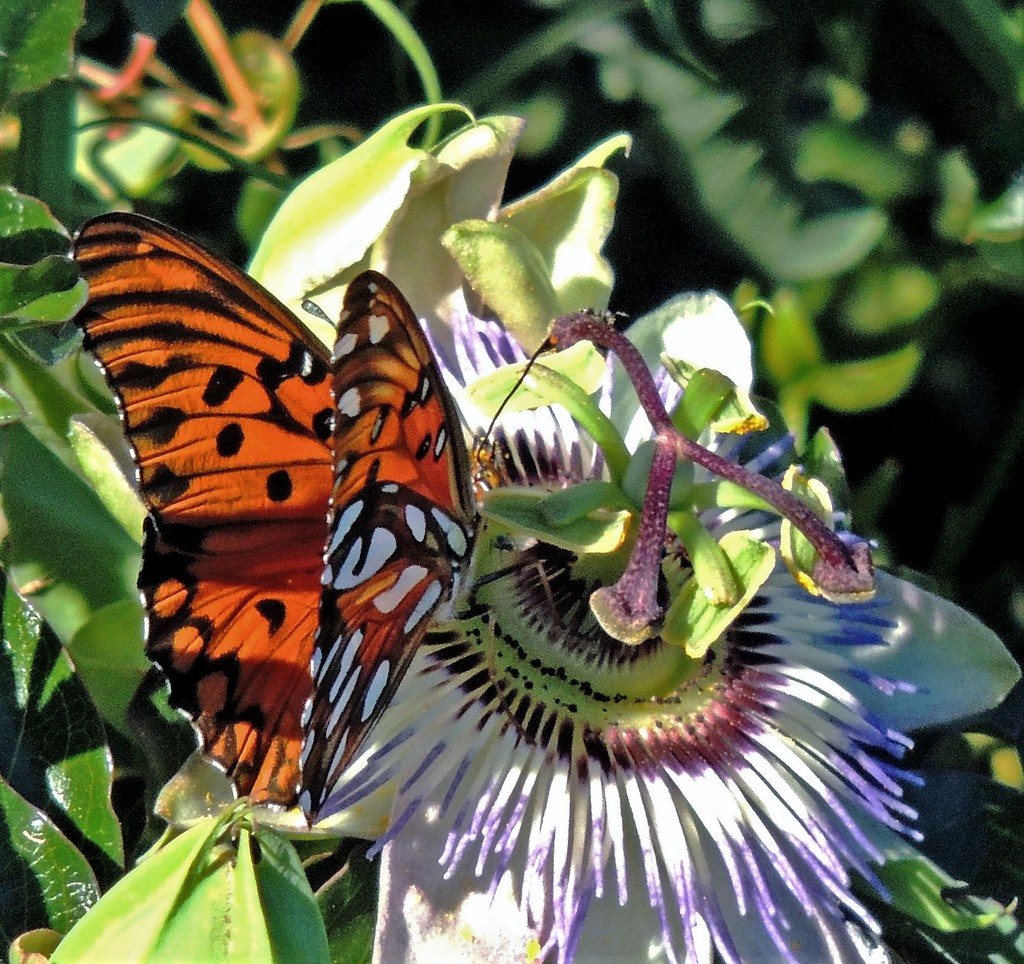
A bright orange fritillary common from the southern United States through Central and South America; larvae eat passionflower vines and adults are frequent garden nectar feeders.
!Is the Gulf fritillary dangerous?
No. Adults and caterpillars are not venomous or poisonous to people. Caterpillars have sharp spines that can irritate skin in sensitive individuals; avoid handling caterpillars with bare hands. No medical significance beyond possible mild skin irritation.
Pets
Generally harmless to pets. Pets may briefly mouth caterpillars or adults but there are no known significant toxic effects; avoid letting pets chew on large numbers of caterpillars to prevent minor gastrointestinal upset.
📖Overview
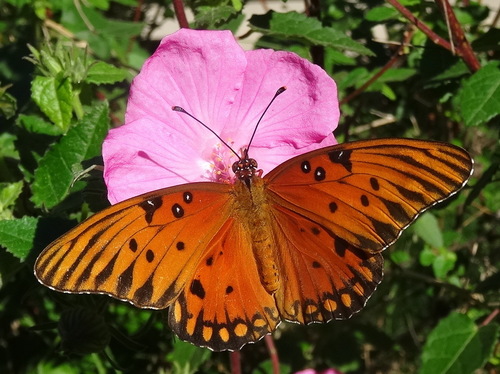
The Gulf fritillary (Dione vanillae) is a medium-sized, fast-flying butterfly found from the southern United States through much of Central and South America. Adults are conspicuously orange on the upperside with black markings; the underside of the hindwing has silvery, reflective spots. Females lay eggs singly on passionflower (Passiflora) vines, and the spiny orange caterpillars can heavily defoliate those host vines during outbreaks. In warm regions the species breeds year-round and often produces multiple generations per year.
🔍How to identify a Gulf fritillary
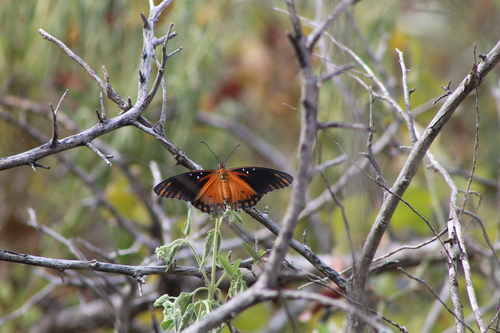
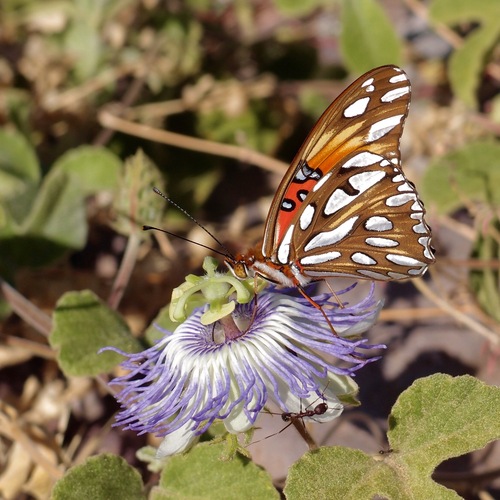
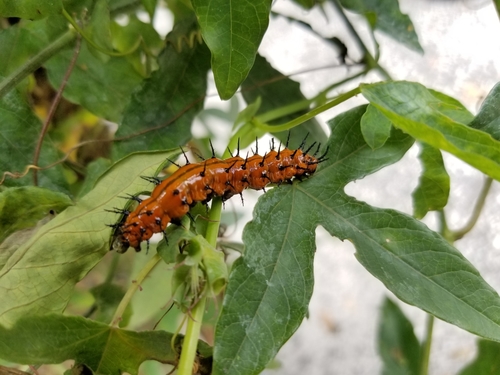
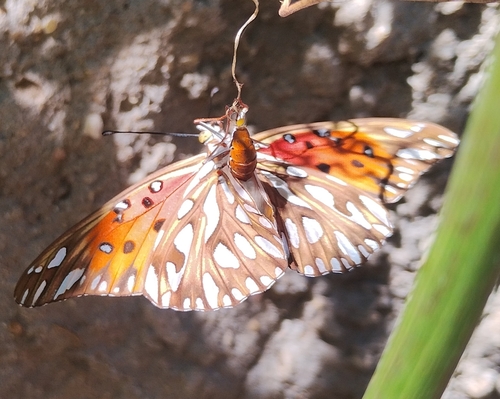
Adult wings are bright orange with several black spots and streaks on the upperside. The hindwing underside is brownish to orange with numerous silvery-white (metallic) spots on the hindwing underside. Wingspan typically 60-90 mm. The caterpillar is cylindrical, bright orange to red with many black conical spines (tubercles) and small black markings. Pupae are smooth, angular chrysalises often brown or green and attached by a cremaster.
- Bright orange upperside with black spots and streaks; fairly plain compared with some fritillaries.
- Hindwing underside with distinctive silvery-white, reflective spots.
- Caterpillars are bright orange/red with many black spines (tubercles) on each segment.
- Wingspan about 6-9 cm and a rapid, direct flight pattern.
Lookalikes
Variegated fritillary Euptoieta claudia
Variegated fritillary has a more mottled underside without the large silvery spots found on Gulf fritillary; wing shape and black markings differ, and variegated tends to be paler orange.
Mexican fritillary Euptoieta hegesia
Mexican fritillary is similar in color but usually lacks the numerous bright silvery spots on the hindwing underside and has subtler black markings; ranges overlap in parts of Central America.
↻Life cycle
Egg
Small, ribbed, yellowish eggs laid singly on leaves, tendrils or stems of passionflower vines.
Larva (caterpillar)
Bright orange caterpillar with rows of branched black spines; several caterpillars may feed on the same vine, and they feed on Passiflora foliage through several instars.
Pupa (chrysalis)
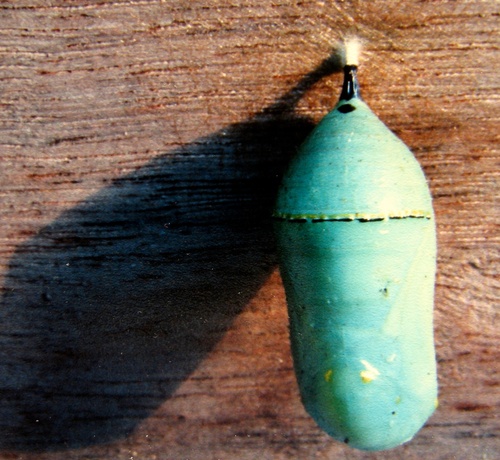
Angular chrysalis attached by a cremaster; coloration ranges from green to brown, often camouflaged against stems or leaves.
Adult (butterfly)
Fast-flying orange butterfly that visits a wide variety of nectar flowers and disperses to find host plants for egg laying.
🍃Diet and predators
Young eat
Leaves of Passiflora species (passionflower vines).
Adults eat
Flower nectar from many plants (e.g. lantana, shepherd's needle, coneflowers) and sometimes rotting fruit.
Predators of the young
Parasitic wasps and flies, ants, predatory bugs and birds.
Predators of adults
Birds, spiders and predatory insects; bright coloration and rapid flight provide some protection.
🌱Effect on plants and gardens
Larvae feed almost exclusively on Passiflora species (passionflower vines); heavy caterpillar feeding can defoliate cultivated passionflowers. Adults are pollinators and frequent nectar feeders on many garden flowers such as lantana.
How to get rid of Gulf fritillaries
If caterpillars defoliate passionflower vines, handpick eggs and caterpillars or shake them into a container of soapy water. Encourage natural enemies (parasitic wasps, birds) and avoid broad-spectrum insecticides that kill beneficials. For severe outbreaks, use targeted biological controls (Bacillus thuringiensis kurstaki) following label instructions.
📍Where and when to find it
Look for adults visiting sunny garden flowers (lantana, shepherd's needle). Check passionflower vines for eggs and spiny caterpillars on the undersides of leaves.
Best time
Warm months in temperate regions (spring to fall); year-round in tropical regions. Best seen on sunny days during daylight hours.
Observation tips
Photograph the underside of the hindwing to capture the diagnostic silvery spots; use a telephoto or long lens to avoid disturbing skittish adults.
✨Fun facts
- Females lay eggs singly on passionflower leaves rather than in clusters.
- The silvery spots on the underside of the hindwing are highly reflective and are a distinctive field mark.
- Populations in temperate parts of North America show seasonal movements and multiple broods in warm months.
?Frequently asked questions
Do Gulf fritillary butterflies bite or sting?
No. Adults do not bite or sting. Caterpillars have sharp spines that can cause mild skin irritation in some people—avoid handling caterpillars with bare hands.
Is the Gulf fritillary poisonous to touch?
No. The species is not poisonous, though the caterpillar's spines can sometimes irritate skin mechanically.
Why are Gulf fritillaries on my passionflower vine?
Females lay eggs on passionflower (Passiflora) because its leaves are the caterpillar's food. If you have vines, they attract egg-laying adults.
How can I get rid of Gulf fritillary caterpillars on my passionflower?
For small numbers, remove eggs and caterpillars by hand (wear gloves) or shake them into soapy water. Encourage natural predators and avoid broad insecticides. For heavy infestations, targeted Bacillus thuringiensis (Btk) can be used following label directions.
Where does the Gulf fritillary live?
It lives across the Americas: southern United States (Gulf Coast, Florida, Texas), through Mexico and Central America into South America, preferring sunny open spaces where passionflower vines grow.
📷Photos of the Gulf fritillary
More butterflies & moths
This guide was written with AI assistance and fact-checked, last updated 2026-10-10. Identification from photos is never certain: don't handle insects you can't identify, and get medical advice for bites, stings or allergic reactions. More about the Gulf fritillary: iNaturalist, Wikipedia.