
Fiery skipper
Hylephila phyleus · Skipper butterflies
A small, fast-flying orange skipper common in lawns and gardens; larvae feed on grasses and adults visit flowers for nectar.
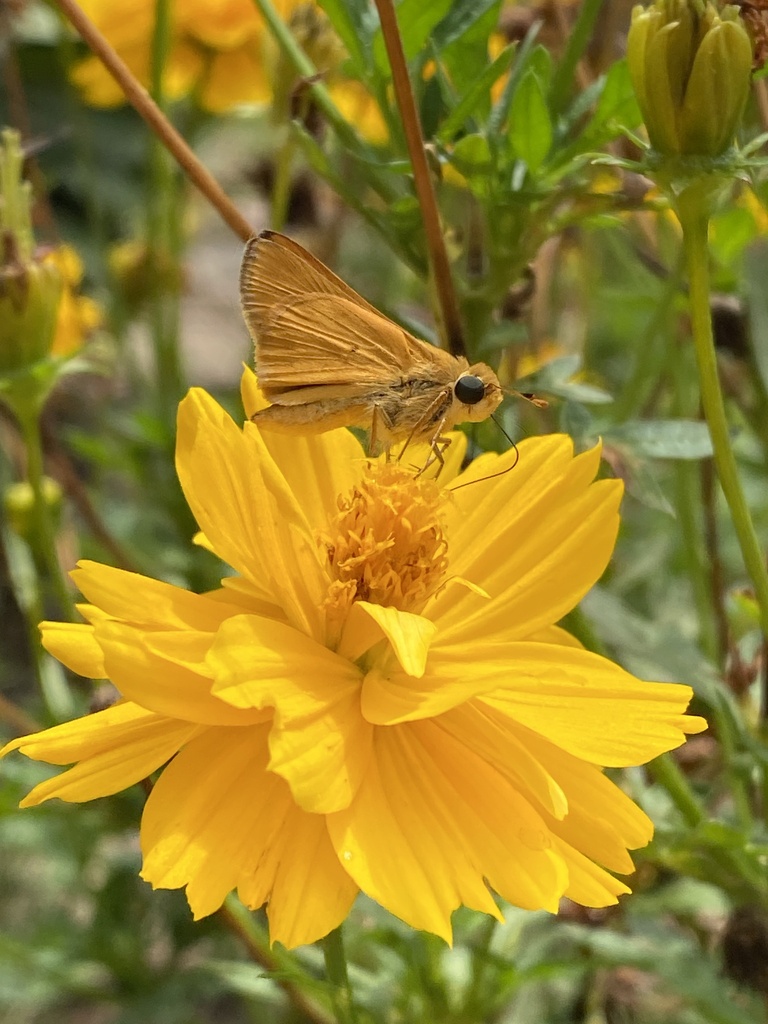
!Is the fiery skipper dangerous?
No. Fiery skippers do not bite or sting and are not poisonous. They are harmless to people; handle gently if needed.
Pets
Not toxic to pets. Occasional curiosity or light contact is harmless.
📖Overview
The fiery skipper is a widespread small butterfly in the skipper family, notable for its bright orange colour and rapid, darting flight. It is common in disturbed habitats, lawns, gardens and roadsides where its grassy host plants grow. Adults are nectar feeders and often seen at low flowers; males frequently perch on grass stems and display territorial behaviour.
The species completes multiple generations per year in warm regions. Larvae feed on a variety of grasses and live inside silken shelters they make by folding grass blades. Fiery skippers are harmless to people and rarely cause serious damage to turf, though small localized feeding by larvae can occur when populations are high.
🔍How to identify a fiery skipper
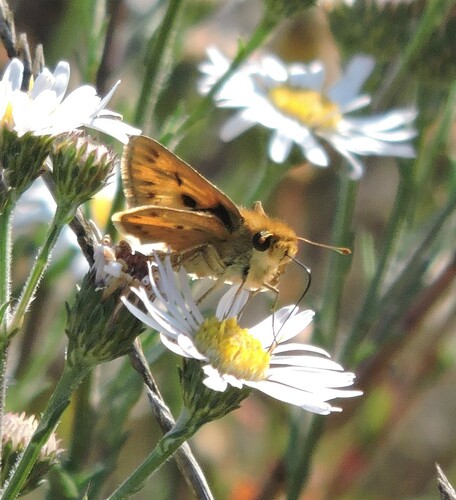
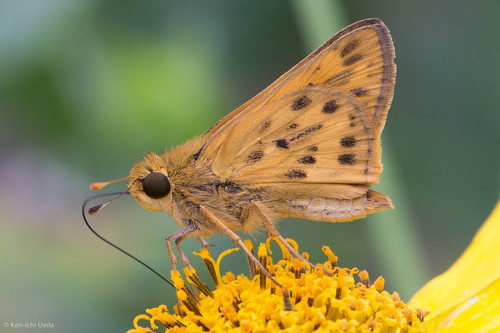
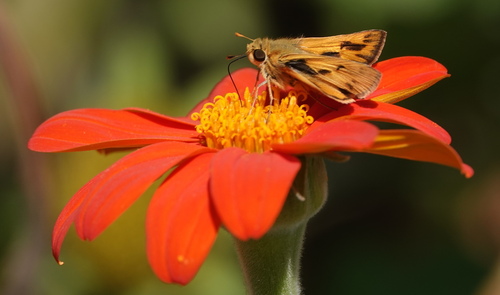
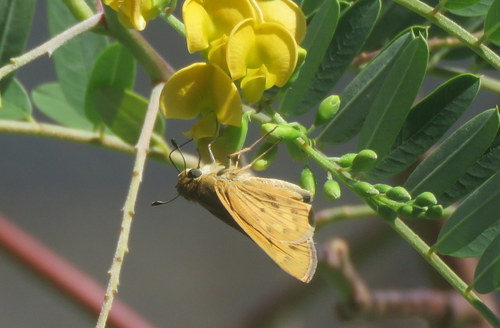
Adults are compact skippers about 2-3 cm across. Males are bright orange with darker brown or blackish borders and small dark stigma (scent patch) on the forewing. Females are darker brown with orange patches. The hindwing underside is yellow-orange in males and duller brown in females, with scattered small dark spots. The antennae are very short, with a hooked tip, a typical skipper feature.
- Small wingspan 19-32 mm and rapid, hopping flight typical of skippers
- Bright orange upperwings with dark brown/black borders and, in males, a dark forewing stigma
- Hindwing underside yellow-orange to brownish with scattered small dark spots; very short antennae with hooked tips (skipper trait)
- Larvae live in folded grass blades tied with silk
Lookalikes
Sachem Atalopedes campestris
Sachem males have a large, squarish black stigma on the forewing and the hindwing underside lacks the scattered small dark spots; sachem females have glassy pale spots on the forewing.
Common checkered-skipper Pyrgus communis
Checkered-skippers have a contrasting black-and-white checkered pattern on the wings rather than uniform orange; much darker overall.
Southern broken-dash Wallengrenia otho
Smaller and duller with different forewing spots and less bright orange; examine spot patterns on the forewing to separate them.
↻Life cycle
Egg
Tiny pale eggs are laid singly on grass blades or stems near the base of the plant.
Larva (caterpillar)
Greenish to brown caterpillars that make silken shelters by folding or tying grass blades together; they feed on grass blades and stems.
Pupa (chrysalis)
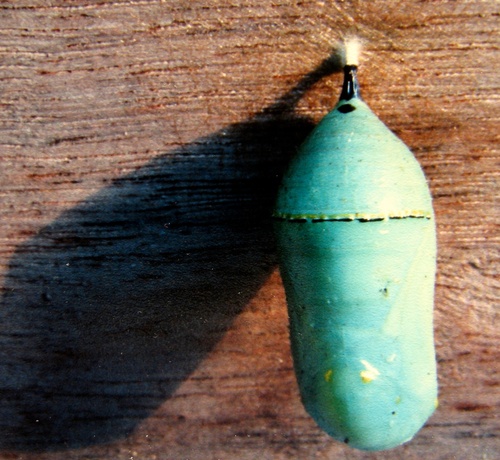
Pupation occurs inside the folded grass shelter or close to the ground; the chrysalis is compact and camouflaged.
Adult (butterfly)
Winged skipper that emerges to feed on nectar, mate, and disperse; multiple broods occur each year in warm climates.
🍃Diet and predators
Young eat
Leaves of various grasses (both turf and wild grasses)
Adults eat
Nectar from low flowers such as clover, aster, and other small blooms
Predators of the young
Parasitoid wasps and flies, spiders, ants and ground-foraging predators
Predators of adults
Small birds, predatory insects (e.g., robber flies), spiders
🌱Effect on plants and gardens
Larvae feed on various grasses, including turf grasses and weedy grasses (e.g., Bermuda grass, crabgrass). Heavy local infestations can produce visible chewing but widespread turf loss is uncommon.
📍Where and when to find it
Adults: low flowers, lawn edges and garden flowers. Larvae: inside silk-lined folded grass blades near the turf surface.
Best time
Best observed spring to fall in temperate areas, during sunny daytime hours when they are actively feeding and flying.
Observation tips
Look low over lawns and along sunny edges of paths; use a fast shutter speed to photograph their quick flight and approach perching grass stems slowly to capture resting individuals.
✨Fun facts
- Male fiery skippers perch low on grass stems and dash out to chase intruders, a typical territorial behavior.
- Caterpillars make little silk 'tents' by folding a blade of grass and hiding inside during the day.
- They are strong colonizers and often show up quickly in newly created lawns or gardens.
?Frequently asked questions
Do fiery skipper butterflies bite or sting?
No. Fiery skippers do not bite or sting and are harmless to people.
Are fiery skippers harmful to my lawn?
Larvae feed on grass blades and can cause localized chewing, but they rarely cause serious, widespread turf damage.
Why are there so many in my yard?
They are attracted to lawns and grassy areas where their caterpillar host plants grow; warm weather and nearby nectar sources also encourage populations to build up.
How can I get rid of fiery skippers?
Reduce grassy weeds, mow regularly, remove folded grass shelters by raking, encourage natural predators, and for small problem patches consider targeted biological controls such as Btk following label instructions.
When will I see them?
Expect to see adults from spring through fall in temperate zones, often most active on sunny days; in warm regions they can be present year-round.
📷Photos of the fiery skipper
More butterflies & moths
This guide was written with AI assistance and fact-checked, last updated 2026-10-10. Identification from photos is never certain: don't handle insects you can't identify, and get medical advice for bites, stings or allergic reactions. More about the fiery skipper: iNaturalist, Wikipedia.