
Is this a monarch? Monarch vs viceroy, and other orange and black butterflies
Most orange and black butterflies get called monarchs, but several look alike, and some copy the monarch on purpose: birds learn that monarchs taste bad and leave anything similar alone.
A few details settle it: a black line across the hind wing, the size, the pattern on the wing tips and the underside. Here's how to tell them apart.
Monarch: the one everyone knows
The monarch is a big butterfly, about 9-10 cm across, bright orange with thick black veins, a wide black border dotted with two rows of small white spots, and white spots on the black forewing tips. Males have a small black spot on a vein of each hind wing; females have thicker veins and no spot.
Its caterpillars feed only on milkweed and are striped yellow, black and white. In North America, monarchs migrate every autumn: eastern ones fly up to about 4,000 km to mountain forests in central Mexico, and western ones gather on the California coast. Monarchs also live in Australia, New Zealand, the Canary Islands and parts of southern Europe.
Monarch vs viceroy: look for the line
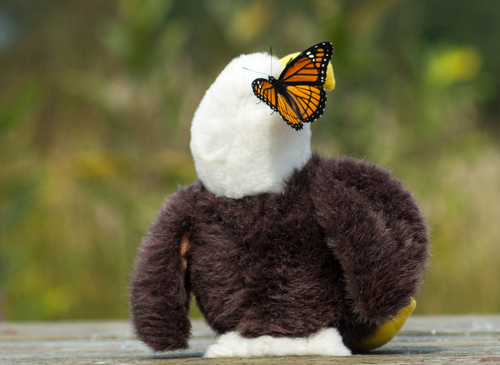
The viceroy looks almost the same, but it has a black line curving across the middle of each hind wing, which the monarch doesn't. It's also smaller, about 7-8 cm across, and has a single row of white dots in the black border instead of two.
Viceroys fly in a quicker, more flapping way, while monarchs flap and glide. Their caterpillars feed on willows and poplars, not milkweed, and look like bird droppings. Viceroys taste unpleasant to birds too, so the two butterflies protect each other by looking alike.
Other monarch lookalikes: queen and plain tiger
The queen is a close relative of the monarch found in the southern US, Mexico and further south. It's a darker, brownish orange with only faint black veins and white spots scattered over the black forewing. It also feeds on milkweed.
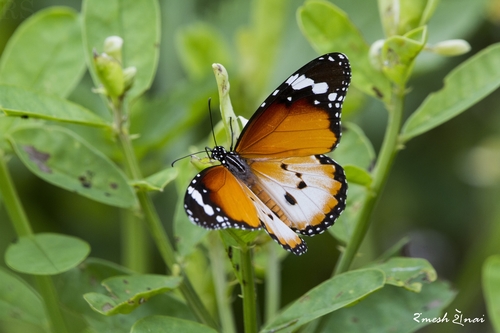
The plain tiger, also called the African monarch, lives across Africa, southern Asia and northern Australia. It's orange with a black forewing tip crossed by a white band, and has fewer black veins than the monarch.
Do monarchs bite? Are they poisonous?
Monarchs can't bite or sting. Adult butterflies drink nectar through a coiled tube and have no jaws.
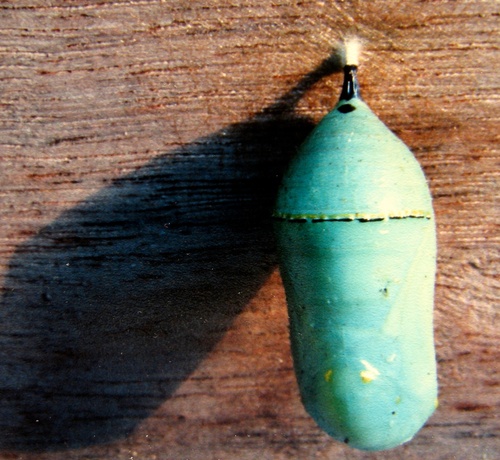
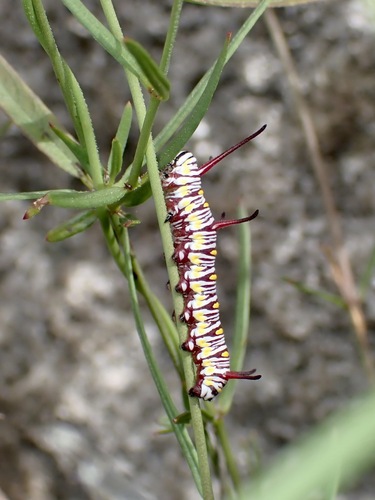
They are poisonous to eat, though. Monarch caterpillars store bitter toxins from milkweed, and the adults keep them, which is why birds avoid them. Touching a monarch or its caterpillar is safe; wash your hands afterwards and don't rub your eyes.
A dog or cat that eats a monarch will usually just drool or vomit because of the taste. Eating many caterpillars or milkweed plants is more serious. Call your vet if a pet keeps vomiting, seems weak or unwell.
Orange with black and white tips: painted lady and red admiral
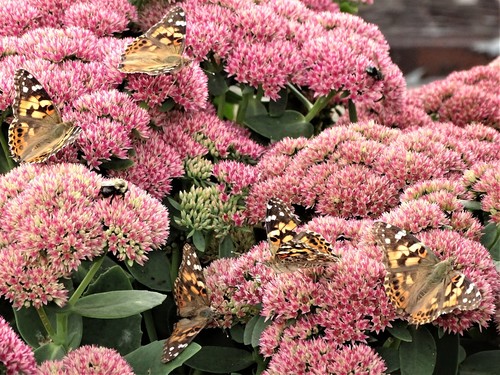
The painted lady is one of the most widespread butterflies in the world, about 5-6 cm across, orange-pink with black blotches and black forewing tips with white spots. Underneath, the hind wing is mottled grey-brown with four small eyespots. It migrates in huge numbers in some years, across Europe, North Africa and North America.
The red admiral is mostly black, with a bright orange-red band across each forewing and along the edge of the hind wings, and white spots on the forewing tips. It's common in gardens in autumn, feeding on fallen fruit and ivy flowers. Its caterpillars eat nettles.

Orange with black spots: fritillaries
Fritillaries are orange butterflies covered in black spots, bars and zigzags rather than black veins.
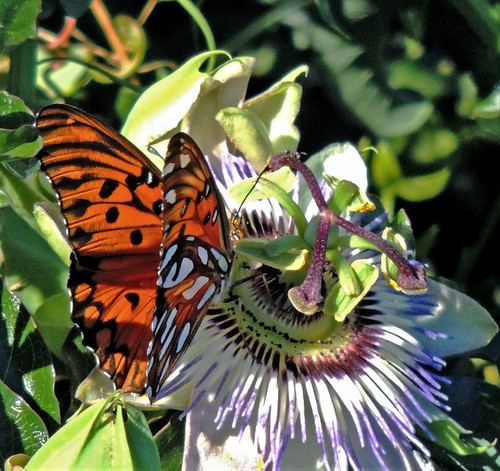
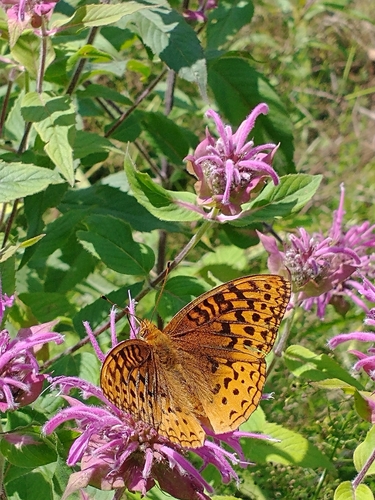
The gulf fritillary of the southern US is bright orange with long, narrow forewings and large silvery spots underneath. Its spiny orange caterpillars eat passionflower vines. The great spangled fritillary of North America is larger and tawny orange with black chevrons and silver spots under the hind wings; its caterpillars eat violets. The variegated fritillary is a duller orange-brown with a more blurred pattern.
Ragged edges: question mark and commas
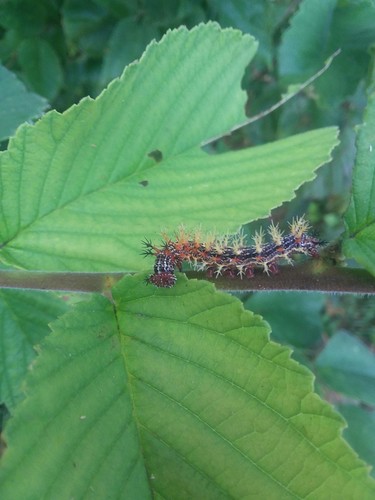
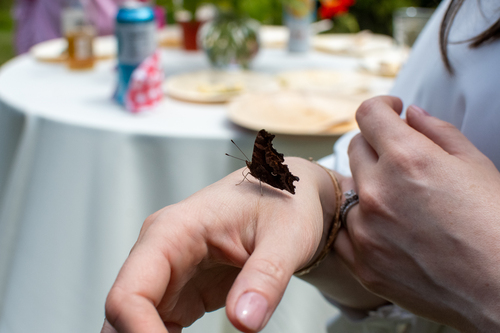
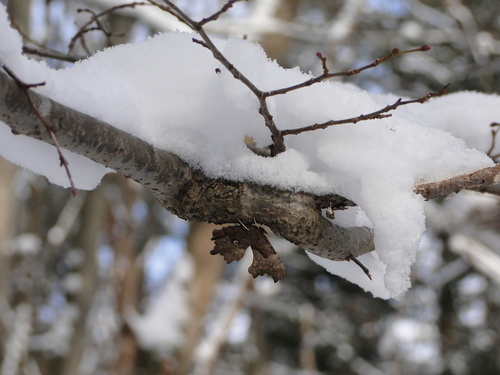
A few orange butterflies have jagged, ragged-looking wing edges and look like dead leaves when they close their wings. The silver mark underneath the hind wing gives them their names.
The question mark of North America has a silver mark shaped like a question mark: a curve with a dot. The eastern comma is smaller and has just the curve. In Europe, the comma butterfly is the common one, with a small white C-shaped mark. They often come to rotting fruit and tree sap and are among the first butterflies seen on warm days in late winter.
How to help monarchs
Monarch numbers have dropped sharply in recent decades. Planting native milkweed and nectar flowers, and avoiding pesticides, helps them breed and refuel on migration. In warm places where tropical milkweed stays green all winter, cut it back in autumn so monarchs keep migrating.
If you're not sure which butterfly you've seen, compare it with the photos on this page, or identify it from a photo.
?Frequently asked questions
How can you tell a monarch from a viceroy?
Look at the hind wings. The viceroy has a black line curving across the middle of each hind wing; the monarch doesn't. Viceroys are also smaller and have a single row of white dots in the black border.
Do monarch butterflies bite?
No. Monarchs have no jaws and can't bite or sting. They feed by sipping nectar through a coiled tube. They're safe to touch, though you should wash your hands afterwards.
Are monarch butterflies poisonous to dogs and cats?
They contain bitter toxins from milkweed, so a pet that eats one may drool or vomit. Serious poisoning from a single butterfly is unlikely. Call your vet if your pet keeps vomiting or seems weak.
Is the viceroy butterfly poisonous?
Viceroys taste unpleasant to birds, but they aren't dangerous to people. They can't bite or sting, and touching one is harmless.
What butterfly looks like a monarch but is smaller?
Usually the viceroy, which has an extra black line across the hind wings. In the southern US it may be a queen, which is darker brownish orange with faint veins. Painted ladies and fritillaries are also smaller, with black spots instead of black veins.
Written by the Insect Scanner team, last updated 2026-11-10. Identification from photos is never certain: don't handle insects you can't identify, and get medical advice for bites, stings or allergic reactions.