
Eastern comma
Polygonia comma · Anglewing butterflies
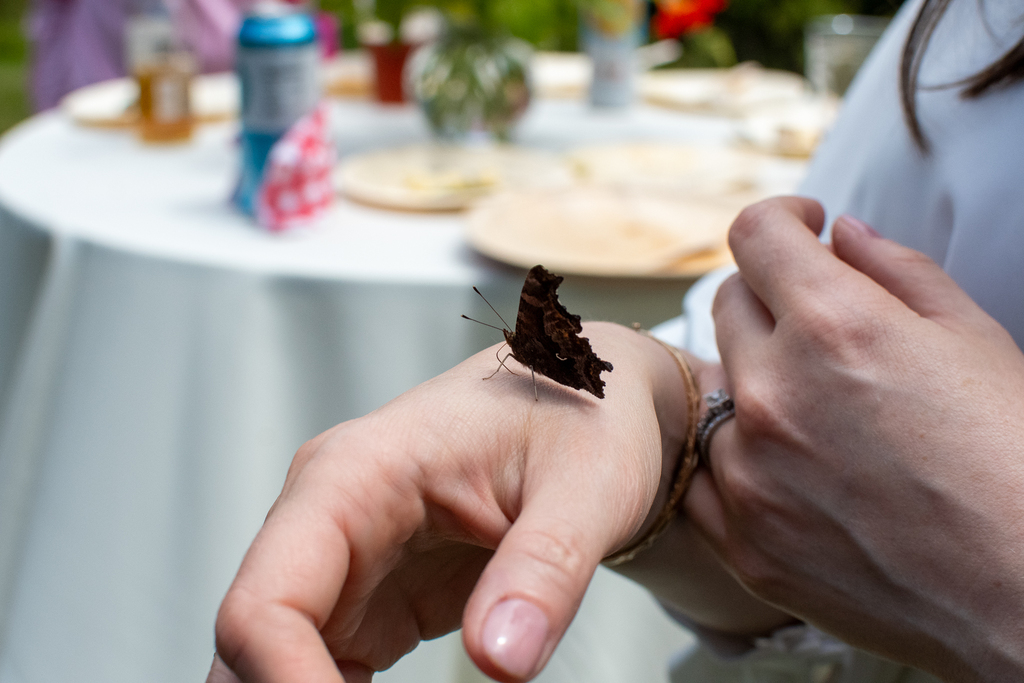
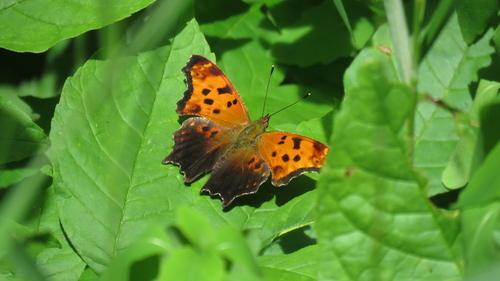
A small orange-brown anglewing butterfly with ragged wing edges and a tiny silver comma-shaped mark on the underside of the hindwing.
!Is the eastern comma dangerous?
No. Eastern commas do not bite or sting and are not poisonous. They are harmless to people. Handle gently if necessary; avoid crushing the wings which are delicate.
Pets
Not toxic to pets. A cat or dog that catches or eats one is not at risk of poisoning.
📖Overview
Polygonia comma, the Eastern comma, is a member of the anglewing group of brush-footed butterflies. Adults have a characteristic ragged wing outline and the underside of the hindwing shows a small silvery comma-shaped mark that gives the species its common name. They inhabit woodland edges, parks, gardens and riparian areas. Caterpillars feed on plants in the elm and nettle families and hops and adults often feed on tree sap, rotting fruit and nectar.
Eastern commas are widespread in much of temperate North America. They have one to several broods depending on latitude and typically overwinter as adults in sheltered places, emerging on warm days in late winter or early spring. They are not harmful to people or structures and are considered neither a household nor an agricultural pest.
🔍How to identify an eastern comma
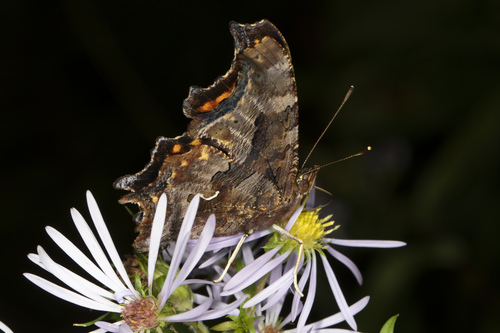
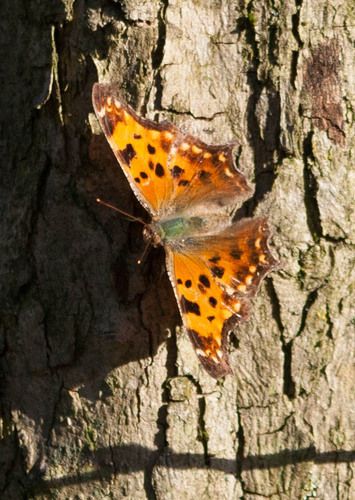
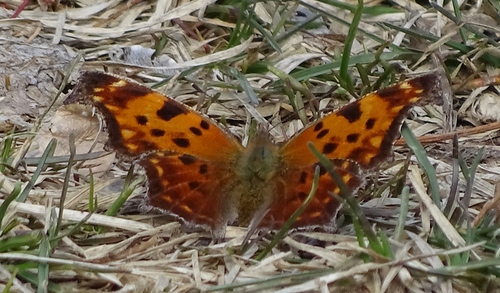
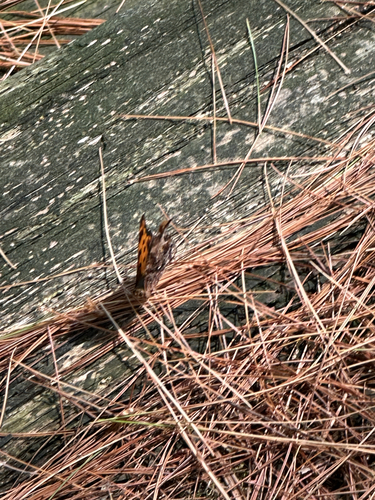
Wingspan about 4.5-6.5 cm. Upperwing is orange-brown with darker brown or black markings and small submarginal spots; wing edges are markedly scalloped and ragged. The underside is mottled brown and gray, giving excellent camouflage when the wings are closed; the hindwing underside bears a small silvery comma-shaped mark near the center of the wing. Males and females are similar in appearance; males may be slightly darker.
- Ragged, scalloped wing edges typical of anglewing butterflies.
- Upperwing orange-brown with darker markings and small submarginal spots.
- Underside of hindwing shows a small silvery comma-shaped mark.
- When wings closed, mottled brown/gray underside provides excellent leaf-like camouflage.
Lookalikes
Question mark Polygonia interrogationis
Question mark is larger and its silver underside mark is a curved line plus a separate dot (like a question mark); on the upperside it has an extra dark dash on the forewing that the Eastern comma lacks.
Green comma Polygonia faunus
Green comma has even more jagged wing edges and greenish submarginal markings on the underside; it lives mainly in northern and mountain forests.
Mourning cloak Nymphalis antiopa
Mourning cloak is larger, with a dark maroon upperwing edged in pale and rows of blue spots, lacking the small silver comma underside mark.
↻Life cycle
Egg
Females lay single or small clusters of eggs on the leaves or stems of host plants. Eggs hatch in several days to a couple of weeks depending on temperature.
Larva (caterpillar)
Spiny caterpillars that feed on host plant leaves. Larval development goes through multiple instars over a few weeks.
Pupa (chrysalis)
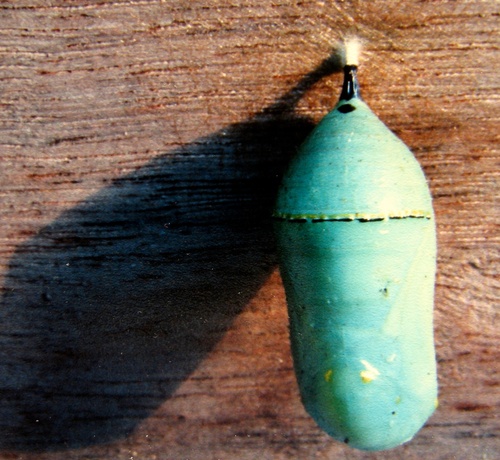
The chrysalis hangs head-down from a stem or twig; metamorphosis into the adult takes about 1-2 weeks in warm conditions.
Adult (butterfly)
Winged, reproductive stage. Adults disperse, mate and lay eggs. Some adults enter diapause and overwinter in sheltered sites.
🍃Diet and predators
Young eat
Leaves of host plants such as elm, nettle, false nettle and hops.
Adults eat
Tree sap, rotting or fermenting fruit, dung, carrion, and occasionally flower nectar.
Predators of the young
Parasitoid wasps and flies, predatory insects, spiders, and birds.
Predators of adults
Birds, dragonflies and other insectivorous predators; adults rely on cryptic underside coloration to avoid detection when at rest.
🌱Effect on plants and gardens
Caterpillars feed on elm (Ulmus), nettles (Urtica), false nettle (Boehmeria) and hops (Humulus). Adults feed on tree sap, rotting fruit, dung and occasionally nectar; they are not significant agricultural pests.
📍Where and when to find it
Look at woodland edges, hedgerows, along streams and in suburban gardens. Adults rest with wings closed on tree trunks or among leaf litter; larvae are found on host plant leaves.
Best time
Spring through autumn; warm sunny days mid-morning to early afternoon. Overwintering adults may be seen on warm winter days.
Observation tips
Search tree trunks and low branches for resting adults; check fallen fruit and sap flows to observe feeding. Use a telephoto or macro lens to photograph the silvery comma mark on the hindwing underside.
✨Fun facts
- The 'comma' name comes from the tiny silvery mark on the underside of the hindwing that resembles a comma punctuation mark.
- Eastern commas often overwinter as adults, hiding in logs, hollow trees or buildings and flying on warm winter days.
- They are attracted to fermenting fruit and sap and are often easier to observe feeding on fallen fruit than on flowers.
?Frequently asked questions
Do Eastern comma butterflies bite or sting?
No. They do not bite or sting and are harmless to people.
Why is there a comma mark on the underside of the wing?
The small silvery comma-shaped mark is a natural wing marking that gives the species its name. It is a handy field mark for telling it apart from the similar Question mark, whose silver mark has an extra dot.
Why is an Eastern comma in my house during winter?
Adults overwinter in sheltered, cool places such as attics, barns, hollow trees or wall cavities. If one flies in on a warm winter day it is likely a hibernating adult that found shelter indoors.
How can I attract Eastern commas to my garden?
Provide habitat: host plants (elm, nettles or hops), sunny perches, and fallen or fermenting fruit. Tree sap and overripe fruit stations attract adults.
Are Eastern commas endangered?
No. Eastern commas are generally common across much of their range. Local populations can fluctuate with habitat loss, but the species is not considered threatened overall.
📷Photos of the eastern comma
More butterflies & moths
This guide was written with AI assistance and fact-checked, last updated 2026-10-10. Identification from photos is never certain: don't handle insects you can't identify, and get medical advice for bites, stings or allergic reactions. More about the eastern comma: iNaturalist, Wikipedia.