
Black witch moth
Ascalapha odorata · Owlet moths
A very large nocturnal moth from the Americas, dark and mottled, known for long-distance migrations and cultural associations with omens.
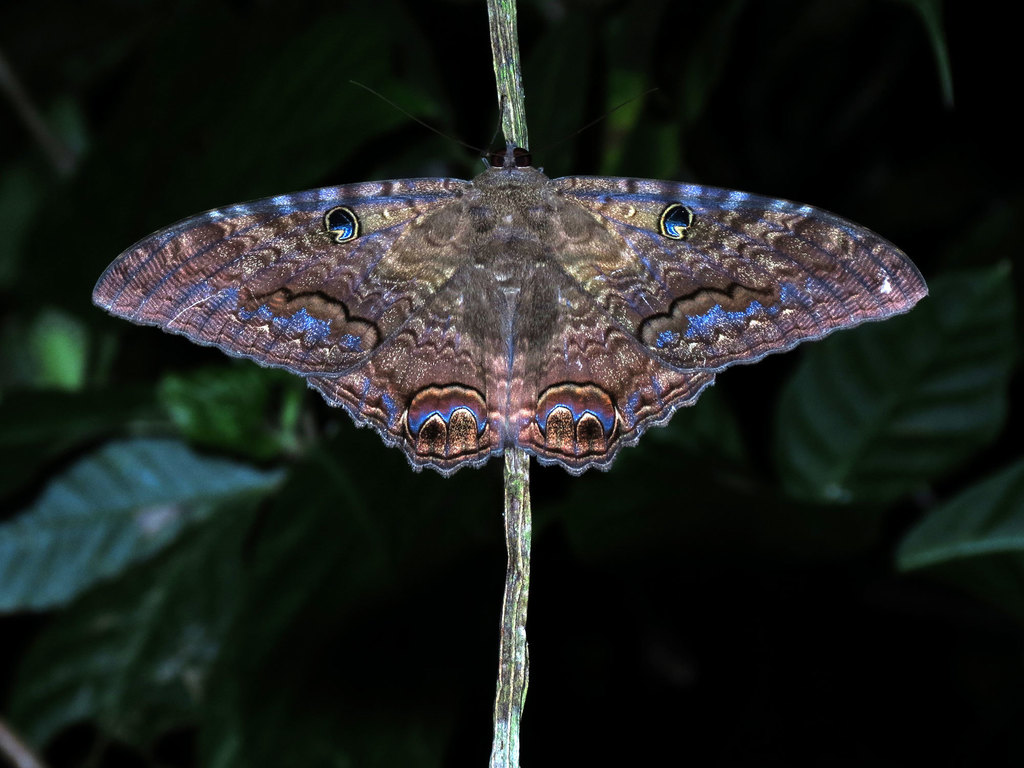
!Is the black witch moth dangerous?
No. Black witch moths do not bite or sting and are not venomous. They may startle people because of their large size, but they are harmless. Handle gently if needed; avoid rough contact as their scales can rub off and irritate sensitive skin or eyes in rare cases.
Pets
Generally harmless to pets. Curious cats or dogs might paw at large moths and could injure the insect or themselves but there is no venom risk.
📖Overview
Ascalapha odorata is a large erebid moth found across much of the Americas. Adults are nocturnal, strong fliers and frequently attracted to artificial lights. The species undertakes seasonal north-south movements and is commonly reported as a migrant into the southern and eastern United States; it breeds in warmer parts of its range. Larvae feed on various trees and shrubs (especially members of the legume family), while adults feed on nectar or do not feed heavily.
🔍How to identify a black witch moth
Wings are very broad and triangular when at rest, producing an overall wingspan of 120-170 mm. Upper wings are dark brown to nearly black with fine mottling and a few paler patches; a faint, curved, pale line or dash near the forewing apex may be visible. The underside is lighter and more patterned. Females are paler and have a distinct pale, purplish-white band crossing both forewings and hindwings; males are darker and lack this band. A small comma- or eye-shaped spot is visible on each forewing. The body is robust and furry-looking compared with many smaller moths.
- Very large wingspan (120-170 mm) — noticeably larger than most local moths.
- Overall dark, near-black to dark brown forewings with fine mottling and a few paler patches or a faint curved line.
- Broad triangular wings and a robust, furry body shape when at rest.
- Frequently seen at night around bright lights or resting on walls and tree trunks.
Lookalikes
Owl moth Thysania zenobia
The owl moth is somewhat smaller and paler grey-brown with bold zigzag lines, while the black witch is darker brown with an eye- or comma-shaped spot on the forewing (and a pale band in females).
Catocala (underwing) moths Catocala spp.
Underwings are often smaller and show bright contrasting hindwing colors when spread; Black witch is larger with uniformly dark, mottled forewings.
↻Life cycle
Egg
Females lay eggs singly or in small groups on host plant leaves. Eggs hatch after several days to a couple of weeks depending on temperature.
Larva (caterpillar)
Caterpillars are variable in color and feed on host foliage. They grow through several instars over a few weeks to months depending on climate.
Pupa
Pupation occurs in a loose cocoon in leaf litter or soil and lasts days to weeks before the adult emerges.
Adult (moth)
Adults are large, nocturnal and strong fliers; they seek mates, may visit flowers for nectar and disperse long distances.
🍃Diet and predators
Young eat
Leaves of trees and shrubs, especially legume family members (Acacia, Prosopis and related genera).
Adults eat
Nectar from flowers when feeding; adults may also visit fermenting fruit or not feed much during their short adult life.
Predators of the young
Small birds, predatory wasps, ants and parasitic flies and wasps.
Predators of adults
Bats, night-flying birds and predatory insects; large size may reduce some predation but makes them conspicuous at lights.
🌱Effect on plants and gardens
Caterpillars feed on leaves of various trees and shrubs, especially legumes (for example Acacia and Prosopis) and related plants; they rarely occur in numbers high enough to cause serious damage to mature trees.
📍Where and when to find it
Adults around outdoor lights, porches and streetlamps at night; resting on tree trunks, walls and fences by day. Look for caterpillars on foliage of leguminous trees and shrubs.
Best time
Warm months and nights; year-round in tropical areas, spring to fall in temperate regions. Nighttime is best for adults.
Observation tips
Use a flashlight with a diffuser or photograph while the moth rests on a surface. To avoid scaring it, approach slowly and avoid shining bright light directly into its eyes.
✨Fun facts
- The Black witch is one of the largest nocturnal moths regularly seen in the Americas and is a well-known migrant into temperate regions.
- Throughout its range it features in folklore and is often associated with omens or the souls of the dead in several cultures.
- Individuals are frequently attracted to lights and may enter houses during warm nights, which contributes to many human encounters.
?Frequently asked questions
Are Black witch moths dangerous?
No. They are not venomous and do not bite or sting. Their large size can surprise people, but they are harmless.
Do Black witch moths bite people or pets?
No. Adults do not bite. Caterpillars are not known to cause harmful bites, though handling any caterpillar can occasionally cause mild skin irritation in sensitive people.
Why is a Black witch moth in my house?
They are strongly attracted to lights at night and sometimes fly into buildings. Warmth and shelter can also draw migrants into houses.
How do I get rid of a Black witch moth in my home?
Gently guide it toward an open window or door using a light or a sheet of paper. Avoid touching the wings roughly. Reduce outdoor lighting or use yellow 'bug' bulbs to make your house less attractive at night.
Where do Black witch moths live and migrate?
They breed throughout tropical and subtropical parts of the Americas and commonly migrate northward into the southern and eastern United States; occasional records exist farther north during warm seasons.
📷Photos of the black witch moth
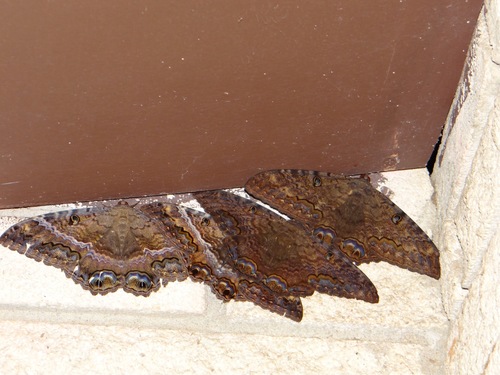
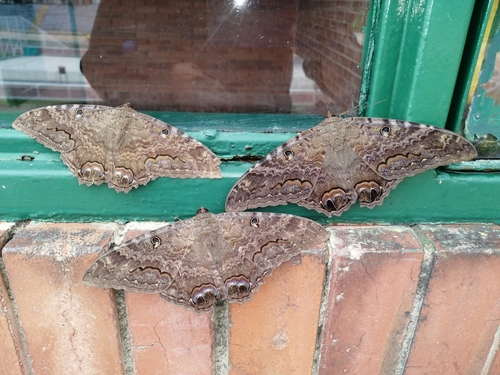
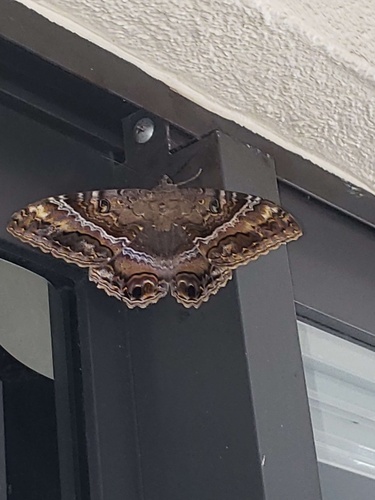
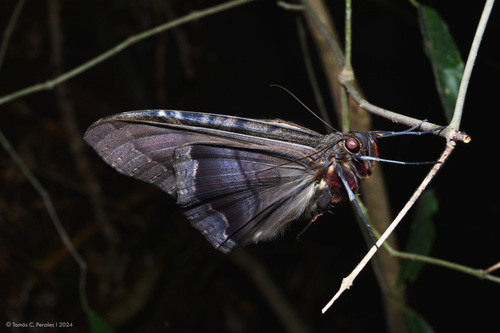
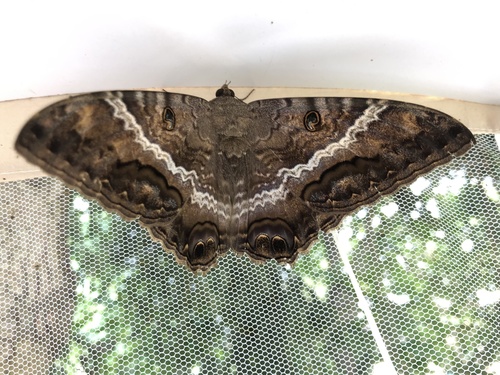
More butterflies & moths
This guide was written with AI assistance and fact-checked, last updated 2026-10-10. Identification from photos is never certain: don't handle insects you can't identify, and get medical advice for bites, stings or allergic reactions. More about the black witch moth: iNaturalist, Wikipedia.