
Common wood-nymph
Cercyonis pegala · Satyr and wood-nymph butterflies
A widespread North American brown butterfly with distinctive eye spots, common in open woods, meadows and grassy clearings.
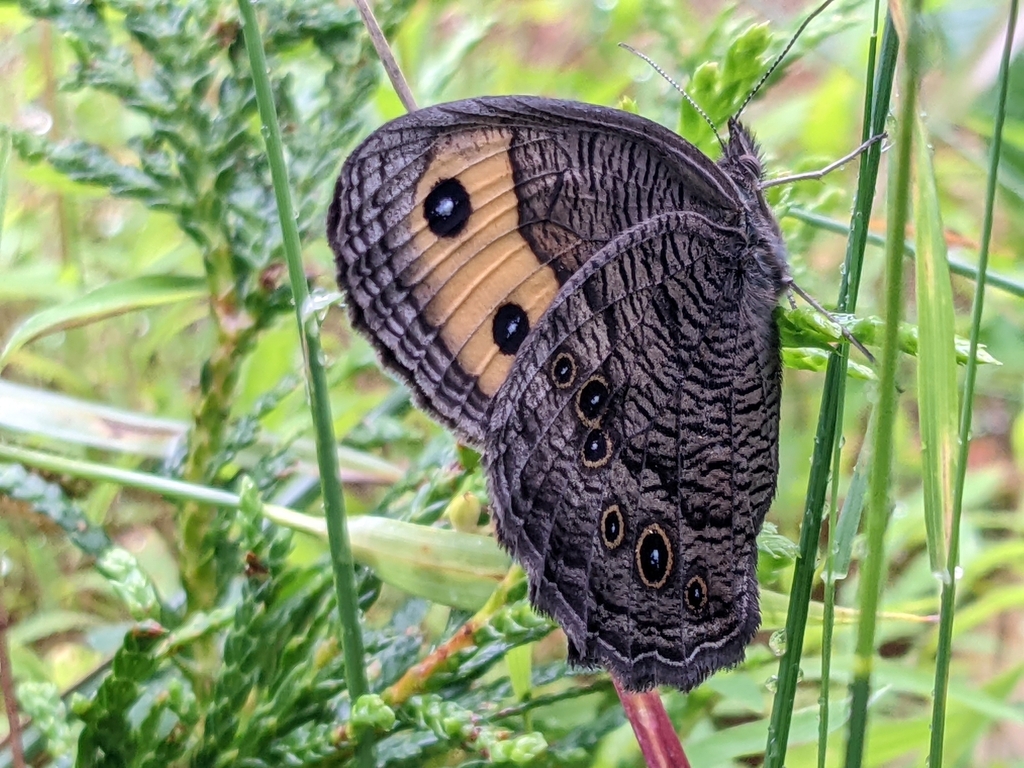
!Is the common wood-nymph dangerous?
No. Harmless to people. Does not bite or sting. Handle gently if necessary; wings are delicate and easily damaged.
Pets
Not toxic to pets; butterflies are flighty and seldom caught by dogs or cats, but ingestion of any insect can cause mild digestive upset.
📖Overview
Cercyonis pegala is a medium-sized satyrine butterfly found across much of North America. It prefers open woodland edges, grassy clearings, meadows and roadsides. Adults are often seen fluttering slowly through vegetation and frequently settle with wings closed or partially open, revealing eye spots used to deter predators. The species has several regional subspecies and forms that vary in size and number of eye spots.
🔍How to identify a common wood-nymph
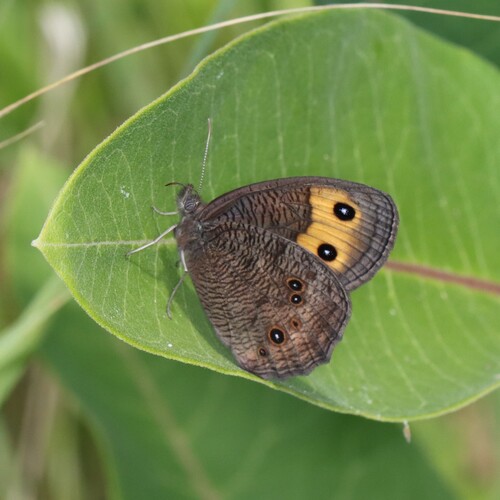
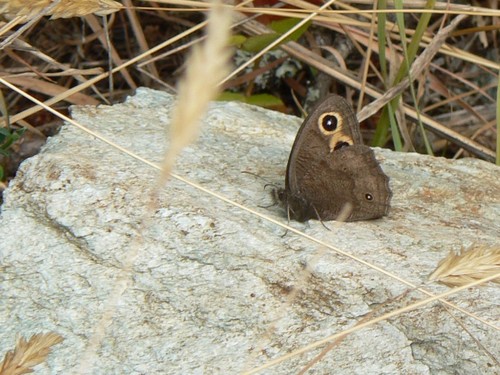
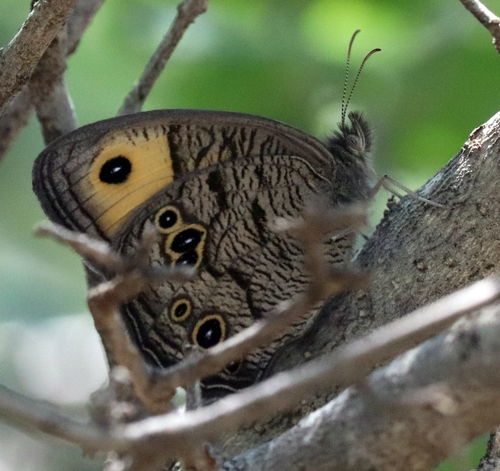
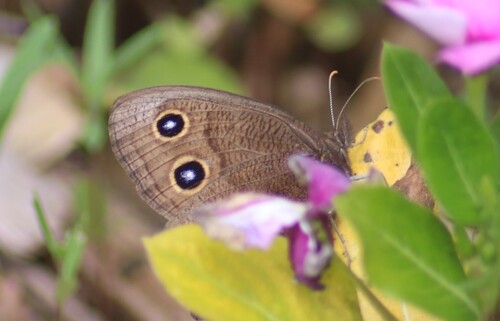
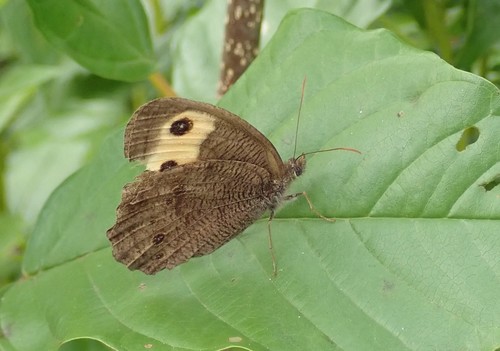
Wings are various shades of brown. Each forewing has two large black eyespots with white or bluish pupils, often set in a pale yellow patch (bold in southern and coastal populations, faint or absent in northern and western ones). The hindwing upperside may have a small eyespot, and the hindwing underside shows a variable row of small eyespots. The underside is finely striated, helping the butterfly blend into dead grasses and leaf litter. Wing margins are rounded and the wingspan is moderate.
- Look for two large yellow-ringed black eyespots on each forewing; the hindwing underside has a variable row of small eyespots
- Brown wings, often with a pale yellow forewing patch around the eyespots; finely striated underwings blend with dead grass
- Moderate size with rounded wing margins and slow, low flight through grassy areas
Lookalikes
Eyed brown Satyrodes eurydice
Eyed brown tends to have larger, more pronounced hindwing eyespots and prefers wetter habitats; wing markings differ in pattern and contrast.
Northern pearly-eye Enodia anthedon
Northern pearly-eye has a row of small eyespots on the hindwing and darker, more mottled underwings; range and habitat preferences can help separate them.
↻Life cycle
Egg
Females lay single eggs on or near host grasses. Eggs are small and pale, hatching in days to weeks depending on temperature.
Larva (caterpillar)
Caterpillars are green with pale stripes and two short reddish tails, and feed on various grasses. Newly hatched caterpillars overwinter without feeding and resume development in spring.
Pupa (chrysalis)
The caterpillar pupates in a loose chrysalis among leaf litter or grass stems; pupal stage lasts one to a few weeks depending on season and climate.
Adult (butterfly)
Adults emerge to fly, mate and feed. Depending on latitude there may be one or more broods per year; many northern populations are univoltine (one brood).
🍃Diet and predators
Young eat
Grasses (various species such as Poa, Festuca and others; specific hosts vary regionally)
Adults eat
Nectar from flowers, tree sap, rotting fruit and other sugary sources
Predators of the young
Parasitoid wasps, ground predators such as ants, spiders and small mammals
Predators of adults
Birds, dragonflies and other insectivorous predators; eye spots and cryptic underwings help reduce predation
🌱Effect on plants and gardens
Larvae feed on various grasses; adults visit nectar sources, tree sap and rotting fruit. They are not a garden pest and may help pollinate some flowers.
📍Where and when to find it
Adults fly low through grassy openings, woodland edges and meadows. Look for caterpillars on grasses and for pupae in leaf litter or at the base of grass clumps.
Best time
Best observed from late spring through summer into early autumn depending on latitude; warm sunny mid-morning to mid-afternoon is most active.
Observation tips
Walk slowly along grassy edges, watch low vegetation and dead grass; use a telephoto or macro lens to photograph wing markings without handling the butterfly.
✨Fun facts
- Eye spots on wings help distract predators and can reduce the chance of fatal attacks.
- Newly hatched caterpillars spend the winter without feeding, then begin eating grasses in spring.
- Adults often feed on tree sap and rotting fruit as well as flower nectar.
?Frequently asked questions
Is the common wood-nymph dangerous?
No. It is harmless to people and pets and does not bite or sting.
Do common wood-nymph caterpillars eat garden plants?
They feed on native and non-native grasses, not broadleaf garden plants, so they are not usually a garden pest.
Why is this butterfly in my yard?
If you have grassy areas, meadow patches or open woody edges, the habitat provides food for caterpillars and nectar or sap for adults, so yards with these features often attract them.
How can I encourage common wood-nymphs in my garden?
Leave or plant native grasses for caterpillars, provide nectar flowers, avoid heavy pesticide use, and keep some undisturbed leaf litter or grassy thatch.
How do I tell a common wood-nymph from similar brown butterflies?
Check the number, size and placement of eye spots and the underwing pattern; local field guides or photos with range information help narrow down identification.
📷Photos of the common wood-nymph
More butterflies & moths
This guide was written with AI assistance and fact-checked, last updated 2026-10-10. Identification from photos is never certain: don't handle insects you can't identify, and get medical advice for bites, stings or allergic reactions. More about the common wood-nymph: iNaturalist, Wikipedia.