
Common wood-nymph vs Little wood satyr
These two are easy to mix up. Here's how to tell a common wood-nymph from a little wood satyr, and whether either one bites or stings.
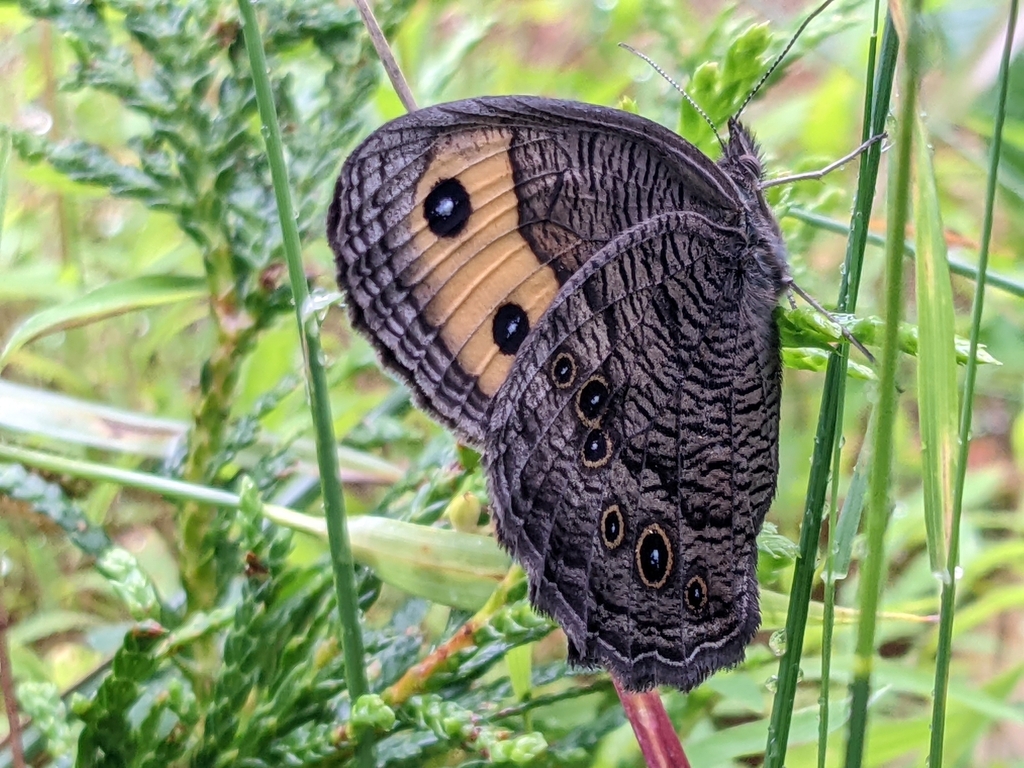
Common wood-nymph
Cercyonis pegala

Little wood satyr
Megisto cymela
≠The key differences
Common wood-nymph is larger with more prominent eyespots (usually two large eyespots on the forewing) and less delicate pale banding.
⚖︎Side by side
| Common wood-nymph | Little wood satyr | |
|---|---|---|
| To humans | Non-toxic | Non-toxic |
| Size | Wingspan 45-65 mm | Wingspan about 38-48 mm |
| Colours | Brown, Pale yellow, Black, Orange-brown | Brown, Tan, Pale yellow, Cream, Dark brown |
| Family | Nymphalidae | Nymphalidae |
| Habitat | Open woodlands, woodland edges, grassy clearings, meadows, prairies and roadside verges | Shady deciduous woodlands, forest edges, streamsides, grassy openings and paths. |
| Range | Widespread across much of North America, from southern Canada through most of the United States; appearance varies by region | Eastern and central North America from southern Canada through much of the United States, west to the Great Plains. |
| Active | Late spring to early autumn depending on region; adults are diurnal and most active in warm, sunny weather | Spring through early autumn; typically daytime, early morning and late afternoon in shady areas. |
| Pest? | No | No |
🔍How to spot a common wood-nymph
- Look for two large yellow-ringed black eyespots on each forewing; the hindwing underside has a variable row of small eyespots
- Brown wings, often with a pale yellow forewing patch around the eyespots; finely striated underwings blend with dead grass
- Moderate size with rounded wing margins and slow, low flight through grassy areas
🔍How to spot a little wood satyr
- Small rounded brown wings with two yellow-ringed black eyespots on each wing, visible from above and below.
- Underside paler brown with two dark lines crossing both wings; eyespots are smaller and fewer than in larger wood-nymphs.
- Habitually flies low and close to shaded grassy ground; often seen along woodland paths.
?Frequently asked questions
What is the difference between a common wood-nymph and a little wood satyr?
Common wood-nymph is larger with more prominent eyespots (usually two large eyespots on the forewing) and less delicate pale banding.
Is a common wood-nymph or a little wood satyr more dangerous?
Common wood-nymph: Non-toxic. Little wood satyr: Non-toxic. Harmless to people. Harmless to people.
Identification from photos is never certain: don't handle insects you can't identify, and get medical advice for bites, stings or allergic reactions.