
Tobacco hornworm
Manduca sexta · Hawk moths
Large sphingid moth whose green caterpillar is a common pest of tobacco, tomato and other nightshades; adult is a strong nocturnal nectar feeder.
!Is the tobacco hornworm dangerous?
No. Neither the caterpillars nor adults are venomous. Caterpillars can be large and the rear "horn" may look threatening but it does not sting; handling may cause mild skin irritation in very sensitive people, but significant reactions are uncommon. Wash hands after handling.
Pets
Generally not harmful to pets. Dogs or cats eating large numbers of caterpillars could cause mild stomach upset; if a pet consumes many caterpillars or shows severe symptoms, consult a veterinarian.
📖Overview
Manduca sexta is a large moth in the sphinx or hawk moth family. Its caterpillar stage (the "tobacco hornworm") is a stout, fast-growing green larva that feeds on leaves of Solanaceae such as tobacco, tomato and pepper. The species is widespread across the Americas and is well known both as an agricultural pest and as a laboratory model organism for physiology and neurobiology.
Adults are nocturnal, powerful fliers that visit deep-throated flowers for nectar with a long proboscis. The life cycle includes egg, several larval instars, a pupal stage in soil and the adult moth; depending on climate there may be multiple generations per year. Natural enemies, especially parasitic wasps, commonly attack the caterpillars and can dramatically reduce populations.
🔍How to identify a tobacco hornworm
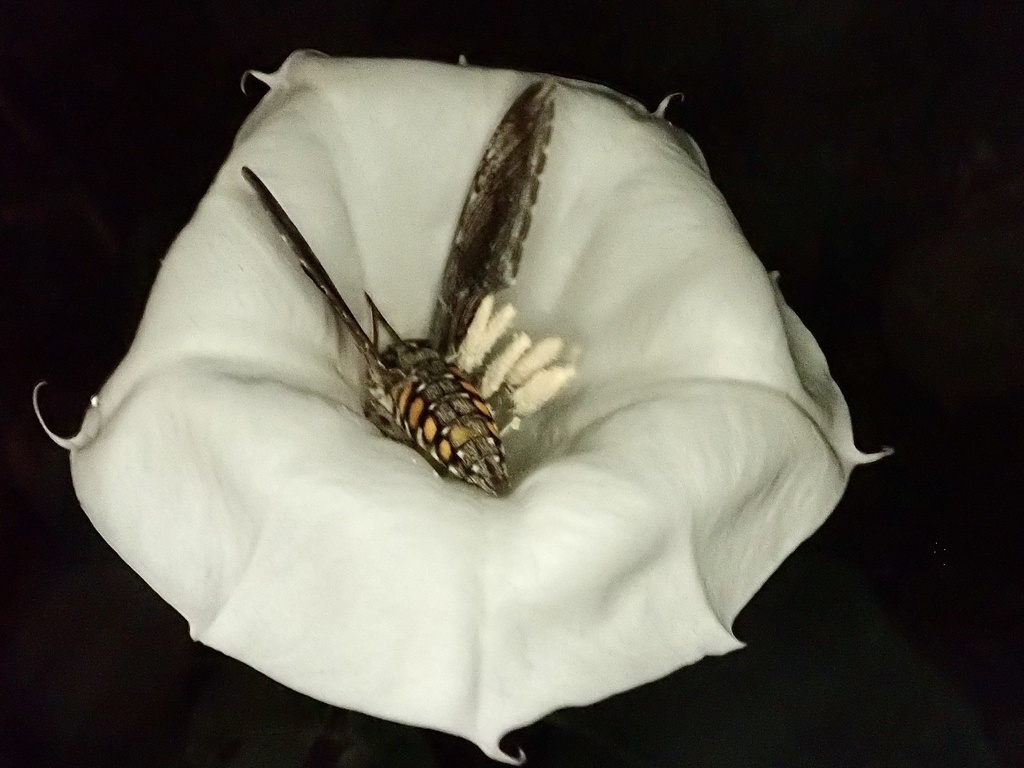
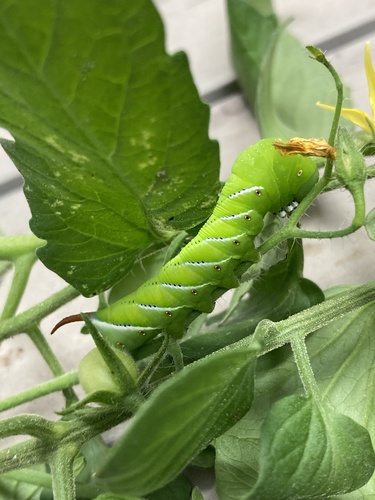
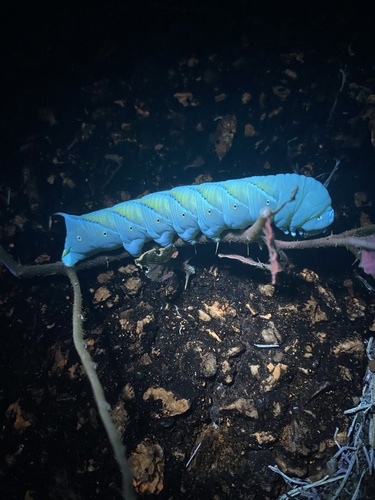
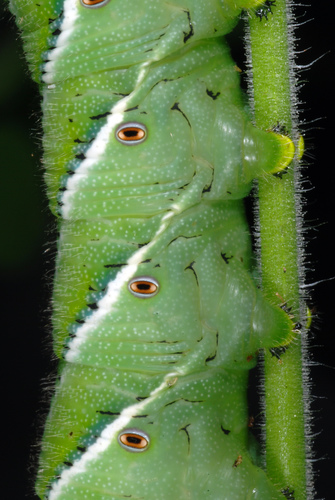
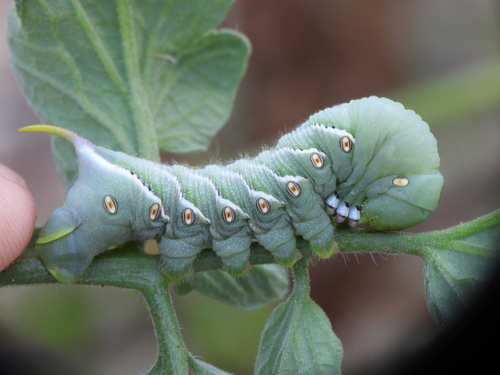
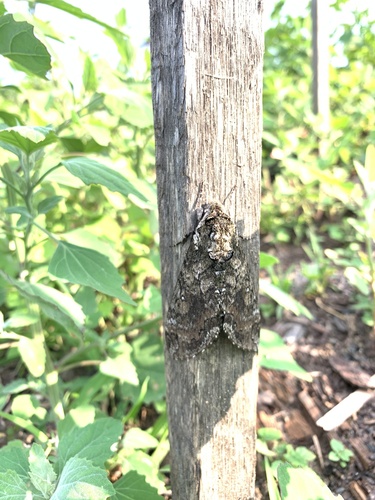
Larvae are bright green, smooth-bodied caterpillars with diagonal white or pale stripes on each segment and a conspicuous horn-like spike at the rear (usually red). Full-grown caterpillars reach large sizes, often 8-10 cm long. Pupae are brown and formed in the soil. Adults are robust moths with a wingspan typically around 90-120 mm; forewings are mottled gray-brown and the abdomen has six pairs of orange-yellow spots along the sides. The adult has a long coiled proboscis for reaching nectar.
- Large green caterpillar with diagonal pale stripes on each segment and a conspicuous rear horn that is usually red.
- Full-grown larvae reach 8-10 cm and have smooth skin without hairs.
- Adult moths are robust with a 90-120 mm wingspan, gray-brown mottled forewings and a long proboscis.
Lookalikes
Tomato hornworm Manduca quinquemaculata
Tomato hornworm (M. quinquemaculata) has V-shaped or angled white markings and typically a black or dark horn; tobacco hornworm (M. sexta) has diagonal white stripes and usually a red horn.
Pink-spotted hawk moth Agrius cingulata
Adults are similarly large and gray but have pink bands on the abdomen and hindwings instead of orange-yellow spots; caterpillars feed mainly on sweet potato and morning glories rather than nightshades.
↻Life cycle
Egg
Small spherical eggs laid singly on the underside of host plant leaves; hatch in a few days depending on temperature.
Larva (caterpillar)
Several instars of rapidly feeding green caterpillars with diagonal pale stripes and a rear horn; they grow to 8-10 cm before leaving the plant to pupate.
Pupa
Larvae burrow into soil and form dark brown pupae which overwinter or develop to the adult stage in several weeks.
Adult (moth)
Nocturnal hawk moth that emerges from the pupa, mates and lays eggs; adults feed on nectar and can live for a few weeks.
🍃Diet and predators
Young eat
Leaves of Solanaceae (tobacco, tomato, pepper, eggplant and related plants).
Adults eat
Nectar from a variety of night-blooming and deep-throated flowers; adults have a long proboscis for accessing nectar.
Predators of the young
Birds, predatory insects, spiders and parasitic wasps (notably Cotesia species) whose larvae develop on or inside the hornworm and emerge as visible white cocoons.
Predators of adults
Bats, night-flying birds and insectivorous mammals; nocturnal predators and collisions with artificial structures also cause mortality.
🌱Effect on plants and gardens
Larvae feed heavily on leaves of tobacco, tomato, pepper and other Solanaceae; heavy infestations can defoliate plants and reduce yield. Adults are nectar feeders and can act as pollinators for some flowers.
How to get rid of tobacco hornworms
Hand-pick caterpillars off plants and drop into soapy water. Inspect underside of leaves daily during growing season. Encourage natural enemies (birds, predatory insects, parasitic wasps such as Cotesia species). For larger infestations use Bacillus thuringiensis var. kurstaki (Bt) applied to foliage — effective against young larvae. Floating row covers can prevent egg-laying on young plants. Chemical insecticides are effective but choose products approved for the crop and follow label instructions.
📍Where and when to find it
Caterpillars on the leaves and stems of tobacco, tomato, pepper and related plants (often on the undersides of leaves). Adults visit night-blooming flowers and can be seen near gardens and fields at night.
Best time
Best observed from late spring through early fall. Caterpillars are easier to find by day; adults are active at night and at dusk.
Observation tips
Inspect the underside of large leaves for eggs and small larvae. Look for ragged feeding holes and for caterpillars partially hidden along leaf veins. Photograph caterpillars with a macro lens from a few centimetres away; flashes can startle them so use natural light when possible.
✨Fun facts
- Manduca sexta is a widely used model organism in physiology and neuroscience because the large caterpillars are easy to rear and dissect.
- Parasitism by Cotesia wasps is easy to spot: dead or weakened caterpillars often carry clusters of white parasitoid cocoons on their backs.
- Adult moths can hover like hummingbirds and often visit long-tubed flowers such as tobacco and petunia at night.
?Frequently asked questions
Do tobacco hornworms bite?
No — caterpillars do not bite you as a defensive behaviour. They may try to thrash when handled but are not venomous.
Are tobacco hornworms dangerous to humans?
No — they are not poisonous or venomous. Handle them gently or avoid handling if you prefer.
Why are tobacco hornworms in my garden?
They are attracted to plants in the nightshade family, especially tobacco, tomato and pepper, which provide food for their larvae.
How can I get rid of tobacco hornworms on my tomatoes?
Hand-pick caterpillars and destroy them or drop into soapy water. Encourage natural enemies, use Bt spray against young larvae, or cover plants with row covers when possible.
Will tobacco hornworms kill my tomato plants?
A few caterpillars usually cause only minor damage, but heavy infestations can strip foliage and reduce fruit yield. Early detection and control prevent serious harm.
How do I tell a tobacco hornworm from a tomato hornworm?
Look at the stripe shape and horn colour: tobacco hornworm (Manduca sexta) has diagonal pale stripes and usually a red horn; tomato hornworm (Manduca quinquemaculata) shows V-shaped markings and a dark horn.
📷Photos of the tobacco hornworm
More butterflies & moths
This guide was written with AI assistance and fact-checked, last updated 2026-10-10. Identification from photos is never certain: don't handle insects you can't identify, and get medical advice for bites, stings or allergic reactions. More about the tobacco hornworm: iNaturalist, Wikipedia.