
Tobacco hornworm vs Pink-spotted hawkmoth
These two are easy to mix up. Here's how to tell a tobacco hornworm from a pink-spotted hawkmoth, and whether either one bites or stings.
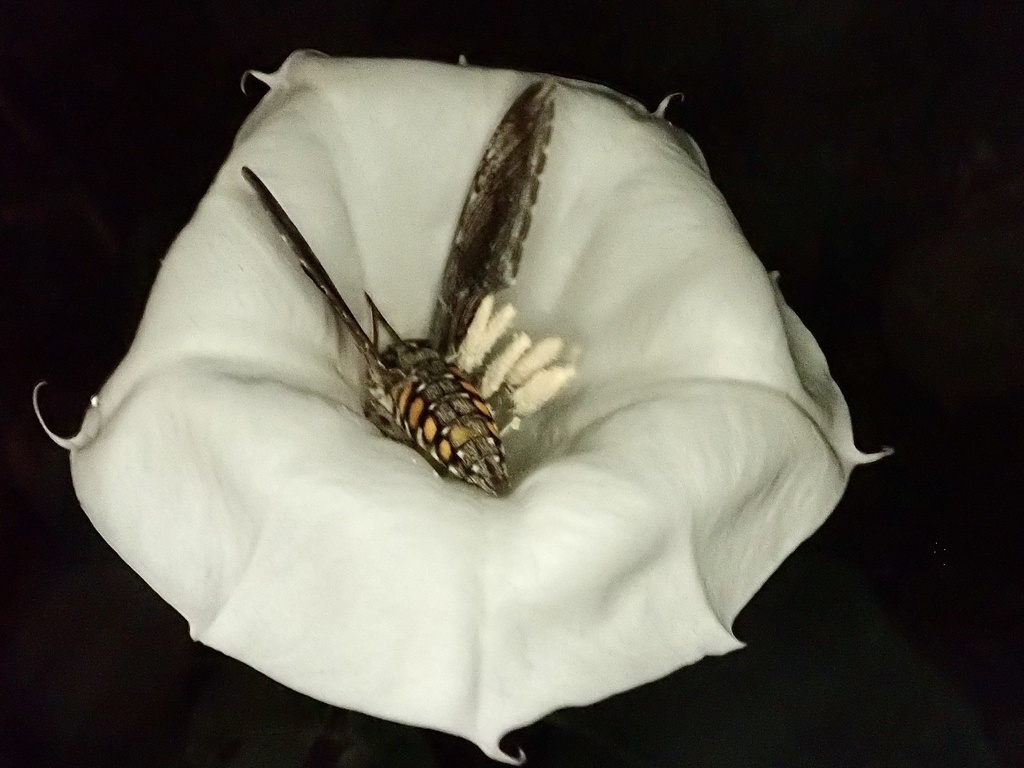
Tobacco hornworm
Manduca sexta

Pink-spotted hawkmoth
Agrius cingulata
≠The key differences
Adults are similarly large and gray but have pink bands on the abdomen and hindwings instead of orange-yellow spots; caterpillars feed mainly on sweet potato and morning glories rather than nightshades.
Adults have yellow-orange rather than pink spots along the abdomen; caterpillars are green with diagonal white stripes and a curved red horn and feed on tomato, tobacco and related plants rather than sweet potato.
⚖︎Side by side
| Tobacco hornworm | Pink-spotted hawkmoth | |
|---|---|---|
| To humans | Non-toxic | Non-toxic |
| Size | 9-12 cm wingspan | 90-120 mm wingspan |
| Colours | Green, Pale cream, Red (horn), Gray-brown | Gray-brown, Pink, Pale gray, Dark brown |
| Family | Sphingidae | Sphingidae |
| Habitat | Gardens, agricultural fields and wild areas where host plants (Solanaceae) grow; adults visit nectar-rich flowers at night. | Open woodland edges, gardens, agricultural fields, coastal scrub and other areas where host plants (Convolvulaceae) or nectar sources occur. |
| Range | Widespread in North, Central and South America; common across the United States where host crops are grown. | Tropical and subtropical Americas (from South America through Central America and the Caribbean); regular migrant into the southern and eastern United States and occasionally farther north. |
| Active | Spring to autumn (multiple generations in warm areas); caterpillars feed mainly by day while adults are primarily nocturnal. | Mostly nocturnal; adults active at dusk and during the night. In warmer regions adults may be present year-round; in temperate areas they appear as migrants in summer and early autumn. |
| Pest? | Yes | Yes |
🔍How to spot a tobacco hornworm
- Large green caterpillar with diagonal pale stripes on each segment and a conspicuous rear horn that is usually red.
- Full-grown larvae reach 8-10 cm and have smooth skin without hairs.
- Adult moths are robust with a 90-120 mm wingspan, gray-brown mottled forewings and a long proboscis.
🔍How to spot a pink-spotted hawkmoth
- Look for a large sphingid moth with a 90-120 mm wingspan and narrow, pointed forewings.
- Check the abdomen for a row of conspicuous pink to rose spots along the sides against a gray-brown background.
- Caterpillars are hornworms with a curved posterior horn and diagonal pale stripes; usually found on morning-glory or sweet potato leaves.
- Active at dusk and nighttime, often visiting tubular, fragrant flowers for nectar.
?Frequently asked questions
What is the difference between a tobacco hornworm and a pink-spotted hawkmoth?
Adults are similarly large and gray but have pink bands on the abdomen and hindwings instead of orange-yellow spots; caterpillars feed mainly on sweet potato and morning glories rather than nightshades. Adults have yellow-orange rather than pink spots along the abdomen; caterpillars are green with diagonal white stripes and a curved red horn and feed on tomato, tobacco and related plants rather than sweet potato.
Is a tobacco hornworm or a pink-spotted hawkmoth more dangerous?
Tobacco hornworm: Non-toxic. Pink-spotted hawkmoth: Non-toxic. Neither the caterpillars nor adults are venomous. Adults do not bite or sting and are not venomous.
Identification from photos is never certain: don't handle insects you can't identify, and get medical advice for bites, stings or allergic reactions.