
Zebra longwing
Heliconius charithonia · Longwing butterflies
A slender, black-and-yellow striped butterfly that feeds on both nectar and pollen, common in the Americas and known for long life and communal roosting.
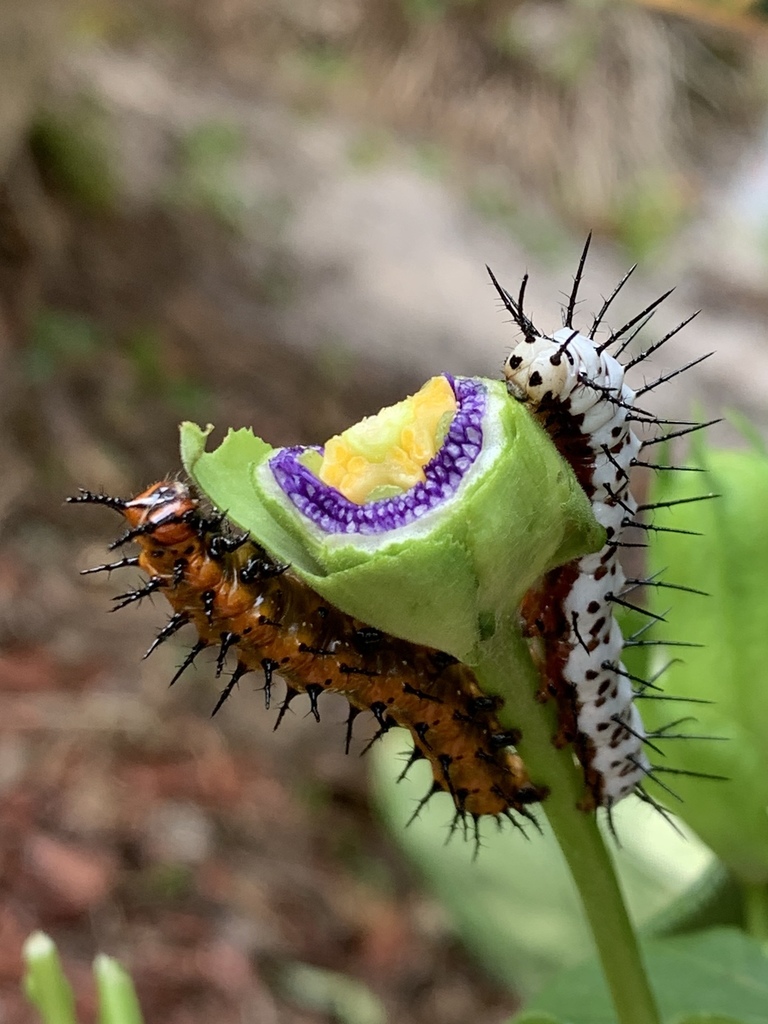
!Is the zebra longwing dangerous?
No. Adults and caterpillars are not dangerous to people. The caterpillars have spines that can be irritating to very sensitive skin in rare cases, but they do not sting or inject venom. Adults do not bite or sting. Handle gently or avoid touching to prevent harm to the butterfly.
Pets
Generally not harmful to pets. Because adults and larvae are unpalatable, pets usually avoid eating them; however, ingestion of multiple caterpillars could cause mild gastrointestinal upset.
📖Overview
Heliconius charithonia is a tropical and subtropical butterfly noted for narrow wings banded with yellow or cream on a dark background. Adults feed on nectar and pollen (the latter is unusual among butterflies), which helps extend their lifespan to several months. Larvae use passionflower (Passiflora) vines as host plants and sequester plant toxins that make the adults distasteful to predators. They roost communally at night in groups of individuals.
🔍How to identify a zebra longwing
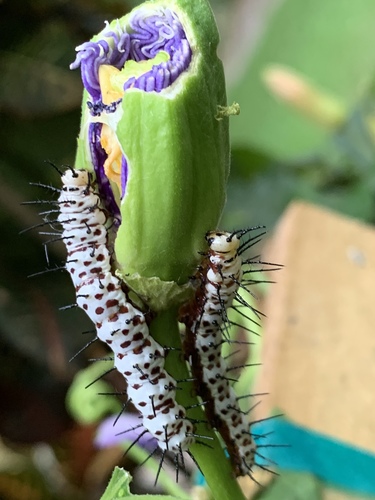
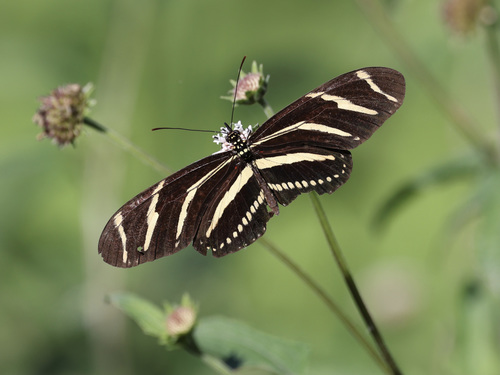
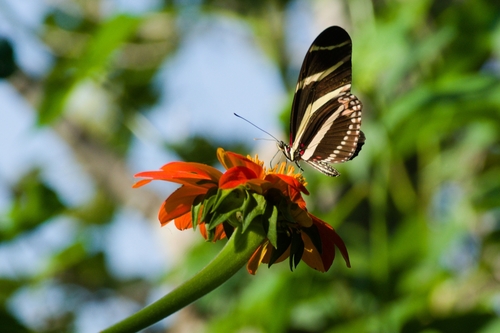
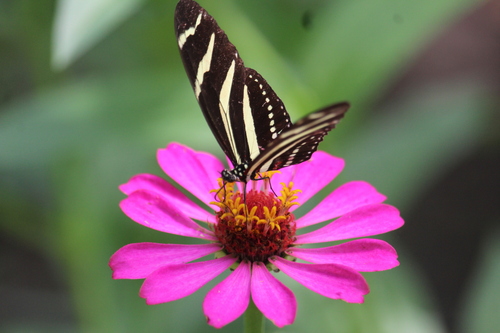
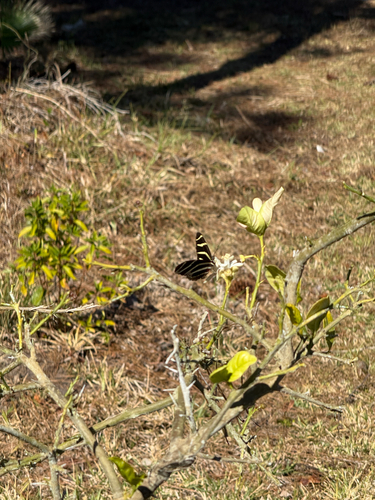
Adults are slender with elongated forewings and hindwings. The wings are black with narrow yellow stripes running across the forewings and hindwings, giving a zebra-like appearance; the hindwing also has a row of small yellow spots near the edge. The body is dark with yellow markings on the head and thorax. The underside repeats the pattern more faintly, with small red spots near the wing bases. Caterpillars are white with black spots and long black branched spines. The chrysalis is brown and spiny with silvery spots, resembling a dead leaf.
- Long, narrow wings with multiple narrow yellow or cream lengthwise stripes on a black background.
- Wingspan around 7-10 cm and a slender body compared with many other nymphalids.
- Caterpillars white with black spots and black spines; look for them on passionflower vines.
- Roosting in small to large communal groups at dusk is characteristic behavior.
Lookalikes
Julia butterfly Dryas iulia
Dryas iulia is mostly bright orange with black markings rather than black with yellow stripes; wing shape is broader and less striped.
Tiger longwing Heliconius hecale
H. hecale has broader orange or yellow patches and different stripe arrangement; check stripe number, width and overall ground color to distinguish.
Zebra swallowtail Protographium marcellus
Also black-and-white striped, but has broad, triangular wings with long hindwing tails and pale greenish-white rather than yellow stripes.
↻Life cycle
Egg
Females lay small, pale eggs singly on the leaves and stems of Passiflora vines.
Larva (caterpillar)
White, black-spotted caterpillars with long black spines feed on Passiflora leaves, developing through several instars; they take up compounds from the host plant that make them distasteful.
Pupa (chrysalis)
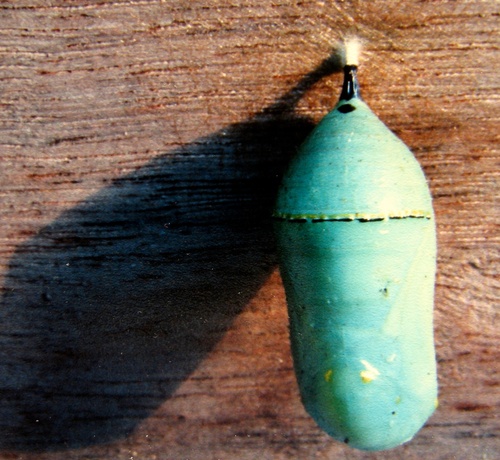
The brown, spiny chrysalis hangs from a stem or leaf and resembles a dead leaf; metamorphosis takes about 1-2 weeks depending on temperature.
Adult (butterfly)
Adults emerge with narrow, striped wings, feed on nectar and pollen, mate, and may roost communally at night; they can live for several months.
🍃Diet and predators
Young eat
Leaves of Passiflora (passionflower) species
Adults eat
Nectar from flowers and pollen (pollen feeding supplements amino acids and extends lifespan)
Predators of the young
Parasitic wasps and flies, predators such as ants and some birds before toxicity accumulates
Predators of adults
Birds, spiders and predatory insects may take some adults, but many predators avoid them because of toxins sequestered from host plants
🌱Effect on plants and gardens
Larvae feed on passionflower (Passiflora) species; this feeding is rarely a serious garden problem unless passionflower vines are heavily infested. Adults are pollinators and also consume pollen, which helps their longevity.
📍Where and when to find it
Look on and near passionflower vines for eggs and caterpillars; adults visit a wide range of nectar flowers and often roost in groups on vines, shrubs or small trees.
Best time
Best seen during warm months; in the tropics year-round. Active during daylight, especially mid-morning to late afternoon; roosts visible at dusk.
Observation tips
Photograph perched butterflies from the side to capture the striped wings; check underside of passionflower leaves for eggs and younger caterpillars. Approach quietly when viewing communal roosts at dusk.
✨Fun facts
- Zebra longwings eat pollen as well as nectar; pollen feeding provides amino acids that let them live much longer than most butterflies.
- They often roost communally at night, sometimes in groups of dozens of individuals on a single vine or shrub.
- Their bright stripes warn predators that they are unpalatable because they sequester toxins from passionflower host plants.
?Frequently asked questions
Do Zebra longwing butterflies bite or sting?
No. Adults do not bite or sting. Caterpillars have spines that may irritate very sensitive skin but they do not inject venom.
Are Zebra longwings poisonous to humans or pets?
They are not poisonous in the sense of causing human poisoning, but they are unpalatable due to chemicals from passionflower hosts. Eating them could cause mild stomach upset in pets.
Why do I have Zebra longwings in my garden?
If you have passionflower vines or nectar-rich flowers, those provide food and breeding sites for them. Warm climates and sheltered garden areas also attract them.
How can I encourage Zebra longwings in my garden?
Plant native Passiflora species for caterpillars, and provide a variety of nectar plants and sheltered roosting spots (shrubs or vines). Avoid broad-spectrum pesticides.
How do I get rid of Zebra longwings if they are eating my passionflower?
They rarely cause serious damage. For heavy local feeding, hand-remove caterpillars or prune infested shoots. Use targeted biological controls (encourage parasitoids) rather than broad insecticides to protect beneficial insects.
📷Photos of the zebra longwing
More butterflies & moths
This guide was written with AI assistance and fact-checked, last updated 2026-10-10. Identification from photos is never certain: don't handle insects you can't identify, and get medical advice for bites, stings or allergic reactions. More about the zebra longwing: iNaturalist, Wikipedia.