
Corn earworm
Helicoverpa zea · Owlet moths
A widespread agricultural moth whose caterpillars feed on corn ears, tomatoes, cotton and many other crops, and are a major pest in the Americas.
!Is the corn earworm dangerous?
No. Corn earworm caterpillars are not venomous or poisonous. They can bite defensively if handled but do not pose a medical hazard; handling may cause minor skin irritation in sensitive people. Wash hands after handling caterpillars and damaged plant material.
Pets
Generally not toxic to pets. Pets that eat large amounts of caterpillars or damaged fruit could get mild stomach upset; seek veterinary advice if symptoms occur.
📖Overview
Helicoverpa zea is a moth in the family Noctuidae. The species is highly polyphagous: its larvae (caterpillars) attack a wide variety of crop plants including corn, cotton, tomatoes, soybean and many vegetables and ornamentals. It has multiple generations per year in warm regions and is an economically important pest because larval feeding damages fruit, ears and bolls. Adults are strong fliers, nocturnal and attracted to lights and flowers for nectar. Population size and number of generations vary with latitude and climate.
🔍How to identify a corn earworm
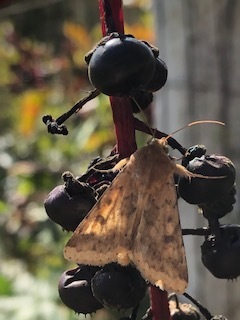
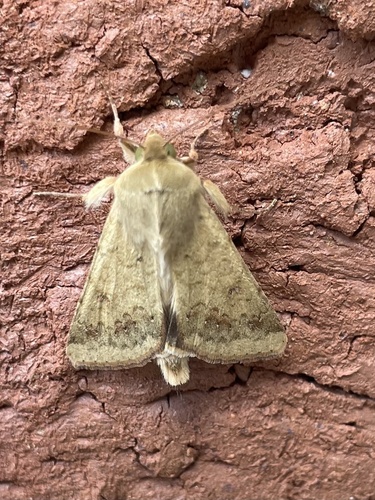
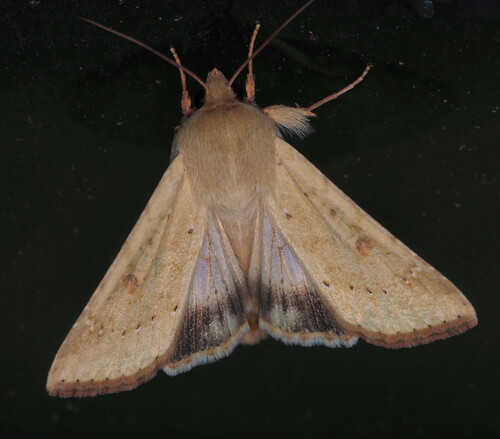
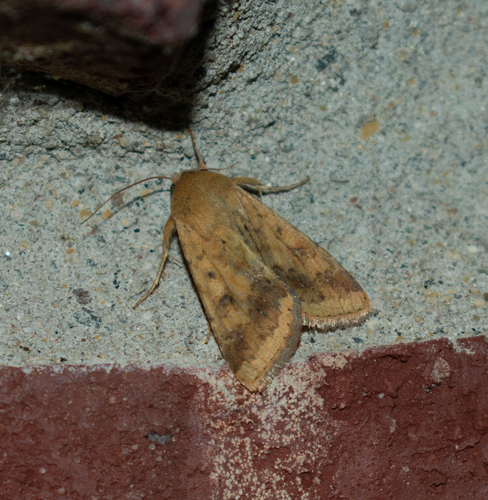
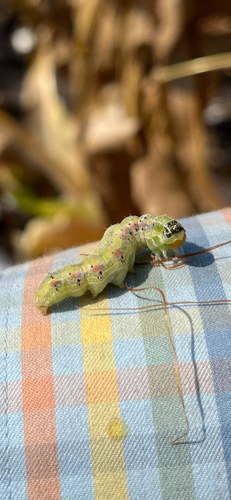
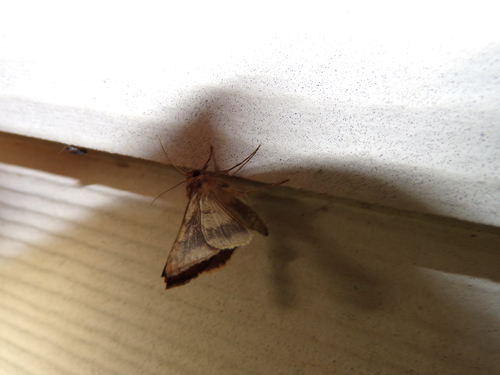
Adults have a wingspan of roughly 30-45 mm. Forewings are variable: usually tan to brown with darker markings and a small dark spot near the middle; hindwings are lighter, often pale with a darker margin. Larvae are the damaging stage and are highly variable in color — green, brown, pink or nearly black — often with lengthwise stripes and skin covered in tiny spines. Mature caterpillars reach about 30-40 mm. Eggs are small, spherical and pale when laid, darkening before hatching.
- Look for variable-colored caterpillars (green, brown, pink) up to 30-40 mm feeding in corn ears or on fruit.
- Adults have a 30-45 mm wingspan with tan to brown forewings and a small dark spot near the middle.
- Damage in corn: partially eaten kernels at the ear tip or inside the husk where larvae entered via the silk.
- Eggs are small and laid singly on silks, leaves or fruit; finding eggs on silks often predicts ear infestation.
Lookalikes
Old World bollworm Helicoverpa armigera
Very similar in appearance; H. armigera is primarily Old World in distribution though it has invaded some areas; definitive separation often requires genitalia examination or DNA.
Tobacco budworm Chloridea virescens
Generally smaller and with different forewing patterning; larvae host preferences and subtle wing markings help tell them apart.
↻Life cycle
Egg
Small spherical eggs laid singly or in small groups on leaves, silks, fruit or flowers; hatch in a few days depending on temperature.
Larva (caterpillar)
The feeding stage; larvae pass through several instars and vary in color. They bore into corn ears or feed on fruit and bolls, causing the economic damage associated with the species.
Pupa
Larvae pupate in the soil in a chamber a few centimeters deep; the pupal stage lasts one to several weeks depending on temperature and generation.
Adult (moth)
Nocturnal, nectar-feeding moths. Adults mate and females lay eggs on suitable host plants to begin the next generation.
🍃Diet and predators
Young eat
Plant tissues: corn kernels, tomato fruit, cotton bolls, soybean, various vegetable and ornamental crops
Adults eat
Flower nectar and other liquid carbohydrates
Predators of the young
Predatory insects (lady beetles, lacewings, minute pirate bugs), spiders, birds, and parasitoids such as Trichogramma wasps (on eggs), braconid wasps and tachinid flies
Predators of adults
Bats, night-flying predatory insects and spiders, some birds at dusk/dawn
🌱Effect on plants and gardens
Larvae feed directly on reproductive parts of plants: corn ears, tomato fruit, cotton bolls, soybean pods and many vegetables and flowers, causing yield loss and market damage.
How to get rid of corn earworms
Use integrated pest management: monitor adults with pheromone traps and inspect silks and fruit for eggs and young larvae; remove and destroy damaged fruit and ears; in sweet corn, a few drops of mineral oil (optionally with Bt) applied to the silk tip after pollination can protect small plantings; time Bt or other approved sprays to target young larvae before they enter ears or fruit, following label directions; encourage natural enemies; and use early planting and resistant or Bt hybrids where available.
📍Where and when to find it
Look for eggs and small larvae on corn silks, on the outside of tomato fruit, in open bolls of cotton, and on leaves and flowers of host plants; pupae are in the soil near host plants.
Best time
From late spring through autumn in temperate regions; at night for adults and during the day for resting caterpillars and feeding damage. Early morning is good for finding caterpillars on plants.
Observation tips
Inspect corn silks within a week of silk emergence for eggs and small larvae. Use a flashlight at night to spot nectar-feeding adults. Photograph caterpillars on a neutral background to show color and markings.
✨Fun facts
- Corn earworm larvae are called 'earworms' because they commonly feed inside the tips of corn ears where they are protected.
- Because the larvae feed on many kinds of crops, they are among the most important generalist agricultural pests in the Americas.
- Female moths can lay hundreds of eggs over their lifetime, contributing to rapid population growth when conditions are favorable.
?Frequently asked questions
Do corn earworm caterpillars bite?
They can pinch or bite defensively if picked up, but they are not venomous and bites are uncommon and not medically significant.
Will corn earworms harm humans or pets?
No—they are not poisonous. Handling may cause minor skin irritation for sensitive people; washing hands after contact is sufficient.
Why are corn earworms in my house or garden?
If you grow host crops such as corn, tomatoes or cotton nearby, moths lay eggs on those plants and larvae hatch and feed there. Adults are also attracted to lights at night and may enter buildings.
How do I get rid of corn earworms in corn or tomatoes?
Use integrated pest management: monitor with pheromone traps, inspect silks and fruit, remove and destroy heavily damaged fruit, time insecticide or Bt sprays to target young larvae, encourage natural enemies, and use early planting or resistant hybrids where available.
How many generations per year do they have?
Depends on climate: 2-3 generations in cool regions and 4-6 or more in warm southern areas where the season is long.
📷Photos of the corn earworm
More butterflies & moths
This guide was written with AI assistance and fact-checked, last updated 2026-10-10. Identification from photos is never certain: don't handle insects you can't identify, and get medical advice for bites, stings or allergic reactions. More about the corn earworm: iNaturalist, Wikipedia.