
Eight-spotted forester
Alypia octomaculata · Forester moths
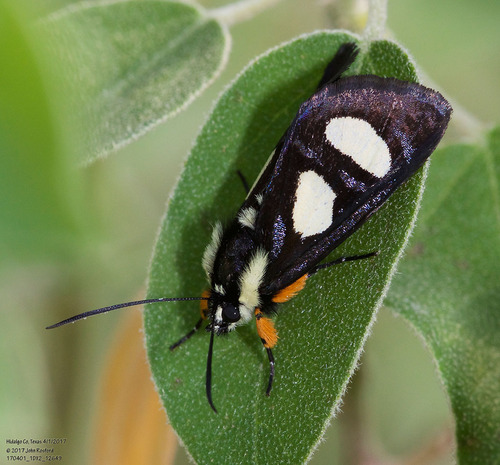
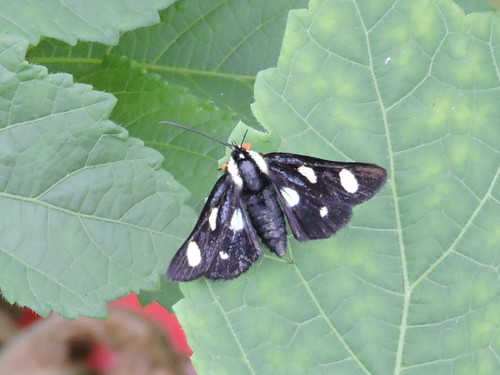
A day-flying black moth with two pale yellow spots on each forewing and two white spots on each hindwing (eight in total), found in eastern North America and often seen on grape and Virginia creeper.
!Is the eight-spotted forester dangerous?
No. Harmless to people. Adults do not bite or sting. If handled gently, adults and caterpillars will not cause harm beyond the chance of a minor skin irritation in very sensitive individuals; standard hand-washing is enough.
Pets
Not toxic to pets. Caterpillars are not known to be dangerous if accidentally eaten, though large amounts of plant material could upset a pet's stomach. Keep pets from eating unknown insects or large quantities of grape leaves.
📖Overview
Alypia octomaculata is a striking day-flying moth common in woodlands, edges, gardens and near vineyards in eastern North America. Adults are active in daylight and visit flowers; the caterpillars feed mainly on grapevines (Vitis) and Virginia creeper (Parthenocissus). They are not dangerous to people and rarely reach pest status on cultivated grapes.
Adults fly in spring and summer; in warmer parts of its range there can be two broods in a year. The species is easily noticed because of its black wings patterned with bright spots and its habit of flying by day rather than at night like many moths.
🔍How to identify an eight-spotted forester
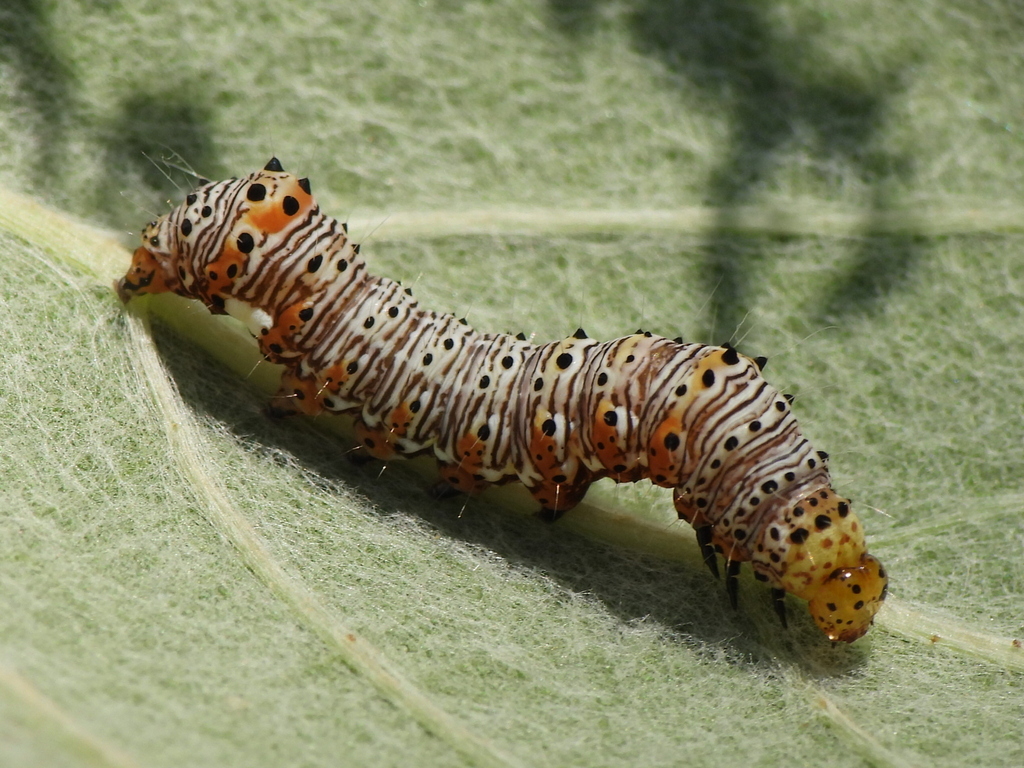
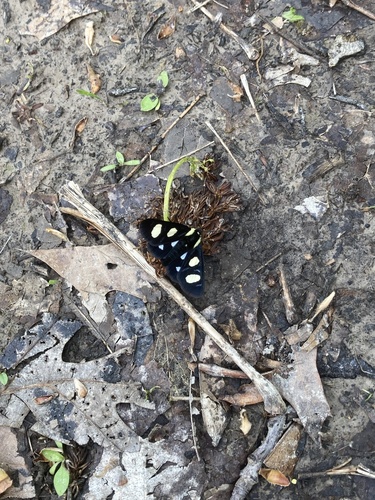
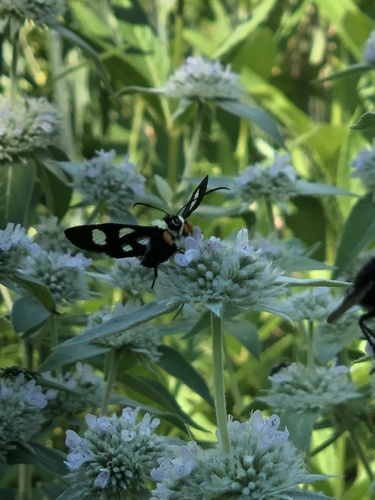
Adult wings are black with two large pale yellow spots on each forewing and two white spots on each hindwing (eight spots in total). The body is stout and black, and the front and middle legs carry conspicuous orange hair tufts. Wingspan is roughly 30-40 mm. Caterpillars are boldly banded in orange, black and white with an orange head and black spots.
- Look for a black moth with two pale yellow spots on each forewing and two white spots on each hindwing (eight spots total).
- Day-flying behavior: active in daylight on flowers or resting on leaves.
- Wingspan about 30-40 mm, a stout black body and orange hair tufts on the front and middle legs.
- Caterpillars on grape or Virginia creeper banded in orange, black and white are likely Alypia caterpillars.
Lookalikes
Six-spotted forester Alypia langtoni
A northern and western species with only one white spot on each hindwing (six spots total) instead of two; the eight-spotted forester has two on each hindwing.
Yellow-collared scape moth Cisseps fulvicollis
Narrower-winged and plain dark with a yellow-orange collar on the thorax; it lacks the large pale spots on the wings.
↻Life cycle
Egg
Females lay small eggs on host plant leaves (vines).
Larva (caterpillar)
Boldly banded orange, black and white caterpillars feed on the leaves of grape and Virginia creeper, growing through several instars.
Pupa
Pupation typically occurs in soil, leaf litter or soft rotting wood near host plants.
Adult (moth)
Day-flying moth with pale yellow forewing spots and white hindwing spots on black wings; adults feed at flowers and seek mates.
🍃Diet and predators
Young eat
Leaves of grape (Vitis) and Virginia creeper (Parthenocissus) and related vines
Adults eat
Nectar from flowers; adults may also take liquids from other sources
Predators of the young
Parasitoid wasps, predatory insects, birds and small mammals
Predators of adults
Birds, some predatory insects and spiders; their day-flying habit makes them visible to diurnal predators
🌱Effect on plants and gardens
Larvae feed on grape species (Vitis) and Virginia creeper (Parthenocissus). Feeding is usually minor; in small vineyards or on isolated vines heavy localized feeding can occur but major damage is uncommon.
📍Where and when to find it
Adults: visiting flowers in daylight, resting on leaves and vines. Larvae: on leaves of grape (Vitis) and Virginia creeper (Parthenocissus). Pupae: in soil or leaf litter near host plants.
Best time
Spring through summer; daytime is best for observing adults.
Observation tips
Photograph on sunny days when adults are active. Check grape and Virginia creeper leaves for caterpillars; use a gentle sweep net or hand collection for adults.
✨Fun facts
- Unlike many moths, the eight-spotted forester flies during the day and is often mistaken for a colorful butterfly.
- Its common name comes from its eight wing spots: two pale yellow spots on each forewing and two white spots on each hindwing.
- Because its caterpillars feed on grapevines, people sometimes notice them in backyard trellises and small vineyards.
?Frequently asked questions
Do eight-spotted forester moths bite or sting?
No. Adults do not bite or sting and are harmless to people.
Are the caterpillars harmful to grape vines?
They feed on grape and Virginia creeper leaves, but populations are usually small and damage is rarely severe in commercial vineyards.
Why is this moth in my garden during the day?
Alypia octomaculata is day-active, feeding at flowers and resting on leaves; gardens with grapes or Virginia creeper attract them.
How can I get rid of them if they are eating my grape leaves?
Hand-pick caterpillars from vines, encourage natural enemies (birds, parasitoids), or use row covers for small plantings. Chemical controls are rarely necessary; follow integrated pest management guidelines if treatment is required.
When and where will I see them?
Look on sunny days in spring and summer on flowers, woodland edges and host vines in eastern North America.
📷Photos of the eight-spotted forester
More butterflies & moths
This guide was written with AI assistance and fact-checked, last updated 2026-10-10. Identification from photos is never certain: don't handle insects you can't identify, and get medical advice for bites, stings or allergic reactions. More about the eight-spotted forester: iNaturalist, Wikipedia.