
Tersa sphinx
Xylophanes tersa · Sphinx moths and hawk moths
A slender, fast-flying hawk moth with narrow wings and a distinctive pattern; common across the Americas and a strong nighttime pollinator.
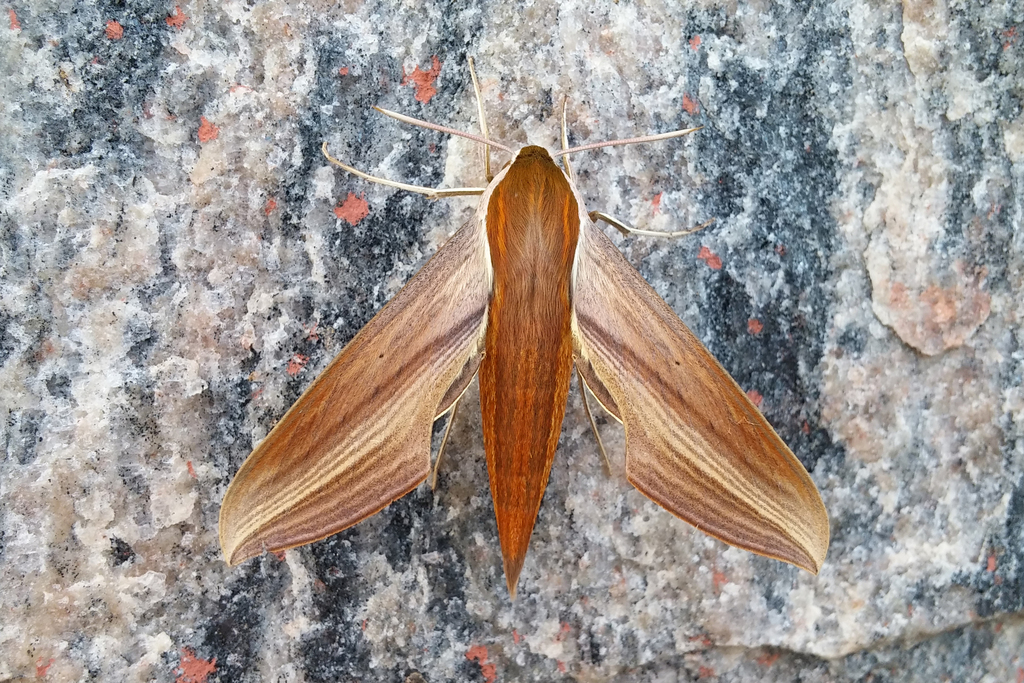
!Is the tersa sphinx dangerous?
No. Tersa sphinx moths are harmless to people. Adults do not bite or sting. Handle gently if needed; their scales can rub off but are not harmful. As with any insect, avoid touching if you have severe allergies to insect scales or dust.
Pets
Harmless to pets. Larvae are not known to be toxic to dogs or cats, but ingestion of large numbers of caterpillars could cause mild stomach upset.
📖Overview
Xylophanes tersa is a species of hawk moth (family Sphingidae) known for its swift flight and frequent visits to night-blooming flowers. Adults are most active at dusk and during the night, hovering like hummingbirds while feeding on nectar. The species occurs from the southern United States through Central America into much of South America and some Caribbean islands. Larvae feed on several species of plants, especially in the coffee family (Rubiaceae). The moth is migratory or dispersive in parts of its range and is commonly encountered in gardens, edges of woodlands, and disturbed areas where host plants occur.
Behaviorally, adults are strong fliers and are attracted to artificial lights and light-colored, heavily scented flowers. Larvae go through several instars and when disturbed may rear up in a characteristic sphinx-like pose (hence the family common name). Xylophanes tersa is not considered rare or threatened and adapts well to suburban and cultivated landscapes where larval host plants are available.
🔍How to identify a tersa sphinx
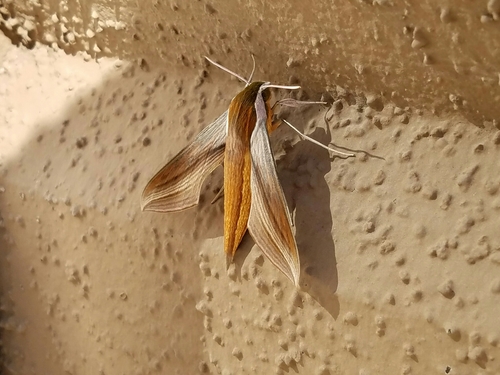
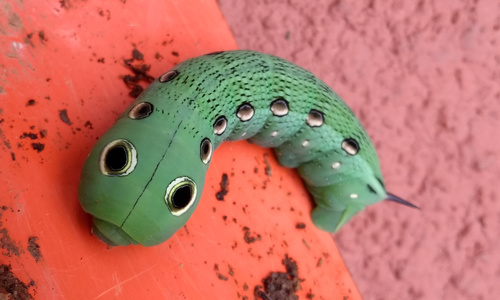
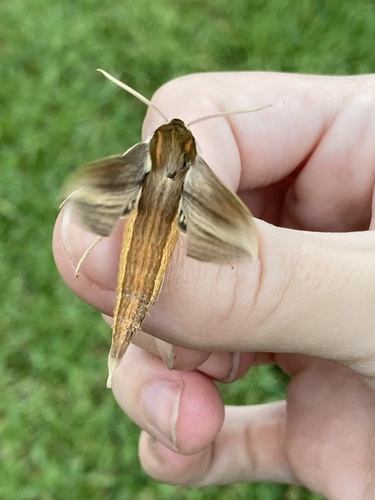
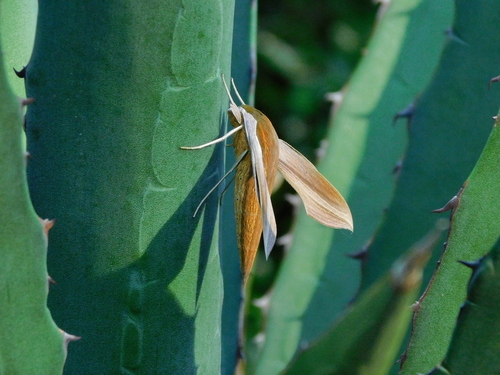
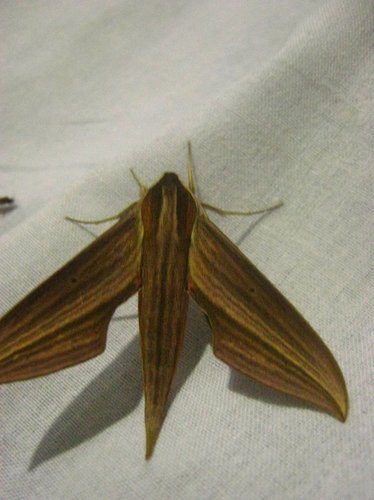
Adults are medium-sized, slender-bodied hawk moths with narrow, pointed forewings and a tapered abdomen. Forewings show a pattern of wavy, pale olive-green to brown bands and streaks on a darker background, often with a pale discal patch or streak. Hindwings are smaller and dark brown with a band of pale cream to yellowish wedge-shaped spots. The body is streamlined for fast flight; the proboscis is long for feeding on tubular flowers. Larvae are smooth-bodied, green or brown, with a large eyespot on each side near the front of the abdomen and a row of smaller eyespots along the sides, plus a small horn at the rear.
- Narrow, pointed forewings with wavy olive-green to brown banding and a pale discal streak on the forewing
- Slender, streamlined body and long proboscis for nectar feeding
- Wingspan about 55-85 mm; flies quickly at dusk and night and hovers at flowers
Lookalikes
Hummingbird clearwing Hemaris thysbe
Also hovers at flowers like a hummingbird, but flies by day and has clear, scale-free patches in the wings and an olive-and-burgundy body.
Pluto sphinx Xylophanes pluto
A related, similarly shaped hawk moth of Florida and the tropics, but its forewings are bright green rather than brown.
↻Life cycle
Egg
Small, spherical eggs laid singly on the underside of host plant leaves; hatch in about 3-7 days depending on temperature.
Larva (caterpillar)
Smooth-bodied caterpillars feed on host plant leaves, passing through several instars; later instars develop conspicuous eyespots and may be green or brown.
Pupa
Pupation occurs in the soil or leaf litter in a loose cocoon; pupal stage typically lasts several weeks to months depending on climate and generation timing.
Adult (moth)
Nocturnal nectar-feeding moths that fly strongly and can undertake local dispersal; adults emerge to mate and continue the cycle.
🍃Diet and predators
Young eat
Leaves of host plants, in the coffee family (Rubiaceae), such as buttonweed, Pentas and firebush
Adults eat
Nectar from night-blooming and fragrant flowers; they hover to feed using a long proboscis
Predators of the young
Birds, predatory insects (wasps, ants), parasitic wasps and flies
Predators of adults
Bats, nocturnal birds, and insectivorous mammals; also vulnerable to spiders and predatory insects when at rest
🌱Effect on plants and gardens
Adults are nectar feeders and pollinators of night-blooming flowers. Larvae feed on leaves of host plants, in the coffee family (Rubiaceae) such as smooth buttonweed, starclusters (Pentas) and firebush (Hamelia); feeding usually does not cause serious damage to healthy shrubs or crops.
📍Where and when to find it
Adults at night visiting fragrant, tubular flowers and at porch lights; caterpillars on host plant leaves (Rubiaceae).
Best time
Dusk and night; best months are spring to fall in temperate areas, year-round in tropical/subtropical regions.
Observation tips
Use a flashlight with a red filter or low intensity to observe without scaring them. Photograph adults at flowers from the side to show the long proboscis and wing pattern.
✨Fun facts
- Tersa sphinx moths hover like hummingbirds and can be mistaken for tiny hummingbirds when visiting flowers at dusk.
- They are important nocturnal pollinators for many night-blooming plant species.
- Caterpillars have large eyespots that may make them look like a small snake to would-be predators.
?Frequently asked questions
Are Tersa sphinx moths dangerous?
No. They are harmless to people and pets. Adults do not bite or sting.
Do Tersa sphinx caterpillars bite?
No. Caterpillars do not bite people. They may rear or drop if handled but are not venomous.
Why is a Tersa sphinx in my house?
Adults are attracted to lights at night and may enter houses through open doors or windows. They are also drawn to potted night-blooming flowers or garden plants near the house.
How do I get rid of Tersa sphinx moths?
They are harmless. To remove an adult, gently coax it onto paper or a container and release it outside. Reduce attraction by turning off unnecessary outdoor lights at night.
Where do Tersa sphinx caterpillars live and what do they eat?
Caterpillars live on the leaves of host plants, mainly in the coffee family (Rubiaceae), such as buttonweed, Pentas and firebush. Look on the undersides of leaves for feeding damage.
When can I see Tersa sphinx moths?
They are most visible at dusk and during the night. In warm regions they can be seen year-round; in cooler regions they are seen from spring through fall.
📷Photos of the tersa sphinx
More butterflies & moths
This guide was written with AI assistance and fact-checked, last updated 2026-10-10. Identification from photos is never certain: don't handle insects you can't identify, and get medical advice for bites, stings or allergic reactions. More about the tersa sphinx: iNaturalist, Wikipedia.