
Pandorus sphinx
Eumorpha pandorus · Sphinx moths
A large, fast-flying nocturnal hawkmoth of eastern North America whose caterpillars feed mainly on grape and related vines.
!Is the pandorus sphinx dangerous?
No. Adults and caterpillars are not venomous and do not pose a health threat. Caterpillars may be handled gently but can be stressed or drop off if grabbed; avoid rough handling. If you have an allergy to insect scales or frass, mild irritation is possible.
Pets
Not poisonous to pets. A curious pet might play with or chew a large caterpillar and could experience mild digestive upset from indigestible insect parts, but serious toxicity is not expected.
📖Overview
Eumorpha pandorus is a species of hawkmoth (family Sphingidae) notable for its streamlined, robust body and swift nocturnal flight. Adults are strong fliers attracted to bright, tubular, night-blooming flowers for nectar. Caterpillars are large, often green or brown, and feed on vines in the grape family and related plants. This species is widespread across eastern North America and is not dangerous to people.
🔍How to identify a pandorus sphinx
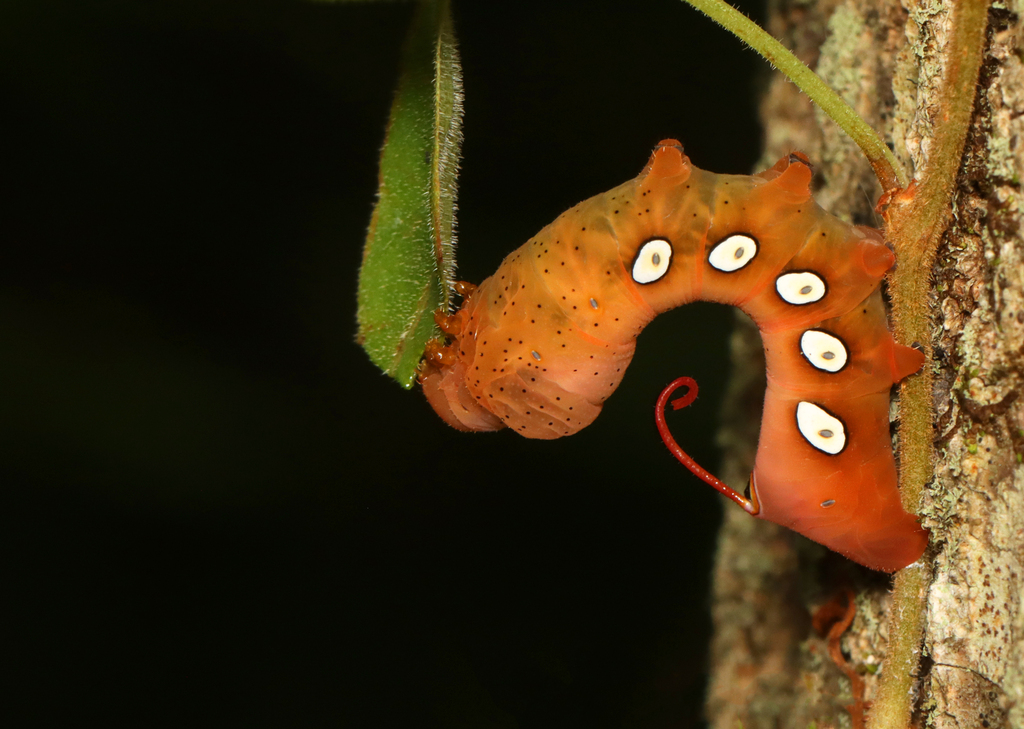
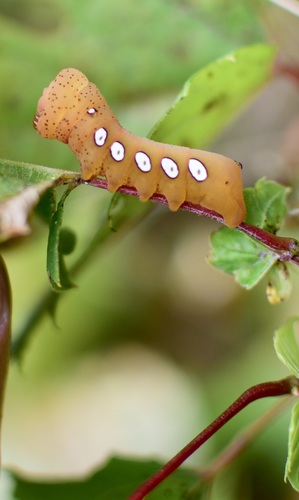
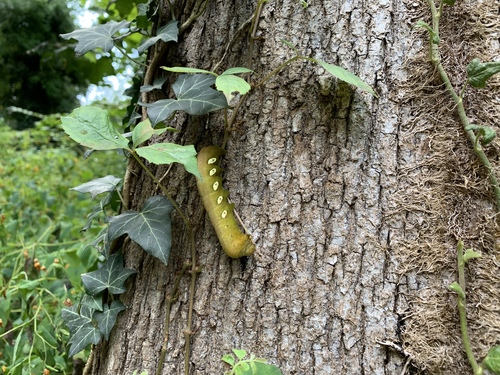
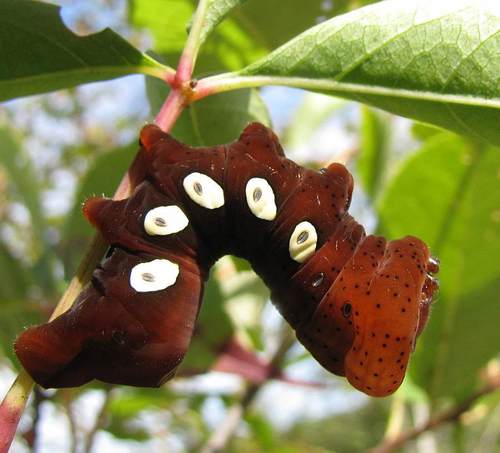
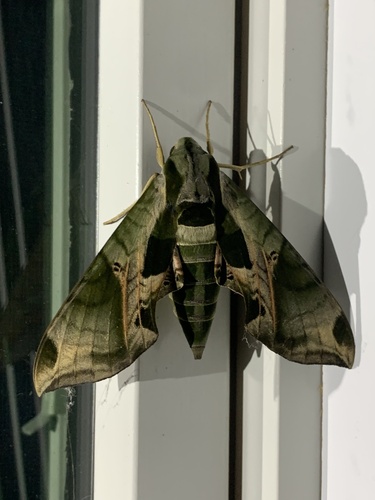
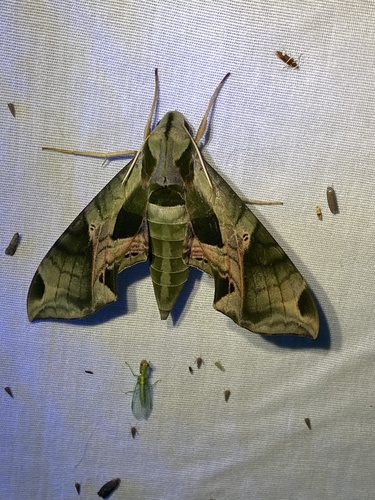
Adults have a heavy, tapered body and relatively narrow wings with a distinctive pattern of olive-green, pinkish and brown tones; the forewings show mottled olive and brown patches while the hindwings often have pinkish or reddish shading toward the base in some individuals. Wingspan is large for a moth. Caterpillars are stout with smooth skin, green in younger stages and often reddish-brown or tan when mature, with a row of large cream to white oval spots along each side; young caterpillars have a long tail horn, which in later instars is replaced by a glossy eyespot-like button near the rear. Pupae are dark brown, formed underground in a loose chamber.
- Large hawkmoth with wingspan about 85-115 mm and a streamlined, spindle-shaped body.
- Forewings mottled olive-green and brown with subtle pinkish tones on the body or hindwing in many specimens.
- Caterpillars stout, green or reddish-brown with large pale oval spots along the sides; older larvae have an eyespot-like button instead of a tail horn.
- Active and often seen feeding at dusk and night at tubular, nectar-rich flowers.
Lookalikes
Achemon sphinx Eumorpha achemon
Eumorpha achemon is paler pinkish-brown with dark brown patches on the forewing and pink hindwings, lacking the olive-green tones of the Pandorus sphinx; its caterpillars also feed on grape and Virginia creeper.
Gaudy sphinx Eumorpha labruscae
Eumorpha labruscae is a mainly tropical relative with brighter green forewings and blue and orange-red patches on the hindwing; it only strays into the southern United States.
↻Life cycle
Egg
Small, spherical eggs are laid singly on the underside of host plant leaves; they hatch in about 5-10 days depending on temperature.
Larva (caterpillar)
Caterpillars go through several instars, growing into large green or reddish-brown caterpillars with pale oval side spots; the tail horn of young larvae is replaced by an eyespot-like button in later instars. They feed heavily on host vines for 3-5 weeks.
Pupa
Mature caterpillars burrow a short distance into loose soil to pupate in a dark brown pupa; pupation lasts several weeks or, for late-season broods, overwinter until spring.
Adult (moth)
Adults emerge from the pupa with a large wingspan, feed on floral nectar at dusk and night, mate, and females lay eggs to start the next generation.
🍃Diet and predators
Young eat
Leaves of vines: Vitis (grapes), Ampelopsis, Parthenocissus, Cissus and other related plants.
Adults eat
Nectar from tubular, night-blooming or dusk-blooming flowers (e.g., evening primrose, moonflower, jasmine and other deep-throated flowers).
Predators of the young
Birds, predatory wasps, parasitic flies and wasps, small mammals and predatory arthropods.
Predators of adults
Bats, nocturnal birds, spiders and insectivorous mammals; also subject to parasitoids and disease.
🌱Effect on plants and gardens
Caterpillars feed on vines in the grape family and related species, including wild and cultivated Vitis (grape), Ampelopsis, Parthenocissus (Virginia creeper), Cissus and similar plants. Heavy local infestations can defoliate individual vines but widespread agricultural damage is uncommon.
📍Where and when to find it
Look for eggs and caterpillars on leaves of grapevines and related host plants. Adults visit night-blooming flowers at garden edges, woodland clearings and near lights.
Best time
Late spring to early autumn; best viewed at dusk and during the night when adults are feeding.
Observation tips
Use a camera with low-light capability or a flashlight with red filter to avoid startling moths. Check the undersides of leaves on host vines for eggs and early instar caterpillars.
✨Fun facts
- Like many hawkmoths, the Pandorus sphinx hovers while feeding and can beat its wings rapidly like a tiny hummingbird.
- Some individuals show pinkish tones on the hindwing and body that are more visible in flight or when the wings are spread.
- Caterpillars can vary in color between green and brown, which helps them blend into different host plants or seasons.
?Frequently asked questions
Are Pandorus sphinx moths harmful to people?
No. They do not bite or sting and are not venomous. They are harmless to people.
Do Pandorus sphinx caterpillars eat grape vines?
Yes. Their larvae feed on grape and related vines (Vitis and other vitaceous plants) and can eat leaves but rarely cause major agricultural damage.
Why is a large moth visiting my garden at night?
Adult Pandorus sphinx moths visit night-blooming or dusk-blooming flowers for nectar; bright tubular flowers attract them.
How can I get rid of Pandorus sphinx caterpillars on my garden grape vine?
Hand-picking is effective for small numbers. For heavier damage, use Bacillus thuringiensis (Bt) formulated for caterpillars or cover vines with netting. Broad-spectrum insecticides are rarely necessary and harm beneficial insects.
When will I see Pandorus sphinx moths?
You are most likely to see adults from late spring through summer into early autumn, at dusk or during the night.
📷Photos of the pandorus sphinx
More butterflies & moths
This guide was written with AI assistance and fact-checked, last updated 2026-10-10. Identification from photos is never certain: don't handle insects you can't identify, and get medical advice for bites, stings or allergic reactions. More about the pandorus sphinx: iNaturalist, Wikipedia.