
Codling moth
Cydia pomonella · Tortricid moths
A small gray-brown moth whose caterpillars are the classic internal pest of apples, pears and other pome fruits worldwide.
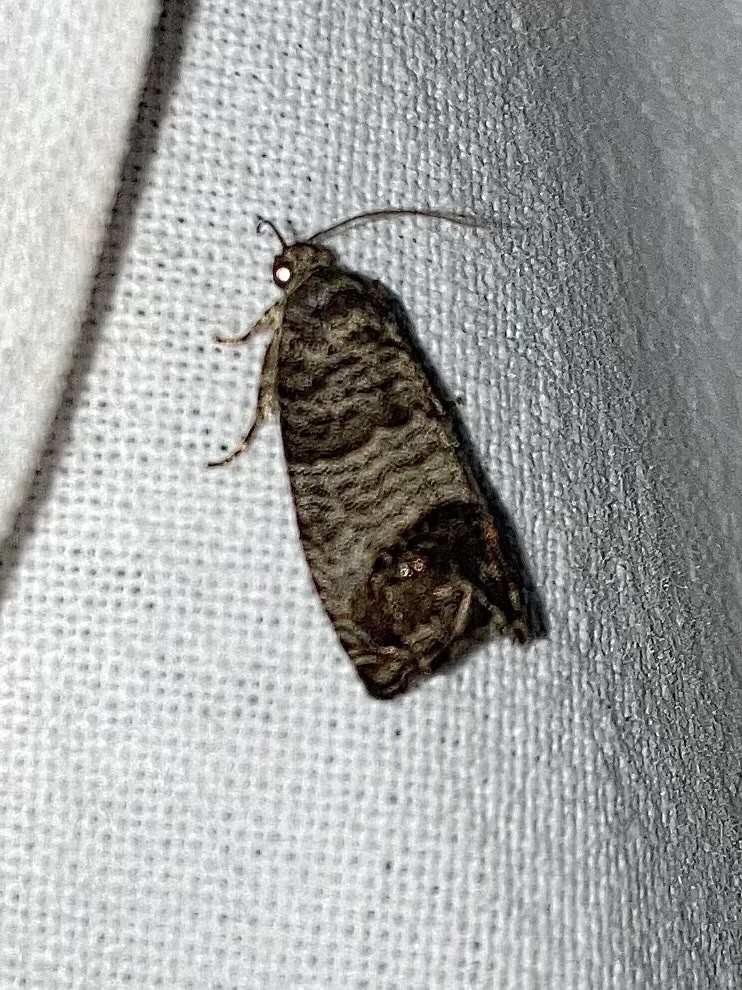
!Is the codling moth dangerous?
No. Codling moths are harmless to people; they do not bite or sting. Handling larvae or adults is safe, though damaged fruit may carry secondary rot or mold and should be discarded.
Pets
Not toxic to pets. Ingesting infested fruit may be unappetizing but is not poisonous; remove and discard damaged fruit to avoid stomach upset from decaying material.
📖Overview
The codling moth is a small tortricid moth best known because its larvae tunnel into apples and other fruit, causing the "worm in the apple" damage. Originally native to Europe, it has spread with fruit cultivation and now occurs across temperate fruit-growing regions worldwide. Adults are nocturnal and short-lived; most economic damage is caused by the cream-coloured larvae (caterpillars). Management relies on monitoring, cultural controls and targeted insecticides or biological controls in integrated pest management (IPM) programs.
🔍How to identify a codling moth
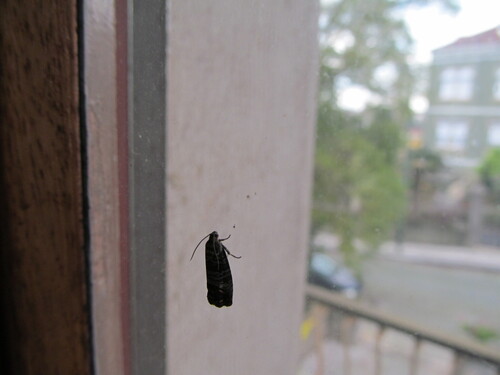
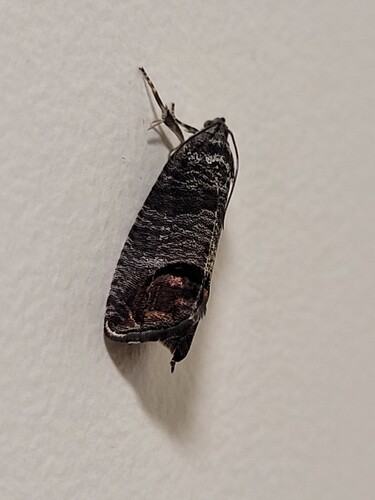
Adult codling moths are small (moth wings folded at rest), with forewings that are mottled gray to brown and a distinctive coppery or bronze rounded blotch near the wing tip often edged in white or pale scales. When at rest the wings form a bell shape. Hindwings are paler and fringed. Larvae (final instar) are cream to pinkish with a brown head and reach about 15 mm; younger larvae are smaller and more translucent. Eggs are tiny, flat, and pearly white, typically laid on fruit or nearby leaves. Pupae are brown and formed in cocoons under bark, in leaf litter or in fruit calyxes.
- Look for small gray-brown moths with a rounded coppery or bronze mark near the forewing tip.
- Inspect fruit for tiny entry holes, frass (brown crumbly frass near the calyx or stem), or tunnels leading to core.
- Remove and cut open suspect fruit: presence of a cream/white caterpillar with a brown head near the core confirms infestation.
- Use pheromone traps to detect adult male flights and population peaks for timing control.
Lookalikes
Oriental fruit moth Grapholita molesta
Oriental fruit moth attacks stone fruits like peaches more commonly; wing pattern is different (more streaked) and larvae often tunnel in shoots as well as fruit.
Plum fruit moth Cydia funebrana
Similar size but often associated more with plums; subtle differences in forewing pattern and genitalia used by specialists to separate species.
↻Life cycle
Egg
Females lay small flat eggs on fruit, leaves or bark. Eggs hatch in about 6-14 days depending on temperature.
Larva (caterpillar)
Larvae bore into fruit and feed on the flesh and core; they go through several instars and are the damaging stage, growing to about 12-18 mm.
Pupa
Mature larvae leave fruit to pupate in cocoons under bark, in soil litter or occasionally in the calyx of fruit; pupal stage lasts 2-3 weeks or longer if overwintering.
Adult moth
Small nocturnal moths that mate and begin the next generation; adults do not cause direct damage to fruit.
🍃Diet and predators
Young eat
Larvae feed internally on apple, pear, quince, walnut and other fruit flesh and seeds.
Adults eat
Adults feed little; if they feed it is on nectar or not at all. Their main role is reproduction.
Predators of the young
Parasitic wasps (e.g., some ichneumonids and braconids), predatory beetles, birds and small mammals that find larvae in fallen fruit.
Predators of adults
Bats, night-flying insectivorous birds and predatory insects.
🌱Effect on plants and gardens
Larvae feed inside apples, pears, quinces and some nuts and stone fruits; they bore into the core and seed area causing fruit drop, reduced marketability and increased rot.
How to get rid of codling moths
Use an integrated pest management approach: monitor adult flights with pheromone traps to time controls; remove and destroy infested fruit and drop; thin fruit and maintain good sanitation; encourage natural enemies (parasitic wasps, birds); use mating disruption (pheromone dispensers) in commercial orchards; apply targeted insecticides or biological insecticides (Bacillus thuringiensis strains effective primarily on early instars) only when monitoring indicates need and following label instructions.
📍Where and when to find it
Adults near lights at dusk and night; inspect fruit, calyx and stem area for eggs and entry holes; larvae inside fruit near the core; pupae under tree bark, in litter or in fruit calyxes.
Best time
Spring to autumn in temperate regions; best observed after dusk for adults and during fruiting season for larvae (depending on local generation timing).
Observation tips
Use a bright torch and pheromone traps for adults. To confirm infestation, cut suspicious fruit open; photographing the larva inside the fruit or the characteristic frass at the calyx helps with identification.
✨Fun facts
- Codling moths are sometimes called "apple worm" because the larvae feed inside the fruit core.
- They were accidentally spread worldwide with the movement of fruit and nursery stock and are now a major global orchard pest.
- Mating disruption, which releases synthetic female sex pheromone in orchards to confuse males, is now widely used against this species.
?Frequently asked questions
Do codling moths bite or sting?
No. Adults and larvae do not bite or sting people. The concern is crop damage, not personal injury.
Why do I find them in my house or on my fruit?
If you have apple or pear trees nearby or store fruit indoors, larvae may come from infested fruit or adults may be attracted to lights indoors. More commonly infestation originates in the tree or fruit at harvest.
How can I tell if my apples have codling moth?
Look for small round entry holes, brown frass at the calyx, misshapen fruit or cutting an apple open to find a tunnel and a cream-coloured caterpillar near the core.
How do I get rid of codling moths in my orchard or garden?
Use pheromone traps to monitor flights, remove and destroy infested fruit, maintain sanitation, consider mating disruption, encourage natural enemies, and apply targeted controls (Bt for early larvae or approved insecticides) based on monitoring thresholds.
Can I eat fruit with codling moth larvae?
Eating an apple with a codling moth larva is not toxic but is unpleasant and the fruit often has rot. Cut away affected areas or discard heavily damaged fruit.
📷Photos of the codling moth
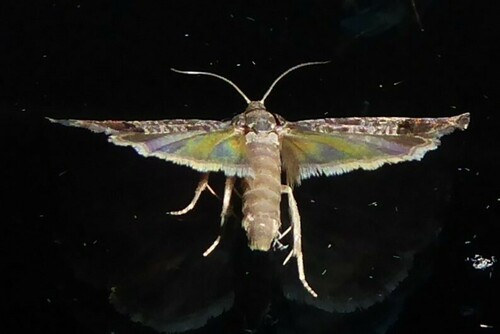
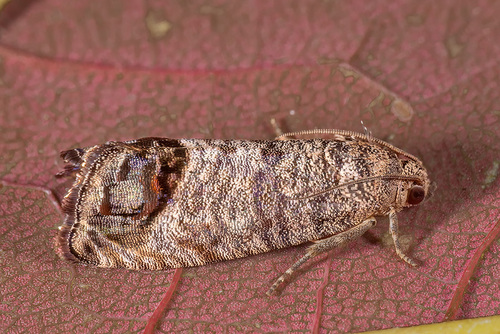
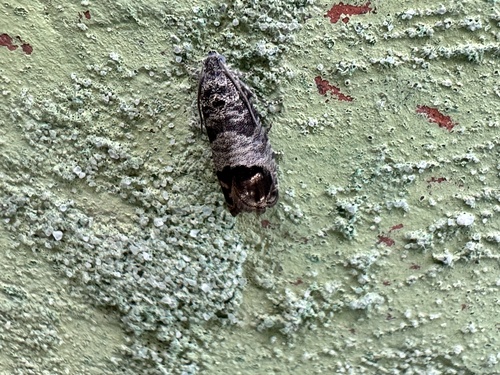
More butterflies & moths
This guide was written with AI assistance and fact-checked, last updated 2026-10-10. Identification from photos is never certain: don't handle insects you can't identify, and get medical advice for bites, stings or allergic reactions. More about the codling moth: iNaturalist, Wikipedia.