
Rosy footman
Miltochrista miniata · Footman moths
A small, rosy-pink lichen-feeding moth of woodlands and gardens across much of Europe and the Palearctic.
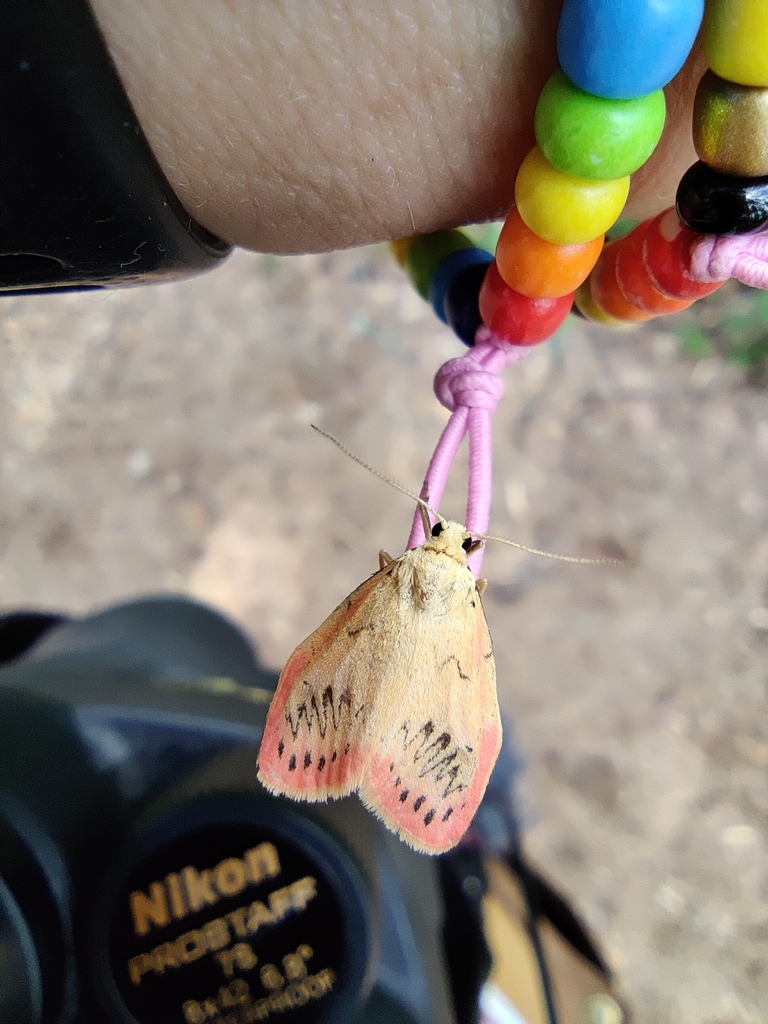
!Is the rosy footman dangerous?
No. Rosy footman moths are not harmful to humans. They do not bite or sting. Handle gently if necessary; their scales can rub off but cause no injury.
Pets
Harmless to cats and dogs. Not known to be toxic if ingested, though eating any insect can upset a pet's stomach.
📖Overview
Miltochrista miniata, the Rosy footman, is a small, day- and night-active moth commonly found on tree trunks, hedgerows and in gardens where lichens grow. Adults are most often seen from late spring into summer. Larvae feed mainly on lichens and algae on bark, so the species is typically associated with mature trees and undisturbed habitats. It is harmless to people, pets and crops.
🔍How to identify a rosy footman
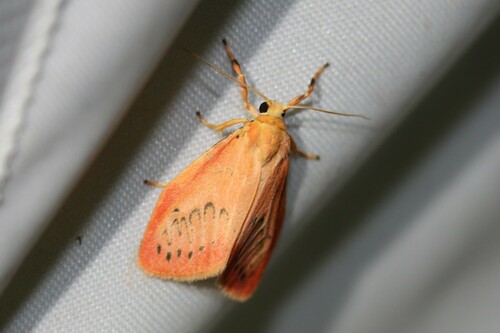
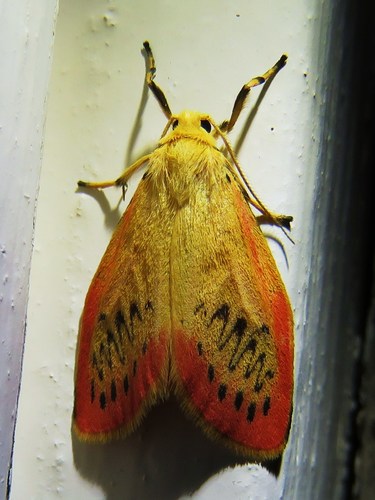
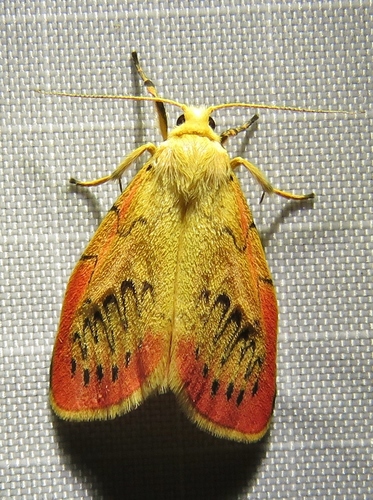
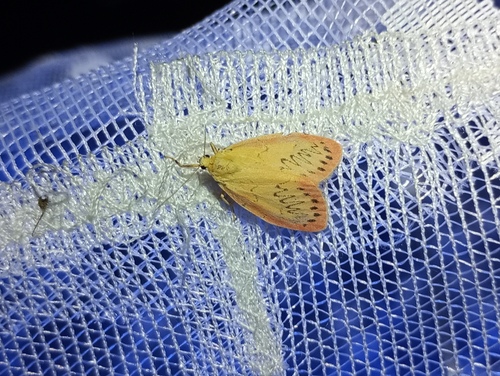
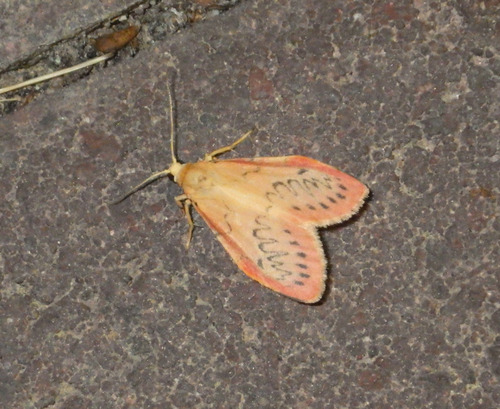
Adults have rounded forewings with a pinkish-orange ground colour, a fine black wavy crossline and scattered black dots, and a pinkish border. Wingspan is modest and the body is relatively slender. When at rest the wings are held flat or slightly roof-like over the body, showing the pink-orange upper surface clearly.
- Pinkish-orange forewings with a fine black wavy crossline and black dots
- Small wingspan around 20-28 mm — noticeably smaller than many tiger moths
- Resting posture with wings folded roof-like, often showing the pink upper surface on trunks or foliage
- Habitat on lichen-rich tree trunks and older trees is a good clue
Lookalikes
Red-necked Footman Atolmis rubricollis
Sooty black wings with a red collar behind the head and a yellow-tipped abdomen, whereas Rosy footman is pinkish-orange.
Common Footman Eilema lurideola
Common Footman is pale grey-yellow and lacks the rosy-pink coloration of Miltochrista miniata.
↻Life cycle
Egg
Laid on bark, lichen or nearby substrates; eggs hatch into small larvae.
Larva (caterpillar)
Caterpillars graze on lichens and algae on tree trunks and rocks; they develop over weeks depending on climate.
Pupa
Pupation typically occurs in a cocoon among bark crevices or lichen-covered surfaces.
Adult (moth)
Winged stage that mates and lays eggs; adults are active in late spring and summer.
🍃Diet and predators
Young eat
Primarily lichens and algae found on tree bark and rocks
Adults eat
Adults feed little; if they feed they take nectar or do not feed much (typical of many small moths).
Predators of the young
Small predatory insects, spiders, birds and parasitoid wasps
Predators of adults
Insectivorous birds, bats and nocturnal predators; day-active individuals can be taken by birds
🌱Effect on plants and gardens
Larvae feed mainly on lichens and algae on bark and rocks; they do not eat live plant tissue and are not agricultural pests.
📍Where and when to find it
Look on lichen-covered trunks, tree bases, garden walls and fences; caterpillars are found on bark and rocks with lichen.
Best time
Late spring to mid-summer; daytime sightings on warm days and at night around lights.
Observation tips
Search slow-moving along tree trunks and branches for the pink wings. Use a low-angle light at night to attract adults for photographs.
✨Fun facts
- Larvae of many 'footman' moths feed on lichens, so healthy lichen growth supports their populations.
- The name 'footman' is often said to come from the stiff, upright resting posture of some species, reminiscent of a uniformed footman.
?Frequently asked questions
Do rosy footman moths bite?
No. They do not bite or sting and are harmless to people.
Are rosy footman moths harmful to my garden or houseplants?
No. Larvae feed on lichens and algae on bark and do not damage healthy plants or crops.
Why is a rosy footman on my wall or tree trunk?
They are attracted to lichen-covered bark where larvae feed and to lights at night; adults also rest on trunks and walls during the day.
How can I get rid of rosy footman moths in my house?
They are not pests and usually wander indoors accidentally. Remove gently with a jar and card, reduce outdoor lighting at night and seal gaps around windows and doors to prevent entry.
When am I most likely to see rosy footman moths?
Adults are most often seen in late spring and through summer; they can be active by day and are attracted to lights at night.
📷Photos of the rosy footman
More butterflies & moths
This guide was written with AI assistance and fact-checked, last updated 2026-10-10. Identification from photos is never certain: don't handle insects you can't identify, and get medical advice for bites, stings or allergic reactions. More about the rosy footman: iNaturalist, Wikipedia.