
Red underwing
Catocala nupta · Underwing moths
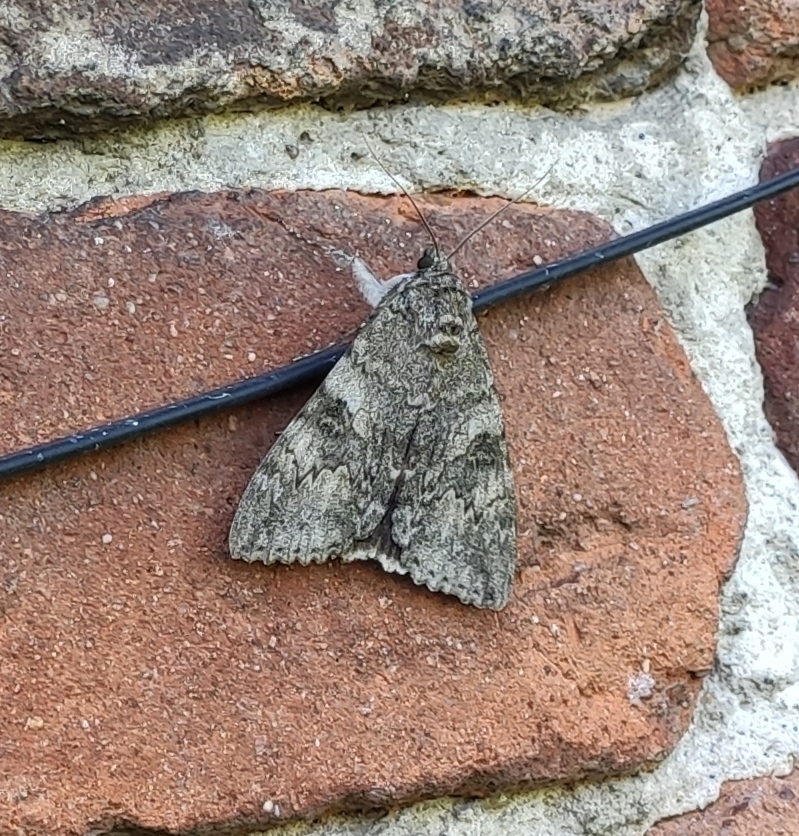
A large nocturnal moth with cryptic forewings and bright red hindwings crossed by black bands, common on willows and poplars across Europe and temperate Asia.
!Is the red underwing dangerous?
No. Harmless to people. Adults do not bite or sting. Handle gently if necessary; scales on wings may rub off but are not harmful.
Pets
Harmless to pets. Not poisonous if touched; ingestion of an occasional moth is unlikely to cause serious harm but may cause mild stomach upset.
📖Overview
Catocala nupta, the Red underwing, is a large night-flying moth best known for its cryptic, bark-like forewings and startling red hindwings crossed by black bands. Adults are active in summer and are attracted to light and sugary baits. Larvae feed mainly on willows (Salix) and poplars (Populus). The species is widespread and generally common across much of Europe and temperate Asia.
🔍How to identify a red underwing
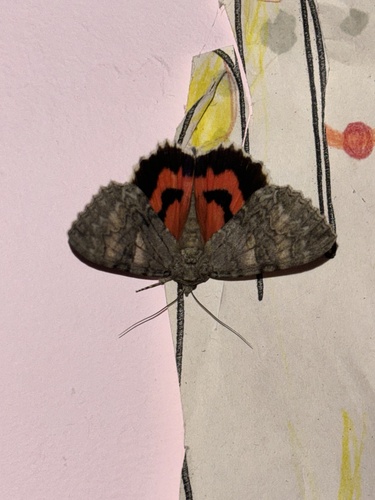
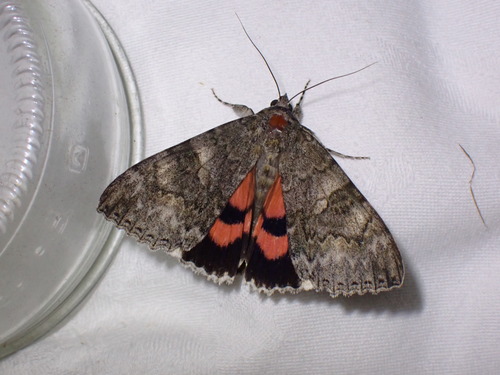
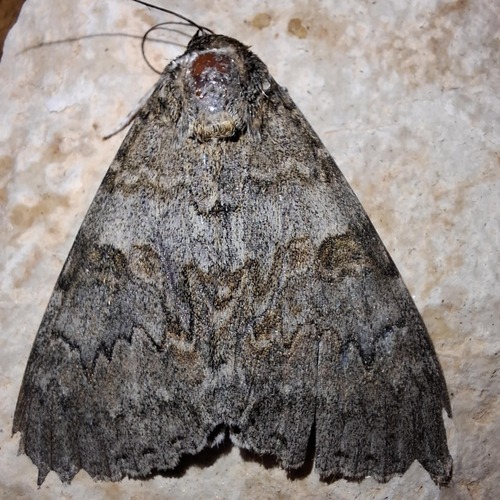
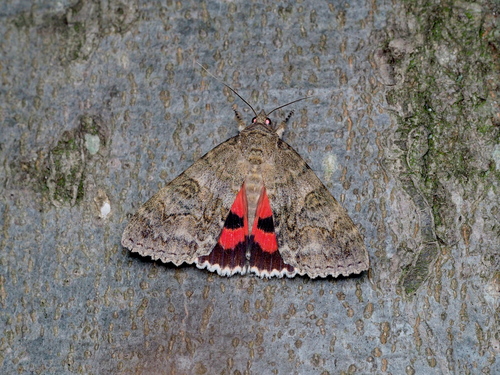
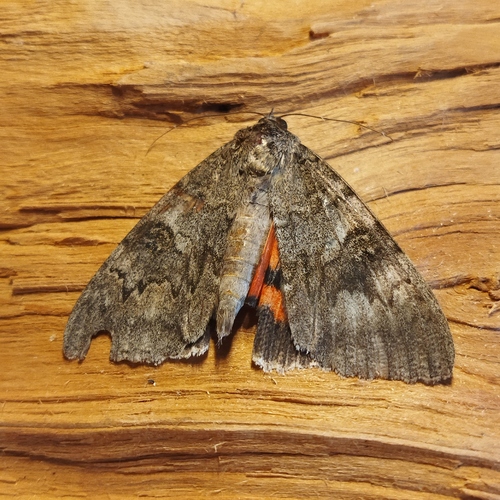
Forewings are mottled grey, brown and black, closely resembling tree bark and providing excellent camouflage when the moth rests on trunks. Hindwings are vivid red with two black bands (a curved median band and a broad outer band) and a pale fringe; the red is exposed suddenly in flight. Wingspan is large for a noctuid/erebid moth. When at rest the red hindwings are hidden beneath the folded forewings.
- Large moth with a wingspan about 65-75 mm
- Forewings mottled grey-brown and cryptic, resembling tree bark
- Hindwings crimson red with two black bands and a pale fringe
- Hides red hindwings at rest; flash of red in flight is distinctive
Lookalikes
Rosy underwing Catocala electa
Catocala electa often has pinker hindwings and different black band shape; check hindwing colour tone and band position.
Dark crimson underwing Catocala sponsa
C. sponsa is an oak-woodland species with darker forewings and a strongly zigzag (W-shaped) black median band on the hindwing; compare forewing markings and the hindwing band shape.
↻Life cycle
Egg
Eggs are laid on twigs or bark of host trees in late summer or autumn and overwinter until they hatch.
Larva (caterpillar)
Caterpillars feed on the leaves of willow and poplar through spring and early summer, growing through several instars.
Pupa
Pupation occurs in a cocoon among leaf litter or in crevices; pupal stage lasts until the adult emerges in summer.
Adult (moth)
Adults are nocturnal, fly in summer, and are attracted to light and fermenting fruit or sugar baits.
🍃Diet and predators
Young eat
Leaves of willow (Salix spp.) and poplar (Populus spp.)
Adults eat
Do not feed heavily; adults take nectar, tree sap, and fermented fruit or are attracted to sugar baits
Predators of the young
Birds, predatory insects and parasitoid wasps
Predators of adults
Bats, nocturnal birds and insectivorous mammals; the bright hindwings help startle predators
🌱Effect on plants and gardens
Larvae feed on willow (Salix) and poplar (Populus) species; defoliation is rare and not usually a serious threat to healthy trees.
📍Where and when to find it
Look on trunks and branches of willow and poplar trees; adults at night come to light traps, sugar baits or fermenting fruit. Caterpillars are on leaves in spring.
Best time
Best seen June to August for adults, at dusk and during the night; caterpillars in spring.
Observation tips
Search tree trunks during the day for well-camouflaged resting adults. At night use light sheets or sugar/fruit bait to attract adults; photograph with low flash to preserve colours.
✨Fun facts
- When resting on tree trunks the forewings make the moth almost invisible; the hidden red hindwings are used as a startle display.
- Underwing moths get their name from the bright hindwings that are hidden beneath dull forewings.
- Adults are attracted to fermented fruit and sugar baits and are often found feeding on overripe fruit.
?Frequently asked questions
Is the red underwing moth dangerous?
No. It is harmless to people and pets; it does not bite or sting.
Do red underwing moths damage trees?
Larvae feed on willow and poplar leaves but rarely cause serious damage to healthy trees.
Why is a red underwing moth in my garden?
If you have willow or poplar nearby, your garden provides food for caterpillars. Adults are also attracted to lights and fermented fruit.
How can I get rid of red underwing moths?
They are not a pest and usually need no control. To reduce adult attraction, avoid bright outdoor lights at night and remove overripe fruit. For caterpillars, manual removal from small trees is effective.
When can I see red underwing moths?
Adults are most often seen from June to August at night or at dusk; caterpillars are visible in spring on host trees.
📷Photos of the red underwing
More butterflies & moths
This guide was written with AI assistance and fact-checked, last updated 2026-10-10. Identification from photos is never certain: don't handle insects you can't identify, and get medical advice for bites, stings or allergic reactions. More about the red underwing: iNaturalist, Wikipedia.