
Eyed hawk-moth
Smerinthus ocellata · Hawk moths
A stout, nocturnal moth of willow and poplar trees with a distinctive rounded pink and black 'eye' on each hindwing.
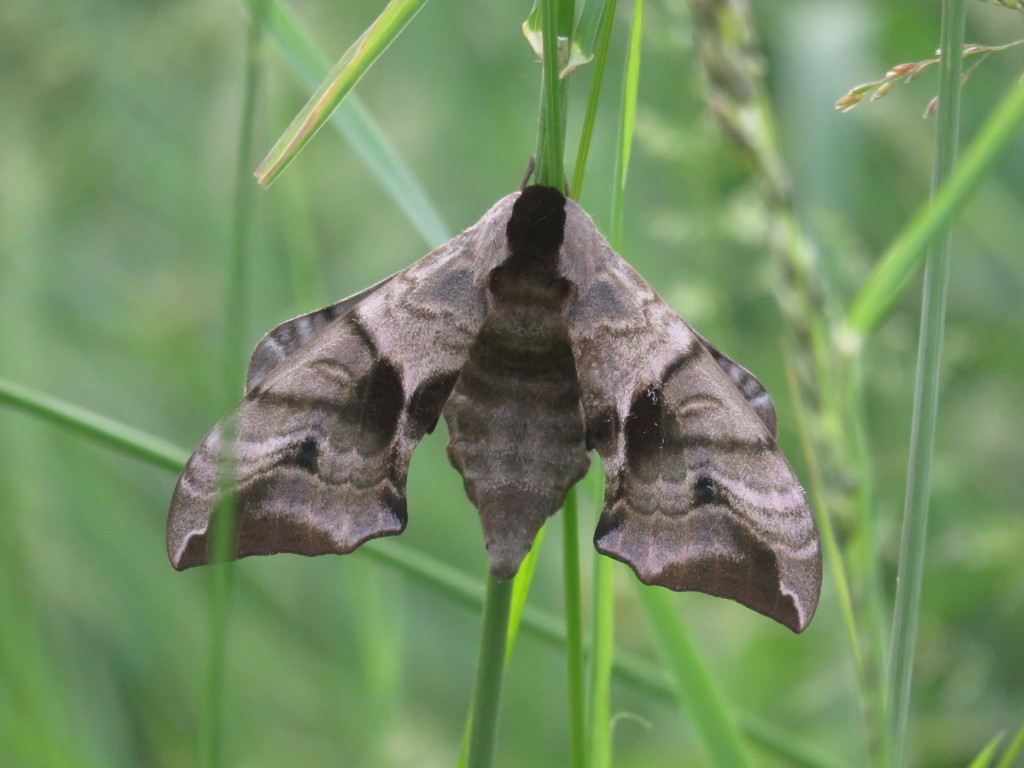
!Is the eyed hawk-moth dangerous?
No. Adults do not bite or sting and are harmless. Handle gently if needed; their scales can rub off. No known venom or medically significant effects.
Pets
Not toxic to pets. Caterpillars are not known to be harmful, though any animal eating large numbers of caterpillars could experience minor digestive upset.
📖Overview
Smerinthus ocellata is a medium-large hawk-moth found across much of Europe and into western Asia. Adults are crepuscular and nocturnal; they fly at dusk and are attracted to light. The species spends most of its life as a caterpillar feeding on poplar and willow; pupation occurs in the soil or leaf litter. It is not harmful to people or pets and is not considered an agricultural pest.
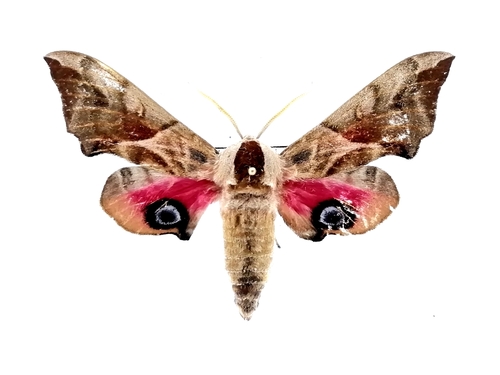
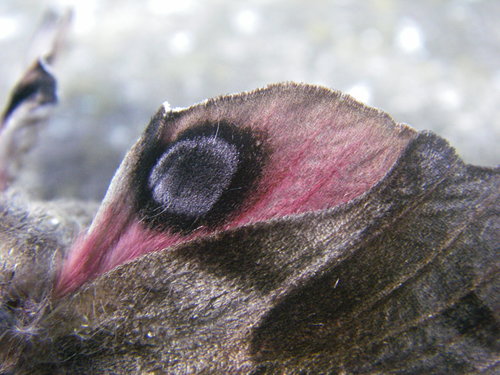
This species is most active in late spring and early summer (timing varies by latitude). It uses cryptic forewing patterning to rest during the day and flashes its hindwing eye-spots if disturbed, a defensive display meant to startle predators such as birds.
🔍How to identify an eyed hawk-moth
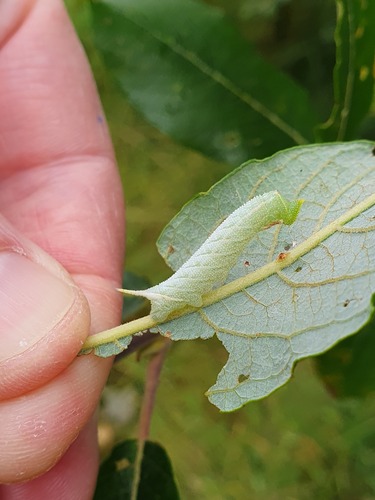
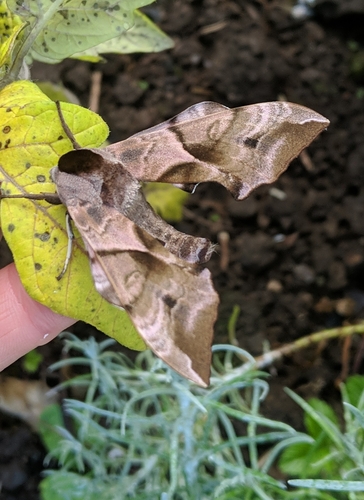
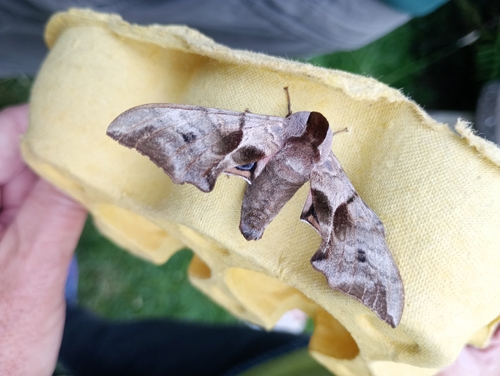
Adults have robust, furry bodies and relatively short, rounded forewings compared with some other hawk-moths. Forewings are mottled brown-grey with darker transverse lines and a subtle pale stigma. Hindwings are hidden at rest and show a rounded, conspicuous eye-spot: a blue ring with a black pupil set on a rosy-pink background. Antennae are slightly thicker in males than in females. Caterpillars are bright green or bluish-green with a rough, granular skin, white diagonal stripes along the sides and a blue horn on the tail end.
- Rounded hindwing 'eye' spot: a blue ring around a black pupil on a rosy-pink background, revealed when disturbed.
- Mottled brown-grey forewings with rounded outline and subtle transverse lines.
- Large size with 70-80 mm wingspan and stout, furry body typical of Sphingidae.
- Caterpillars are green with white diagonal side stripes and a blue tail horn.
Lookalikes
Poplar hawk-moth Laothoe populi
Laothoe populi lacks the prominent rounded pink-black hindwing eye-spot and has a more angular wing shape and a peculiar resting posture with hindwings protruding forward.
Small elephant hawk-moth Deilephila porcellus
Much smaller (wingspan around 40 mm), different coloration and no large eye-spots on hindwings.
↻Life cycle
Egg
Small, round eggs are laid singly on the underside of host-plant leaves and hatch in about 1-2 weeks depending on temperature.
Larva (caterpillar)
Green caterpillars with white diagonal side stripes and a blue tail horn feed on leaves for several weeks, growing through multiple instars.
Pupa
Pupation occurs in the soil or leaf litter in an earthen cell; the pupal stage lasts through the winter in regions with one generation per year.
Adult (moth)
Adults emerge in late spring/early summer, mate, and the females lay eggs. Adults do not feed and live for about 1-2 weeks.
🍃Diet and predators
Young eat
Leaves of willow (Salix), poplar (Populus), apple (Malus) and occasionally other trees
Adults eat
Adults have non-functional mouthparts and do not feed.
Predators of the young
Birds, predatory insects and parasitic wasps
Predators of adults
Bats, nocturnal birds and spiders; startled by eye-spot display which can deter birds
🌱Effect on plants and gardens
Larvae feed on leaves of willows (Salix), poplars (Populus) and apple (Malus), and occasionally other trees. Feeding is rarely severe enough to damage healthy trees.
📍Where and when to find it
Adults at porch lights, around gardens and woodland edges; caterpillars on leaves of willow and poplar. Pupae in soil or leaf litter beneath host trees.
Best time
Late spring to early summer in most of its range; active at dusk and during the night.
Observation tips
Look at dusk near waterside willows or poplars. Use a low ISO and fast shutter when photographing at dusk to freeze wing motion; a soft flash can reveal the hindwing eye-spot if the moth opens its wings.
✨Fun facts
- The hindwing 'eyes' are a defensive flash display: the moth keeps them hidden at rest and reveals them suddenly to startle predators.
- Many hawk-moths, including this species, fly strongly at dusk and can appear suddenly around porch lights.
- Pupae overwinter in the soil, so adult sightings in spring represent individuals that survived winter underground.
?Frequently asked questions
Do eyed hawk-moths sting or bite?
No. Adults do not sting or bite and are harmless to humans.
Why is there a large moth in my house at night?
They are attracted to artificial lights at dusk; if one enters, it likely came in through an open door or window while flying to a light source.
Are they harmful to my trees or garden?
Not usually. Caterpillars feed on willow and poplar leaves but seldom cause serious damage to healthy trees.
How can I encourage them in my garden?
Keep or plant native willows or poplars as larval food plants, provide night-flowering nectar sources, and avoid excessive light pollution to let them forage naturally.
How do I get rid of them?
They are not pests and usually need no control. If larvae are abundant on a small ornamental tree, hand-pick them or prune affected branches. Chemical control is rarely necessary and not recommended for conservation reasons.
📷Photos of the eyed hawk-moth
More butterflies & moths
This guide was written with AI assistance and fact-checked, last updated 2026-10-10. Identification from photos is never certain: don't handle insects you can't identify, and get medical advice for bites, stings or allergic reactions. More about the eyed hawk-moth: iNaturalist, Wikipedia.