
Greater wax moth
Galleria mellonella · Wax moths
A small moth whose caterpillars eat beeswax, comb and hive materials; a common pest of stored honeycomb and weak beehives worldwide.
!Is the greater wax moth dangerous?
No. Adults and larvae are not venomous and do not bite or sting. Dust, scales and frass from heavily infested comb can trigger allergic reactions in sensitive people (skin or respiratory irritation). Wear gloves when cleaning infested equipment; wash the area and seek medical advice if symptoms persist or worsen.
Pets
Not poisonous to pets; larvae are sometimes eaten by captive reptiles and birds as food. Large infestations in stored food or pet supplies are nuisance contamination rather than toxic hazard.
📖Overview
The greater wax moth is a cosmopolitan moth associated with honeybee colonies and stored comb. Adult moths are mostly nuisances, while the creamy-white, wormlike larvae do the feeding damage: tunnelling through comb, webbing cells shut and destroying brood comb and stored honey. They thrive in warm, poorly managed or stored hives and in warehouses holding comb or honey products.
Galleria mellonella completes multiple generations in warm conditions and is well adapted to human-modified environments. It is also used in scientific research (as a model insect for infection studies) and as feed for captive reptiles and fish. In beekeeping, infestation can cause economic loss and hive weakness; control focuses on good hive hygiene and storage practices rather than household insecticide use.
🔍How to identify a greater wax moth
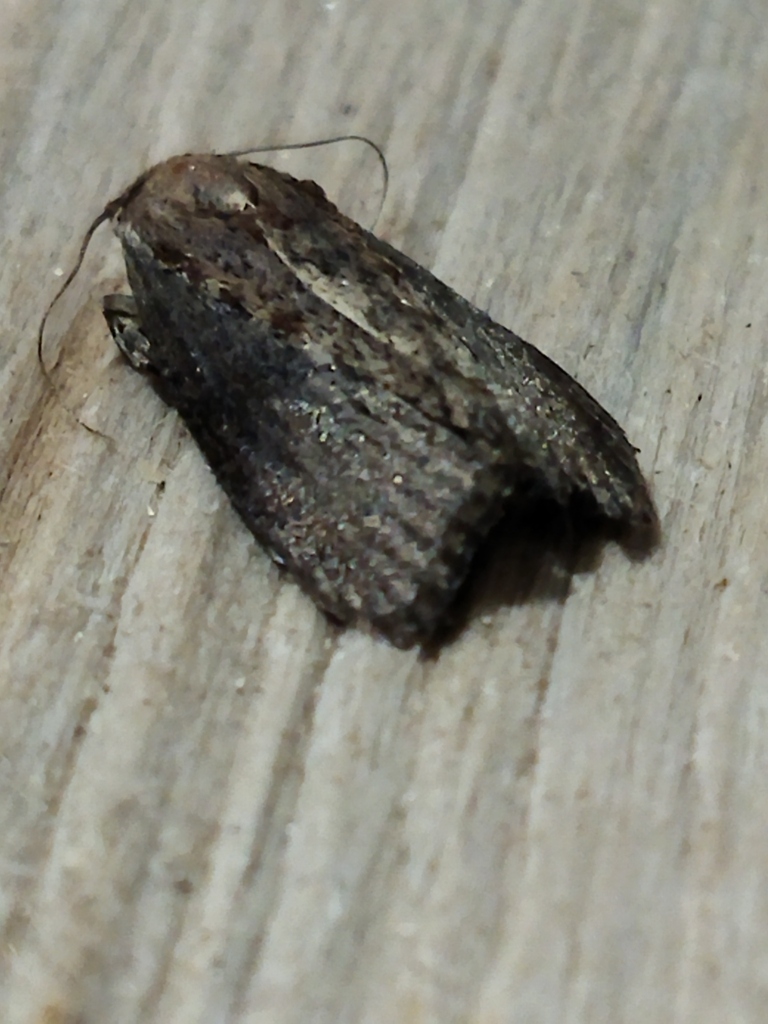
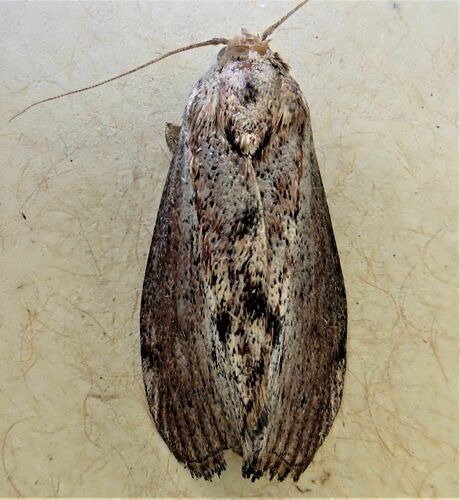
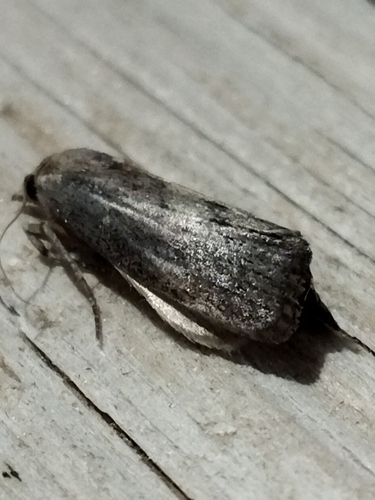
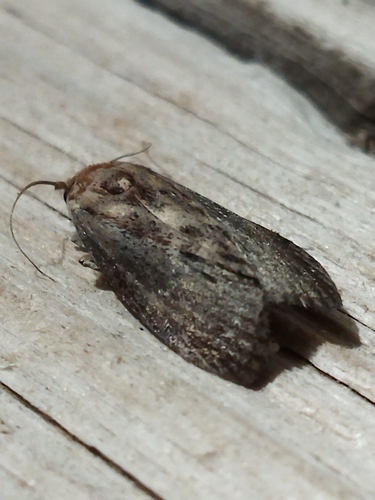
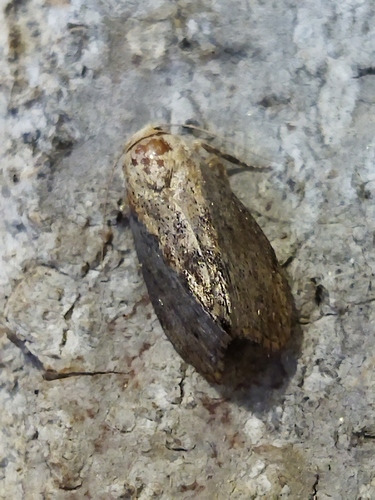
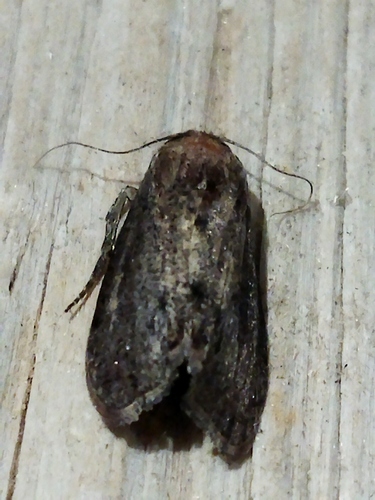
Adult greater wax moths have a wingspan of roughly 25-40 mm. Forewings are mottled grey-brown with wavy darker markings and a somewhat glossy appearance; hindwings are lighter, pale grey with a fringe. Mouthparts are reduced and the adults do not feed; at rest the wings are held roof-like over the body. Larvae (caterpillars) are creamy white to yellowish, up to 25-30 mm long, with a brown head and three pairs of true legs near the front and many prolegs along the abdomen. Mature larvae produce silken webbing and frass-filled tunnels in comb.
- Look for creamy-white larvae up to 25-30 mm with a brown head and abundant silken webbing and frass inside comb.
- Adult moths have a 25-40 mm wingspan with grey-brown, mottled forewings and paler fringed hindwings.
- Damaged comb shows tunnels, webbing, shredded wax and scattered frass; hive frames may be glued together with silk.
- Strong smell of disintegrating wax and scattered cocoons in hive debris suggests heavy infestation.
Lookalikes
Lesser wax moth Achroia grisella
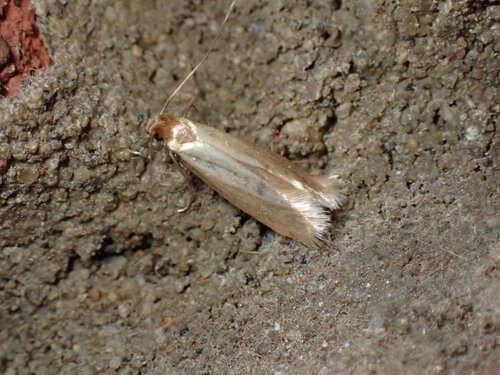
Smaller (about 20-25 mm wingspan) with plain silvery-grey to buff wings and a yellowish head; lesser wax moth larvae have similar habits but usually cause less extensive damage.
Bee moth Aphomia sociella
A larger pyralid whose larvae live in bumblebee and wasp nests rather than honeybee comb; adults have greenish-brown or reddish forewings and males show a pale patch.
↻Life cycle
Egg
Females lay clusters of small, white eggs in crevices of hive equipment, comb edges or stored wax. Eggs hatch in 3-10 days depending on temperature.
Larva (caterpillar)
Creamy-white, wormlike caterpillars feed on beeswax, pollen, honey, and brood remains; they spin silken webbing and cause the destructive tunnelling seen in infested comb. This stage lasts several weeks to months depending on conditions.
Pupa
Larvae pupate inside silken cocoons within comb debris or other sheltered sites; pupation lasts about 1-3 weeks.
Adult moth
Adults are short-lived, do not cause feeding damage, and are primarily responsible for dispersal and egg-laying.
🍃Diet and predators
Young eat
Beeswax, honey, pollen, brood comb, dead brood and other hive debris
Adults eat
Adults do not feed; their mouthparts are reduced and they live on reserves from the larval stage
Predators of the young
Parasitoid wasps (e.g., Bracon/Habrobracon species), predatory beetles, ants and some birds
Predators of adults
Bats, night-flying insectivorous birds and spiders
🌱Effect on plants and gardens
Does not feed on live plants; larvae damage beehive comb, stored wax, pollen and brood. Infestations weaken colonies by destroying brood comb and stored food resources.
How to get rid of greater wax moths
Prevent infestation by maintaining strong, healthy colonies, inspecting hives regularly, removing and replacing old or infested comb, and storing spare comb/honey products in sealed containers or freezing them. Freeze comb at -18 degrees C for 48 hours to kill eggs and larvae before storage. Use light- and pheromone-baited traps in and around apiaries to monitor and reduce adult moths. Biological control (parasitoid Bracon/Habrobracon species) is used in some regions. Avoid spraying insecticides inside active hives; consult a local apiarist or extension service for integrated hive management methods.
📍Where and when to find it
Inspect hive interiors, especially old or poorly sealed comb; stored frames and boxes; honey houses and apiary storage. Larvae are inside comb and behind frames; adults fly at night and may be seen around lights near hives.
Best time
Warm months (spring to autumn) and night-time; year-round in heated indoor storage or warm climates.
Observation tips
Open and inspect frames in daylight with good lighting. Look for silk webbing, shredded comb and frass. Use a white sheet under frames to catch falling debris and make webbing more obvious for photos.
✨Fun facts
- Greater wax moth larvae produce enzymes that can digest beeswax; researchers study these enzymes for biodegradation applications.
- Galleria mellonella is commonly used in laboratories as a simple model for studying microbial infections and host immunity.
- Beekeepers sometimes detect infestations first from the webbing and silk that glue frames together rather than from seeing the adult moths.
?Frequently asked questions
Do greater wax moths bite?
No. Adults and larvae do not bite or sting people. Dust and frass from heavily infested material can cause skin irritation or allergic reactions in sensitive people.
Why do I have wax moths in my house?
They are attracted to stored honeycomb, beeswax, old beekeeping equipment, or poorly sealed containers with wax or honey residues. Warm, undisturbed storage encourages development.
How do I get rid of a wax moth infestation?
For beekeeping materials: remove and destroy heavily infested comb, freeze spare comb at -18 degrees C for 48 hours before storage, repair and seal equipment, and use traps and good hive hygiene. Avoid household insecticides inside hives.
Are wax moths harmful to my bees?
Yes — larvae can severely damage comb and stored food, and heavy infestations weaken or ruin weak colonies. Strong, well-managed colonies can often resist or remove infestations.
Can wax moths infest food or pantries?
They prefer beeswax, honeycomb and hive products rather than common pantry foods. However, they can be found in storage areas with beekeeping materials or wax-containing goods.
📷Photos of the greater wax moth
More butterflies & moths
This guide was written with AI assistance and fact-checked, last updated 2026-10-10. Identification from photos is never certain: don't handle insects you can't identify, and get medical advice for bites, stings or allergic reactions. More about the greater wax moth: iNaturalist, Wikipedia.