
Common clothes moth
Tineola bisselliella · Clothes moths
A small, cosmopolitan moth whose larvae eat keratin-rich textiles (wool, silk, fur) and cause household fabric damage.
!Is the common clothes moth dangerous?
No. Common clothes moths are not venomous and do not bite or sting. They are primarily a fabric pest. Allergic reactions to moth scales or frass (larval droppings) are uncommon but possible; treat any severe allergic symptoms as you would normally (seek medical attention).
Pets
Not directly dangerous to pets. Pets may pick up larvae or carry infested material; keep pet bedding clean to avoid attracting moths.
📖Overview
Tineola bisselliella is a tiny moth closely associated with human dwellings worldwide. Adults are short-lived and mainly exist to reproduce; the larval caterpillars are the destructive stage that feed on natural fibres containing keratin. They prefer dark, undisturbed places such as closets, drawers and storage boxes where soiled or stored wool, silk, fur and feathers are available.
Because they thrive indoors, they can be present year-round in heated homes. Infestations are often discovered only after damage to clothing, carpets, blankets or upholstered furniture is noticed. Control focuses on sanitation, exclusion and targeted treatment of infested items and storage areas.
🔍How to identify a common clothes moth
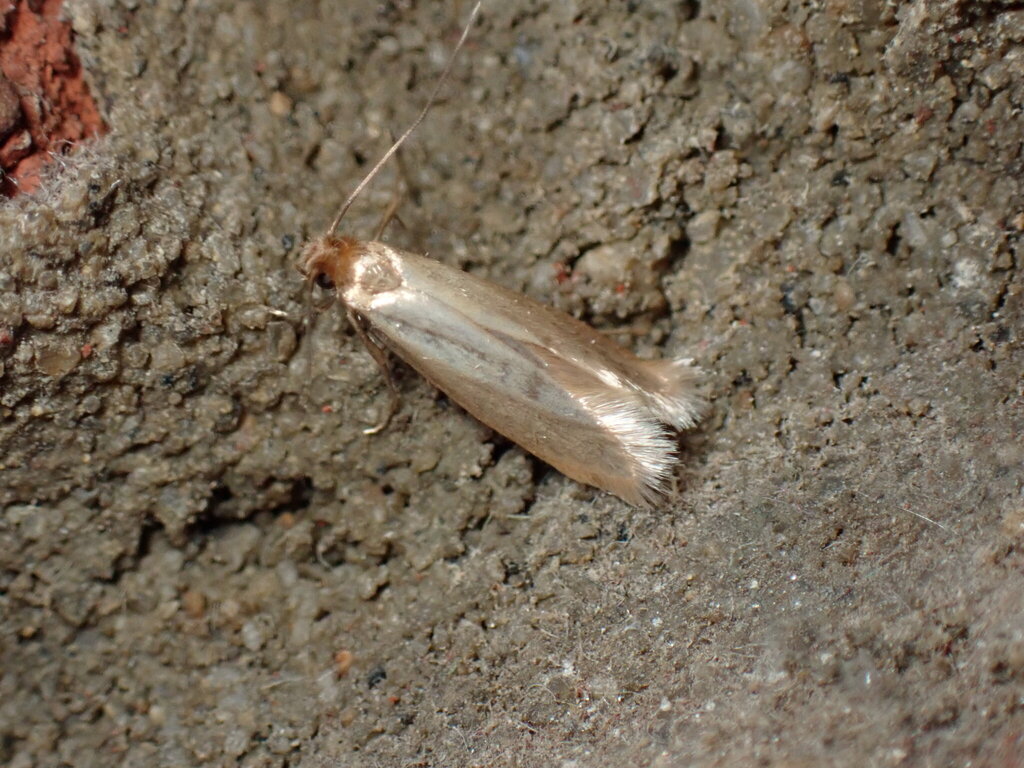
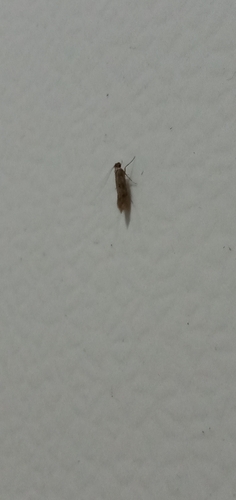
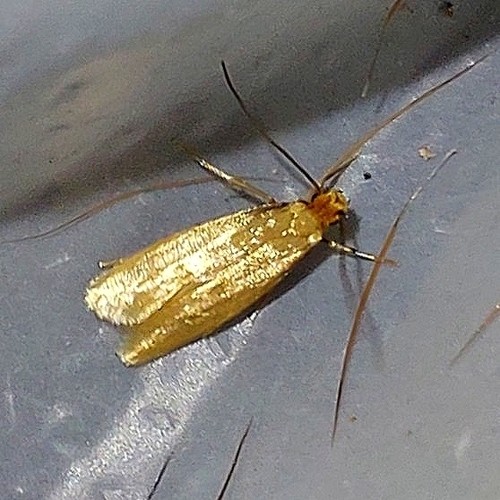
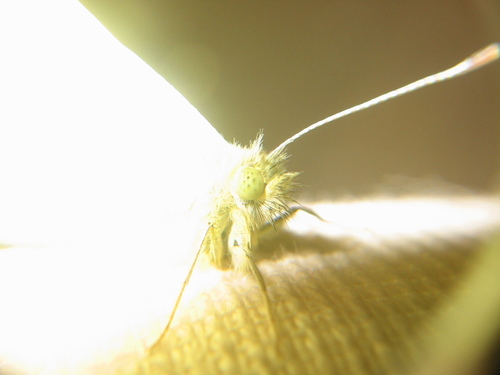
Adult common clothes moths are small (slender, narrow wings) and plain-looking. Forewings are uniform pale golden or buff with a slight sheen and lack conspicuous markings; wings are held roof-like over the body when at rest. The head has a tuft of pale hairs. Larvae are creamy-white caterpillars with a brown head capsule and grow to a few millimetres to over 1 cm, often found in silken tunnels or patches of webbing on damaged fabric.
- Small moth 6-8 mm body length with 9-16 mm wingspan and narrow, fringed wings
- Uniform pale golden or buff forewings without distinct markings (shimmering appearance)
- Larvae are creamy white with a brown head and often found within silken webbing or tunnels on damaged fabric
- Damage appears as irregular holes, often near seams, under collars, or where fabrics are undisturbed
Lookalikes
Case-bearing clothes moth Tinea pellionella
Tinea pellionella larvae construct portable cases of silk and fibres and adults often have small dark spots on the wings; Tineola lacks the portable case and has more uniformly golden wings.
House moth (various tineid moths) Various Tineidae
Other tineid moths may show different wing markings or size; examine larval behavior (case-making vs webbing) and wing pattern for separation.
↻Life cycle
Egg
Females lay tiny, whitish eggs (a few dozen) on or near suitable food. Eggs hatch in about 4-10 days depending on temperature.
Larva (caterpillar)
Larvae are the feeding stage that cause damage. They spin silken tunnels and feed on keratin-rich materials for weeks to months before pupating.
Pupa
Larvae pupate within a silken cocoon attached to fabric or in nearby crevices; pupation lasts about 8-50 days depending on conditions.
Adult (moth)
Adults are short-lived, do not feed on fabrics, and focus on mating and laying eggs. They are weak fliers and avoid light.
🍃Diet and predators
Young eat
Keratin-containing animal fibres: wool, silk, fur, feathers, felt, hair, and soiled textiles (stains increase attractiveness)
Adults eat
Adults do not feed on fabrics and may not feed at all; some may drink water or sugary liquids but adults are mainly reproductive.
Predators of the young
Predatory beetles, parasitic wasps, ants and some spiders in storage areas; birds and mammals if larvae are accessible outdoors
Predators of adults
Spiders, predatory insects and insectivorous bats and birds where adults exit buildings
🌱Effect on plants and gardens
Larvae feed on keratin-containing animal fibres (wool, silk, fur, feathers, felt) and may damage blended fabrics, upholstered furniture and carpets. They do not eat living plants.
How to get rid of common clothes moths
Prevention and non-chemical control are best: regularly wash or dry-clean vulnerable clothing, vacuum and clean storage areas, expose items to sunlight and air, store clean garments in sealed containers, use cedar or lavender as limited deterrents, and use pheromone traps to monitor. For infested items, laundering at high temperature according to label, dry-cleaning, freezing at -18 degrees C for several days, or heating above 50 degrees C for several hours will kill larvae and eggs. In heavy infestations, consider professional pest control that can apply registered insecticides safely; always follow label instructions and safety precautions.
📍Where and when to find it
Look in dark, undisturbed storage: inside closets, under wardrobes, in rarely used clothing, boxes, behind baseboards, and in museum storage. Larvae are found on or under damaged wool, silk, fur, blankets and carpets.
Best time
Year-round indoors; adults are most active in evening and night when they may fly briefly.
Observation tips
Inspect seams, hems and under collars for small holes or silken webbing; use a bright flexible light and a magnifier to find larvae and eggs. Pheromone traps help detect early infestations.
✨Fun facts
- Tineola bisselliella has become almost entirely associated with humans and is rarely found in truly wild habitats.
- The larvae can digest keratin, a tough protein in wool and feathers, thanks to a strongly reducing gut that breaks its sulfur bonds.
- Museums use strict climate control, sealed storage and regular inspections because clothes moths are a major threat to historic textiles and taxidermy.
?Frequently asked questions
Do clothes moths bite humans?
No. Neither adults nor larvae bite people. The concern is fabric damage, not biting.
Are clothes moths dangerous to my health?
Generally no. They do not transmit diseases or sting. Some people may have minor allergic reactions to moth scales or frass.
Why are clothes moths in my house?
They are attracted to and breed where keratin-rich materials are available and undisturbed, especially if fabrics are soiled. Closets, attics and storage boxes provide ideal conditions.
How do I get rid of clothes moths?
Clean and launder or dry-clean affected items, vacuum and clean storage areas, expose items to sunlight, freeze or heat-treat infested objects, use sealed storage, and use pheromone traps for monitoring. For severe infestations, consult a pest professional.
Will mothballs get rid of them?
Products containing naphthalene or paradichlorobenzene can repel or kill moths in sealed spaces but have health and safety concerns. Safer long-term control relies on cleaning, storage and physical treatments; follow label directions and consider alternatives.
📷Photos of the common clothes moth
More butterflies & moths
This guide was written with AI assistance and fact-checked, last updated 2026-10-09. Identification from photos is never certain: don't handle insects you can't identify, and get medical advice for bites, stings or allergic reactions.