
Do moths bite? Are moths poisonous? The moths you'll find in and around the house
A moth fluttering around a lamp or landing on your arm can be startling, but almost all adult moths are completely harmless. They can't bite or sting: most feed by sipping nectar through a coiled tube, and some don't feed at all as adults.
The moths that cause problems do it in other ways: by eating clothes or food as caterpillars, or with irritating hairs. Here's what to know, and how to identify the moths people ask about most.
Do moths bite or sting?
No. Adult moths have no jaws for biting and no stinger. Most have a proboscis, a long, coiled feeding tube that they unroll to drink nectar, fruit juice or water. Some large moths, like luna and polyphemus moths, have no working mouthparts at all and live only about a week as adults on the fat they stored as caterpillars.
The only exception is a small group of fruit-piercing moths in Asia and parts of Europe, sometimes called vampire moths, which can occasionally pierce skin. They don't live in homes and are very rarely encountered.
Caterpillars are different: some have stinging spines or irritating hairs. If you've been stung, it was probably a caterpillar, not a moth.
Are moths poisonous to people, dogs or cats?
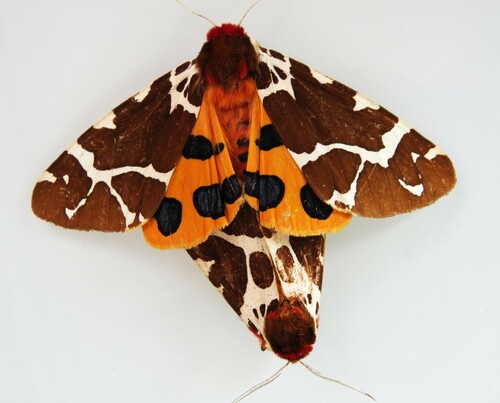
Most moths aren't poisonous, and a cat or dog that catches and eats the odd moth is usually fine. Brightly coloured moths, such as tiger moths, often contain bitter chemicals that make them taste bad. A pet that eats one may drool, paw at its mouth or vomit, but serious poisoning is rare.
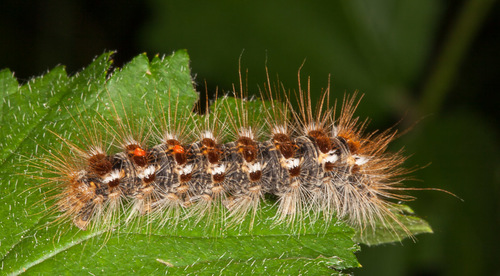
Hairy moths and caterpillars are more of a concern. The garden tiger moth and its woolly caterpillar have irritating hairs, and brown-tail moth caterpillars shed tiny barbed hairs that cause an itchy rash on skin and can irritate a pet's mouth. Call your vet if a pet has swelling of the mouth, keeps drooling or vomiting, or seems unwell.
Moths that cause problems in the house
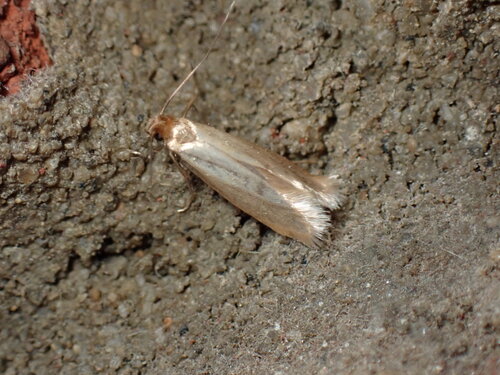
Clothes moths are small (wingspan about 1-1.5 cm), plain golden-buff moths that flutter weakly and avoid light. The adults don't eat, but their caterpillars eat wool, silk, fur, feathers and dust in closets, drawers and carpets, leaving holes and silky tubes. Clean and vacuum closets, wash or freeze affected items, and store woollens in sealed bags.
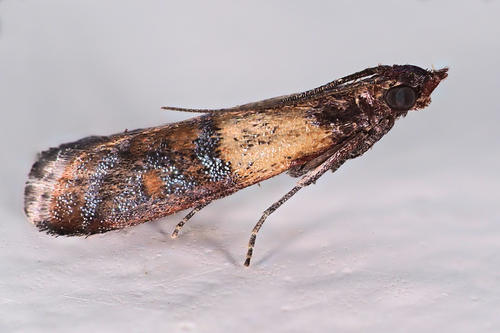
Pantry moths, like the Indian meal moth, have two-tone wings, pale at the base and coppery at the tips. Their caterpillars live in flour, cereal, nuts, dried fruit and pet food and leave webbing. Throw out infested food, vacuum the shelves and keep dry food in airtight jars.
Big moths that look alarming but are harmless
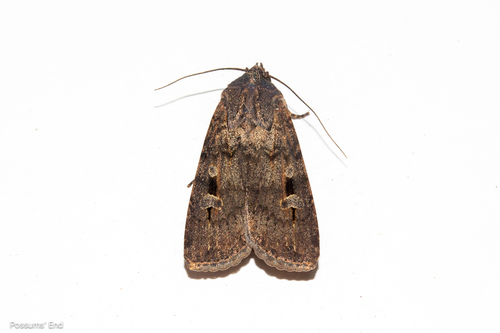
Bogong moths are brown moths about 4-5 cm across from Australia. Every spring, huge numbers migrate to the Australian Alps, and lights draw them into homes and buildings in cities along the way. They don't bite and aren't poisonous.
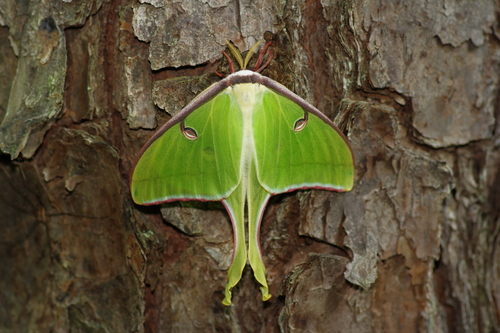
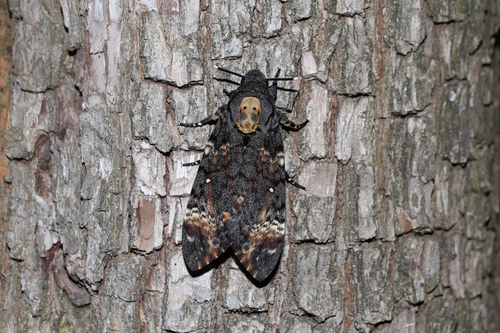
Luna moths are pale lime-green with long, curving tails on the hind wings and are found in eastern North America. The death's-head hawkmoth of Europe and Africa has a skull-like pattern on its back and can squeak loudly when disturbed. Both are harmless to people.
Hawk moths: the ones mistaken for hummingbirds
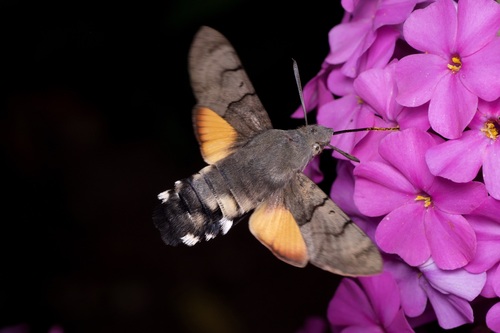
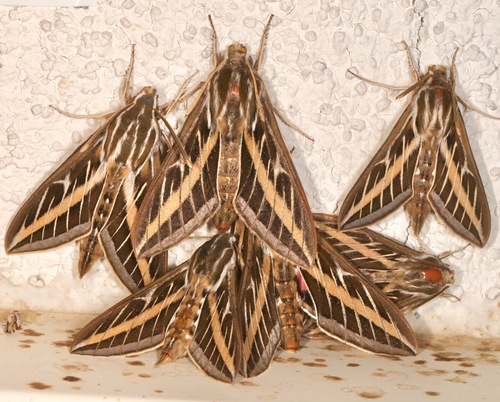
Hawk moths are fast, strong fliers with long, narrow wings. Several hover in front of flowers to drink nectar, so they're often mistaken for hummingbirds.
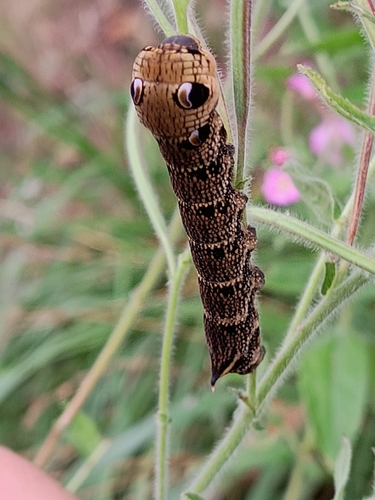
The hummingbird hawk-moth of Europe and Asia flies in daytime and hovers with a loud hum, showing orange hind wings. In North America, the white-lined sphinx, with pink hind wings and white lines on the front wings, does the same at dusk. The elephant hawk moth is bright pink and olive-green; its large caterpillar has eye spots that make it look like a small snake, but it's harmless.
None of them bite or sting.
Keeping moths out
Moths are drawn to light, so close curtains at night, use warm-coloured or yellow outdoor bulbs, and fit screens on windows. A moth indoors can be caught under a glass and released outside.
For holes in clothes or webbing in food, deal with the caterpillars as described above; killing the adults alone won't solve the problem. If you're not sure what you've found, compare it with the photos on this page, or identify it from the photo.
?Frequently asked questions
Can moths bite humans?
No. Adult moths have no biting jaws or stinger and feed by sipping liquids through a coiled tube. A few rare fruit-piercing moths in Asia and Europe can pierce skin, but they're not found in homes. Stings blamed on moths usually come from caterpillars.
Are moths poisonous to cats and dogs?
Most moths aren't. A pet that eats one is usually fine, though brightly coloured tiger moths taste bitter and can cause drooling or vomiting. Hairy caterpillars are more likely to cause problems. Call your vet if your pet has mouth swelling, keeps vomiting or seems unwell.
Do bogong moths bite?
No. Bogong moths can't bite or sting and aren't poisonous. They're common in Australian homes in spring because lights attract them during their migration to the Australian Alps.
Which moths eat clothes?
Clothes moth caterpillars eat wool, silk, fur and feathers. The adults are small, plain, golden-buff moths that avoid light. Clean closets, wash or freeze affected items and store woollens in sealed bags.
Written by the Insect Scanner team, last updated 2026-11-02. Identification from photos is never certain: don't handle insects you can't identify, and get medical advice for bites, stings or allergic reactions.