
Brown-tail moth
Euproctis chrysorrhoea · Tussock moths
A small white moth whose hairy caterpillars have a distinctive brown tail and urticating hairs that can cause skin and respiratory irritation.
!Is the brown-tail moth dangerous?
Yes, it can be. Caterpillar hairs are the main hazard. The tiny, barbed setae can cause itchy rashes (dermatitis), eye irritation and, in sensitive people, respiratory symptoms such as coughing or wheeze. Hairs can remain in nests and shed into the environment for months. Adults do not bite or sting. First aid: avoid rubbing the skin, wash affected skin with soap and water, remove hairs with adhesive tape, apply cool compresses and topical steroid cream if available; seek medical help for severe or widespread reactions, and call emergency services for difficulty breathing or signs of a severe allergic reaction.
Pets
Pets can get skin irritation, rubbing, or vomiting if they groom off hairs. Keep animals away from nests and caterpillars; consult a veterinarian for severe reactions.
📖Overview
The brown-tail moth is a widespread tussock moth found across Europe, parts of North Africa and Asia, and established as an invasive pest in some parts of North America. Adults are small, white moths with a brown-tipped abdomen; the caterpillars are hairy and feed on a wide range of broadleaf trees and shrubs. The caterpillar's hairs include tiny barbed setae that can break off and cause dermatitis, eye irritation and breathing problems in sensitive people. Outbreaks can defoliate hedges and orchard trees and create a public-health nuisance where nests are abundant.
The species is best known to people because of its stinging caterpillars and the winter silk tents or communal webs where larvae overwinter. Management focuses on removing nests, reducing caterpillar numbers in spring and using biological or chemical controls when populations are high.
🔍How to identify a brown-tail moth
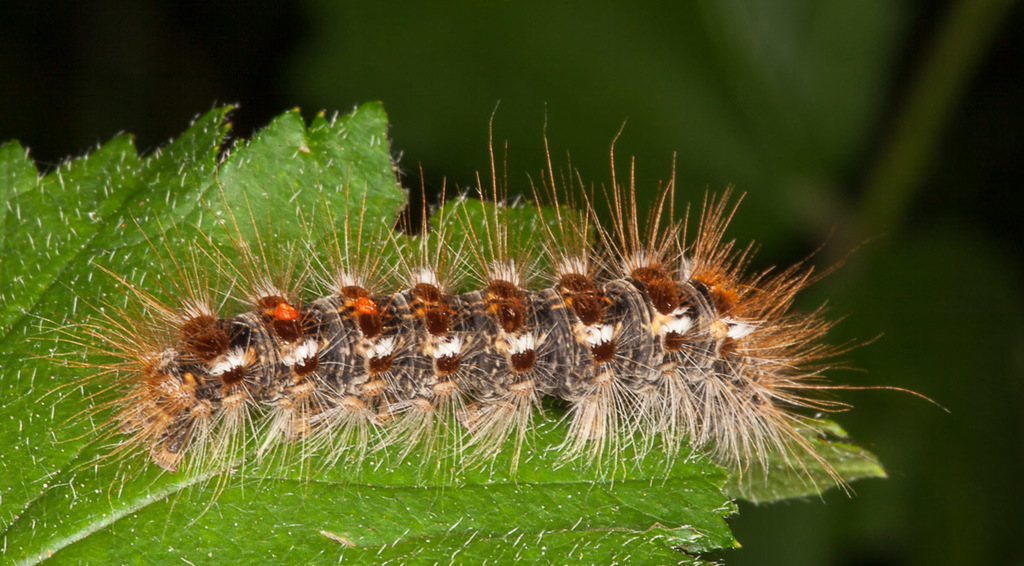
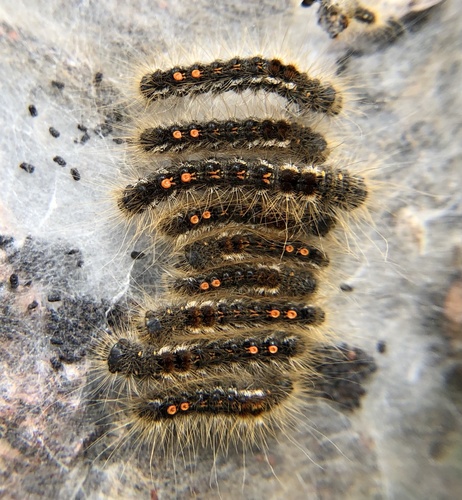
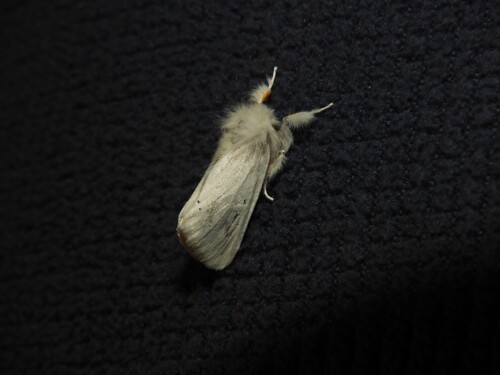
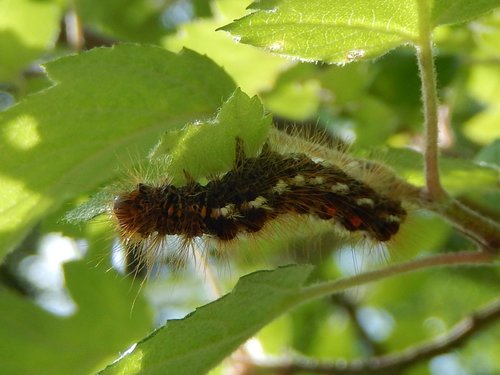
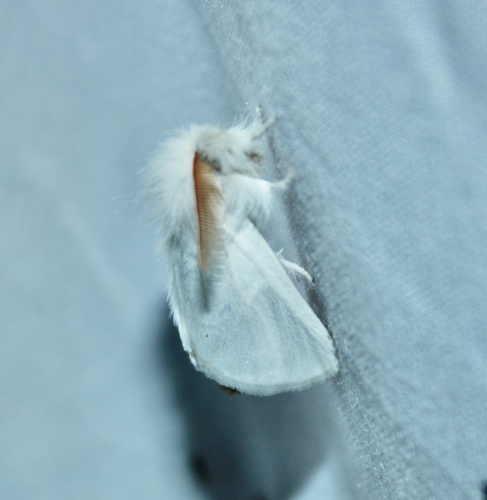
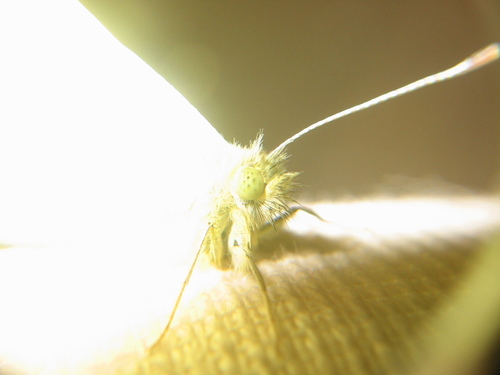
Adult brown-tail moths are pure white with a wingspan roughly 30-40 mm; males sometimes show a few small dark spots on the forewings. The abdomen tip carries a dense tuft of brown hairs (the 'brown tail'), which is larger in females, who use these hairs to cover their egg masses. Caterpillars are densely hairy and dark brown, with a broken white stripe or white tufts along each side and two conspicuous orange-red dots on the back near the rear end. Larval hairs are fine, barbed and easily shed.
- Look for pure white adult moths with a dense brown tuft of hairs at the tip of the abdomen.
- Caterpillars are densely hairy and dark brown, with white tufts along the sides and two orange-red dots on the back near the rear.
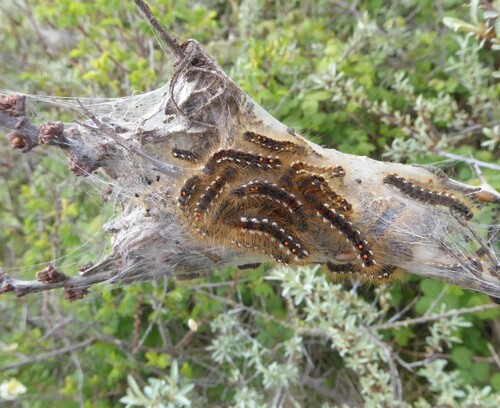
- Silken communal webs or winter tents on shrubs and hedgerows that contain shed hairs and dead larvae indicate browntail moth presence.
- When handling suspected nests or caterpillars, note any fine airborne hairs causing skin irritation as a diagnostic clue (do not intentionally provoke exposure).
Lookalikes
Tussock moths Orgyia spp.
Tussock moth caterpillars (Orgyia) have prominent upright toothbrush-like tufts on the back and long pencil-like hair tufts; brown-tail caterpillars lack these and have two orange-red dots near the rear. Adult Orgyia are brown or grey, not white.
Spongy moth (gypsy moth) Lymantria dispar
Spongy moth caterpillars have five pairs of blue and six pairs of red dorsal spots and lack the two orange-red rear dots of brown-tail caterpillars; adult males are brown and females off-white with dark zigzag lines and no brown abdominal tuft.
Pale tussock moth Calliteara pudibunda
Pale tussock adults are greyish with darker cross-lines, and caterpillars are yellow-green with yellow toothbrush tufts and a reddish tail tuft rather than dark brown with orange-red dots.
↻Life cycle
Egg
In July and August females lay egg masses on the underside of leaves, covered with brown hairs from the tip of their abdomen; eggs hatch in late summer.
Larva (caterpillar)
Young caterpillars feed briefly in late summer, then overwinter together in silk nests woven from leaves at branch tips. They resume feeding in early spring and mature by early summer. Their hairs are urticating and cause irritation.
Pupa
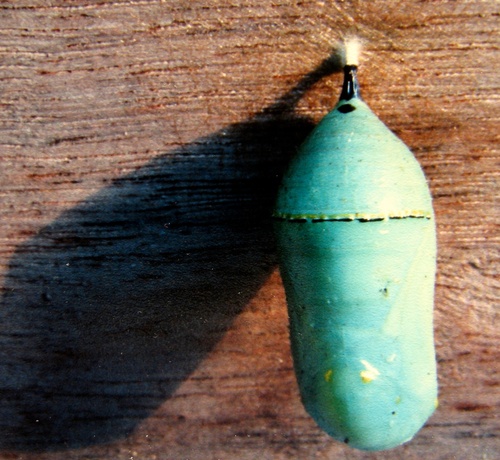
Pupation occurs in loose silk cocoons spun among foliage or in sheltered sites in early summer; the pupal stage lasts a few weeks.
Adult (moth)
Adults emerge in July to mate and lay eggs; they do not feed and live only long enough to reproduce. They are attracted to lights at night.
🍃Diet and predators
Young eat
Leaves of many broadleaf trees and shrubs (oak, apple, hawthorn, blackthorn, fruit trees and ornamentals).
Adults eat
Adults have reduced mouthparts and do not feed significantly.
Predators of the young
Birds, predatory insects and parasitoid wasps attack caterpillars, though hairs reduce predation; small mammals may eat them occasionally.
Predators of adults
Bats, birds and predatory insects; adults are short-lived so predation pressure is limited.
🌱Effect on plants and gardens
Larvae feed on many broadleaf trees and shrubs (oak, apple, hawthorn, blackthorn, fruit trees and ornamental shrubs). Heavy infestations can cause partial or complete defoliation, reducing tree vigor and fruit yield.
How to get rid of brown-tail moths
In winter, clip out the small silk nests (tents) at branch tips while wearing gloves, long sleeves, eye protection and a mask, and destroy them by soaking in soapy water or burning where permitted. In early spring, young caterpillars can be treated with Bacillus thuringiensis kurstaki (Bt) or other approved insecticides, following label directions and local rules; tall trees or heavy infestations are best handled by a licensed professional. Do not mow, rake or leaf-blow in infested areas during dry weather, as this stirs up the irritating hairs.
📍Where and when to find it
Look for small silk nests made of leaves at branch tips in hedgerows, shrubs and trees (oak, apple, hawthorn) in winter. Caterpillars feed on leaves in spring and early summer. Adults are attracted to light in July and August.
Best time
Winter for spotting silk nests; spring to early summer for caterpillars; July-August for adult moths.
Observation tips
When photographing, keep a safe distance from nests and caterpillars to avoid airborne hairs. Use telephoto or macro with zoom rather than close contact. Wear gloves and a mask if you must inspect nests.
✨Fun facts
- The species gets its common name from the dense tuft of brown hairs at the tip of the adult moth's abdomen.
- Egg masses are coated in the mother's body hairs, which helps protect eggs but also spreads the irritating hairs into the environment.
- Because caterpillar hairs can remain dangerous after the season ends, nests found in winter still pose a health risk if disturbed.
?Frequently asked questions
Do brown-tail moth caterpillars sting?
They do not sting like bees, but their fine barbed hairs cause mechanical and chemical irritation that feels like a sting and can produce itchy rashes and respiratory symptoms.
Are brown-tail moths dangerous to humans?
Caterpillar hairs can cause skin and eye irritation and breathing problems in sensitive people; severe allergic reactions are uncommon but possible, so avoid contact and get medical help for severe symptoms.
Why are brown-tail moths in my house or garden?
Larvae feed on common garden trees and shrubs and overwinter in silk nests at branch tips in hedges and trees. In spring the caterpillars emerge from these nests and spread through gardens to feed.
How do I get rid of brown-tail moths?
For small infestations, clip out and destroy the overwintering silk nests in winter while wearing gloves, eye protection and a mask to avoid hairs. In early spring, target young caterpillars with biological controls like Bacillus thuringiensis kurstaki (Bt) or approved insecticides. For large outbreaks, contact local agricultural or public-health authorities or a licensed professional — control methods and legal restrictions vary by region.
Will removing nests in winter stop the problem?
Removing winter nests reduces local numbers substantially but may not eliminate infestations alone; combining removal with monitoring and targeted spring controls is most effective.
Can I touch a dead caterpillar or nest safely?
No — hairs can remain allergenic for months. Always use gloves, long sleeves and a mask when handling nests or dead caterpillars, and seal and dispose of material in a bag according to local guidance.
📷Photos of the brown-tail moth
More butterflies & moths
This guide was written with AI assistance and fact-checked, last updated 2026-10-10. Identification from photos is never certain: don't handle insects you can't identify, and get medical advice for bites, stings or allergic reactions. More about the brown-tail moth: iNaturalist, Wikipedia.