
Purple emperor
Apatura iris · Brush-footed butterflies
A large woodland butterfly whose males show a striking purple-blue iridescence on the wings; secretive, spends much time in the canopy.
!Is the purple emperor dangerous?
No. Not harmful to people. Does not bite or sting. Handle gently if necessary; like most butterflies it can be injured by rough handling.
Pets
Harmless to pets; unlikely to be of interest to most animals except as food for birds or predatory insects.
📖Overview
The Purple emperor is a large, woodland-dwelling butterfly found across much of temperate Europe and east across temperate Asia. Adult males are famous for a rich purple-blue iridescence on the upper wings produced by microscopic wing-scale structure; females lack or show much weaker iridescence and are browner. The species is strongly associated with mature deciduous woodlands containing sallows (willows) that feed the caterpillars. Adults are often seen only when they come down from the canopy to feed on tree sap, fermenting fruit, carrion or animal droppings rather than flowers.
🔍How to identify a purple emperor
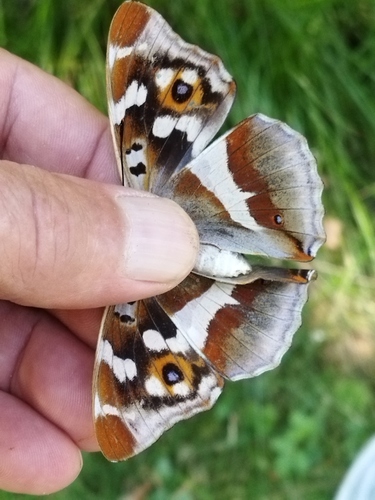
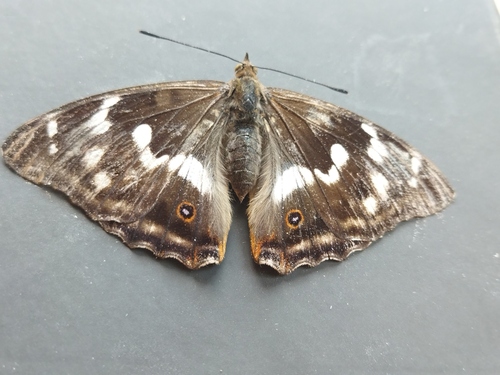
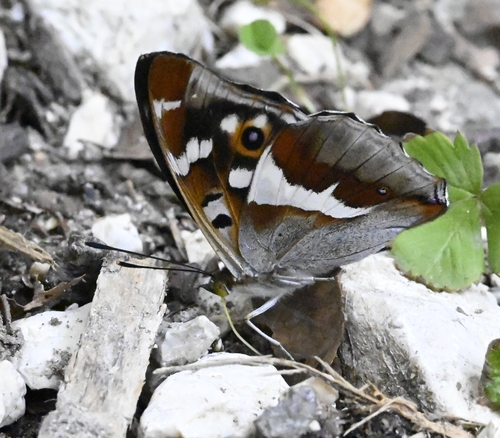
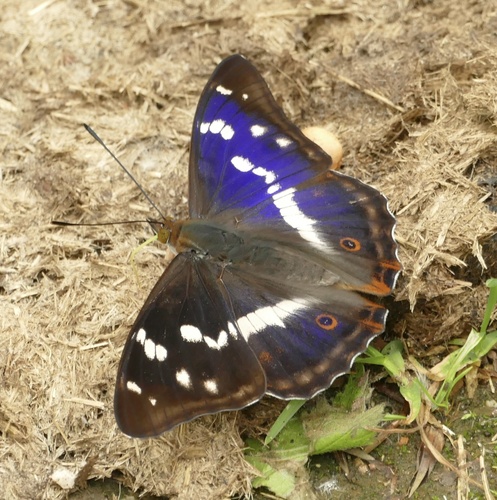
Wingspan about 70-85 mm. Upperwings in males show an intense purple-blue sheen over a dark brown background with broad white markings and a small orange-ringed eyespot on each hindwing; the sheen changes with viewing angle and is absent in females, which are duller brown with the same white markings. Underside of wings is cryptic brown and grey with white bands and eye spots useful for identification when wings are closed. The forelegs are reduced (typical of brush-footed butterflies).
- Large butterfly with 70-85 mm wingspan and bold white bands on dark wings.
- Males show an angle-dependent purple-blue iridescence on the upper wings; females are browner without strong sheen.
- Underside is cryptic brown/grey with white bands and eye spots—useful if wings are closed.
- Associated with mature deciduous woods and sallows; often seen lower down when feeding on sap or rotting fruit.
Lookalikes
Lesser purple emperor Apatura ilia
Slightly smaller, with an orange-ringed eyespot on the forewing upperside and more orange or yellowish tones; the lesser purple emperor's purple sheen is less extensive and its underside pattern differs.
Purple hairstreak Favonius quercus
Much smaller and more strongly associated with oak trees; lacks the large white bands and has different wing shape and size.
↻Life cycle
Egg
Laid singly on the upper side of sallow (Salix species) leaves in mid to late summer; eggs hatch after about two weeks.
Larva (caterpillar)
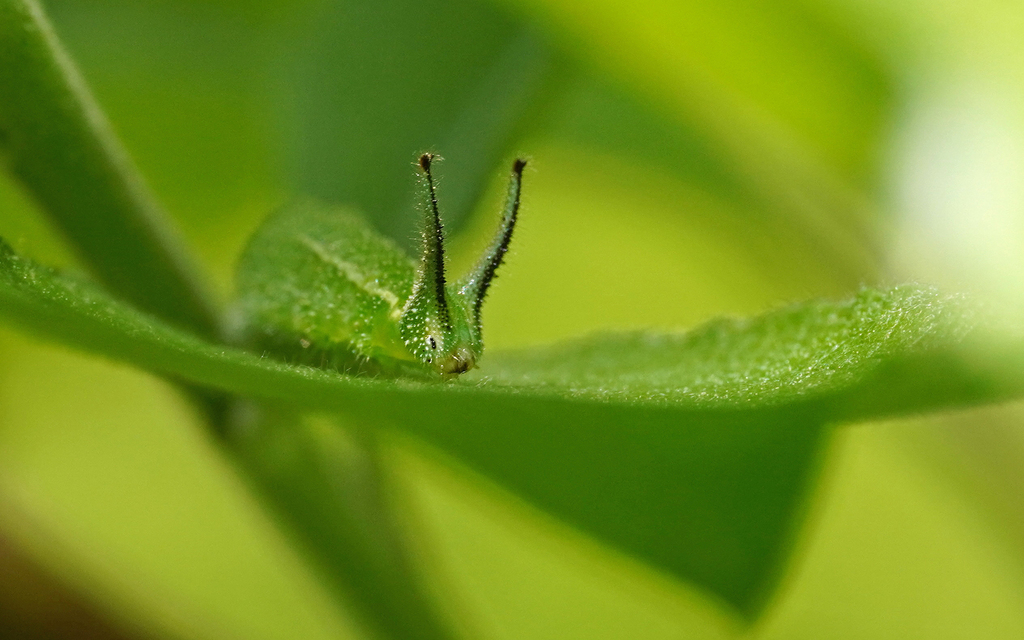
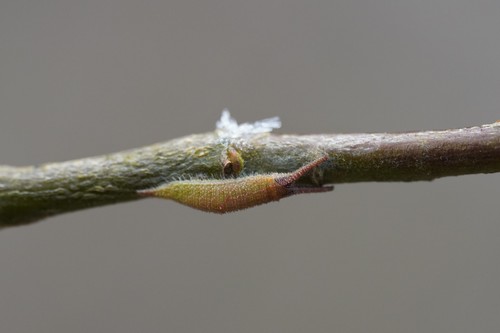
Green, slug-like caterpillars with two horns on the head feed on sallow leaves; they overwinter as small larvae on sallow twigs and resume feeding in spring, completing growth by early summer.
Pupa (chrysalis)
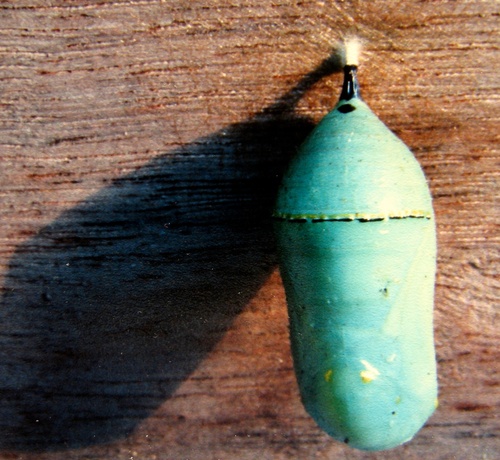
Pupation occurs hanging beneath a sallow leaf; the green chrysalis is well camouflaged and the adult emerges after a few weeks in summer.
Adult (butterfly)
Adults spend much time in the tree canopy; males are territorial and show the purple iridescence when flying or basking at canopy openings.
🍃Diet and predators
Young eat
Leaves of sallows and other willow species (Salix spp.).
Adults eat
Tree sap, fermenting fruit, animal droppings and carrion; rarely nectar from flowers.
Predators of the young
Parasitoid wasps and flies, insectivorous birds, predatory insects.
Predators of adults
Birds (when adults descend from canopy) and predatory insects; adults' canopy habits and cryptic undersides help reduce predation.
🌱Effect on plants and gardens
Larvae feed primarily on various sallows and willows (Salix species). Adults feed on tree sap, fermenting fruit, carrion and animal droppings rather than visiting many flowers.
📍Where and when to find it
Look in mature deciduous woodlands, especially at canopy level. Adults come lower to feed on tree sap, fermenting fruit and animal droppings along rides, glades and woodland edges. Eggs and caterpillars are on sallows (Salix spp.).
Best time
June to August in daylight, especially warm sunny days; early morning or late afternoon when individuals may descend from the canopy.
Observation tips
Scan tree canopies and watch for fast-flying purple flashes. To observe at close range, check fallen fruit, sap runs and muddy tracks where they may come to feed.
✨Fun facts
- The purple colour is not a pigment but iridescence from microscopic wing-scale structure that reflects blue/violet light.
- Males spend much time in the canopy and are often only noticed when they descend for sap, puddling or to investigate animal droppings.
- Territorial males will patrol and defend small canopy perches, sometimes engaging in aerial chases.
?Frequently asked questions
Are Purple emperors dangerous?
No. They are harmless to people and pets, do not bite or sting.
Do Purple emperors visit gardens?
They are mainly woodland canopy species but may visit gardens close to mature woodland, especially if there are fruit trees or fallen fermenting fruit.
Why is a Purple emperor in my yard?
If your yard borders mature woodland or contains sallows or fermenting fruit, adults may descend from nearby trees to feed on sap or rotting fruit.
How can I attract Purple emperors?
Provide sallows (Salix spp.) for caterpillars and leave patches of fermenting fruit or tree sap sources; planting sallows near woodland edges helps, but they are wild woodland specialists and not easily attracted to ordinary gardens.
How do I tell male and female Purple emperors apart?
Males show a strong purple-blue iridescence on the upper wings; females are browner and lack the intense sheen.
Is the Purple emperor endangered?
Populations are stable in many suitable habitats but local declines occur where mature woodland and sallows are lost; conservation depends on maintaining and managing native woodlands.
📷Photos of the purple emperor
More butterflies & moths
This guide was written with AI assistance and fact-checked, last updated 2026-10-10. Identification from photos is never certain: don't handle insects you can't identify, and get medical advice for bites, stings or allergic reactions. More about the purple emperor: iNaturalist, Wikipedia.