
Spongy moth vs Brown-tail moth
These two are easy to mix up. Here's how to tell a spongy moth from a brown-tail moth, and whether either one bites or stings.
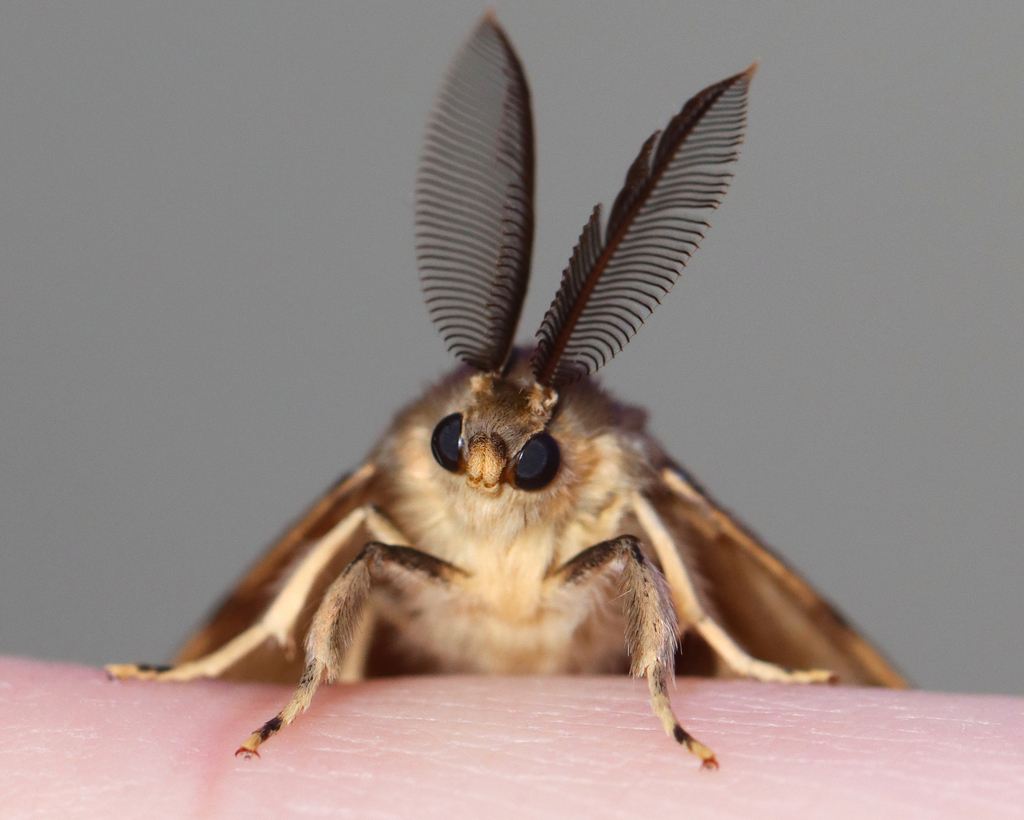
Spongy moth
Lymantria dispar
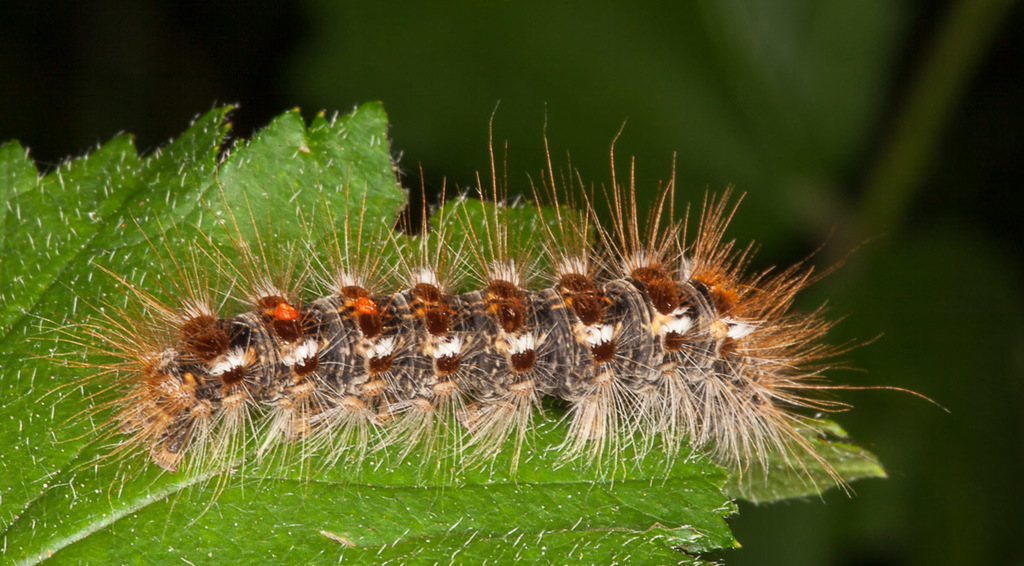
Brown-tail moth
Euproctis chrysorrhoea
≠The key differences
Brown-tail caterpillars are dark brown with white tufts along the sides and two orange-red spots near the rear, not paired blue and red spots; their hairs are much more irritating to skin.
Spongy moth caterpillars have five pairs of blue and six pairs of red dorsal spots and lack the two orange-red rear dots of brown-tail caterpillars; adult males are brown and females off-white with dark zigzag lines and no brown abdominal tuft.
⚖︎Side by side
| Spongy moth | Brown-tail moth | |
|---|---|---|
| To humans | Irritating hairs | Irritating hairs |
| Size | Male wingspan 35-50 mm; female wingspan 50-75 mm | Wingspan about 30-40 mm |
| Colours | Brown, Cream, Black, Blue (larval spots), Red (larval spots) | White, Cream, Brown, Black, Red |
| Family | Erebidae | Erebidae |
| Habitat | Forests, woodlands, parks and urban areas where host trees are present | Hedgerows, gardens, orchards, wood edges and scrub; larvae feed on many broadleaf trees and shrubs including oak, apple, hawthorn and fruit trees. |
| Range | Native to Europe, parts of Asia and North Africa; established as an invasive species in eastern North America, with isolated introductions elsewhere | Native to Europe, North Africa and parts of Asia; introduced and established in parts of northeastern North America (notably New England) where it can be a serious pest in outbreaks. |
| Active | Caterpillars active in spring and early summer; adults emerge mid to late summer depending on climate | Caterpillars overwinter in silk nests and feed from early spring to early summer; adults fly in July and August and are attracted to lights. |
| Pest? | Yes | Yes |
🔍How to spot a spongy moth
- Caterpillars with five pairs of blue dorsal spots followed by six pairs of red dorsal spots.
- Spongy, tan egg masses 40-70 mm long attached to bark, wood, vehicles or outdoor objects.
- Adult females are white or cream with dark markings and often poor fliers; males are brown and fly readily.
🔍How to spot a brown-tail moth
- Look for pure white adult moths with a dense brown tuft of hairs at the tip of the abdomen.
- Caterpillars are densely hairy and dark brown, with white tufts along the sides and two orange-red dots on the back near the rear.
- Silken communal webs or winter tents on shrubs and hedgerows that contain shed hairs and dead larvae indicate browntail moth presence.
- When handling suspected nests or caterpillars, note any fine airborne hairs causing skin irritation as a diagnostic clue (do not intentionally provoke exposure).
?Frequently asked questions
What is the difference between a spongy moth and a brown-tail moth?
Brown-tail caterpillars are dark brown with white tufts along the sides and two orange-red spots near the rear, not paired blue and red spots; their hairs are much more irritating to skin. Spongy moth caterpillars have five pairs of blue and six pairs of red dorsal spots and lack the two orange-red rear dots of brown-tail caterpillars; adult males are brown and females off-white with dark zigzag lines and no brown abdominal tuft.
Is a spongy moth or a brown-tail moth more dangerous?
Spongy moth: Irritating hairs. Brown-tail moth: Irritating hairs. Caterpillar hairs and scales can cause skin irritation or an itchy rash (contact dermatitis) in sensitive people; inhalation of large numbers of hairs or scales may irritate the respiratory tract. Caterpillar hairs are the main hazard.
Identification from photos is never certain: don't handle insects you can't identify, and get medical advice for bites, stings or allergic reactions.