
Orange sulphur vs Clouded sulphur
These two are easy to mix up. Here's how to tell an orange sulphur from a clouded sulphur, and whether either one bites or stings.
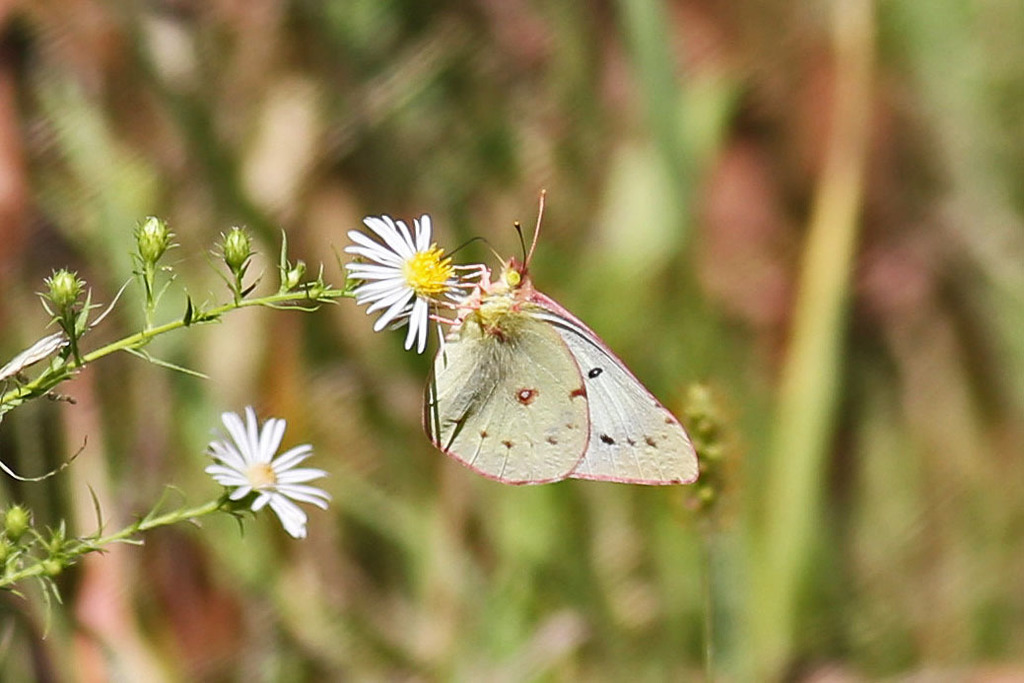
Orange sulphur
Colias eurytheme
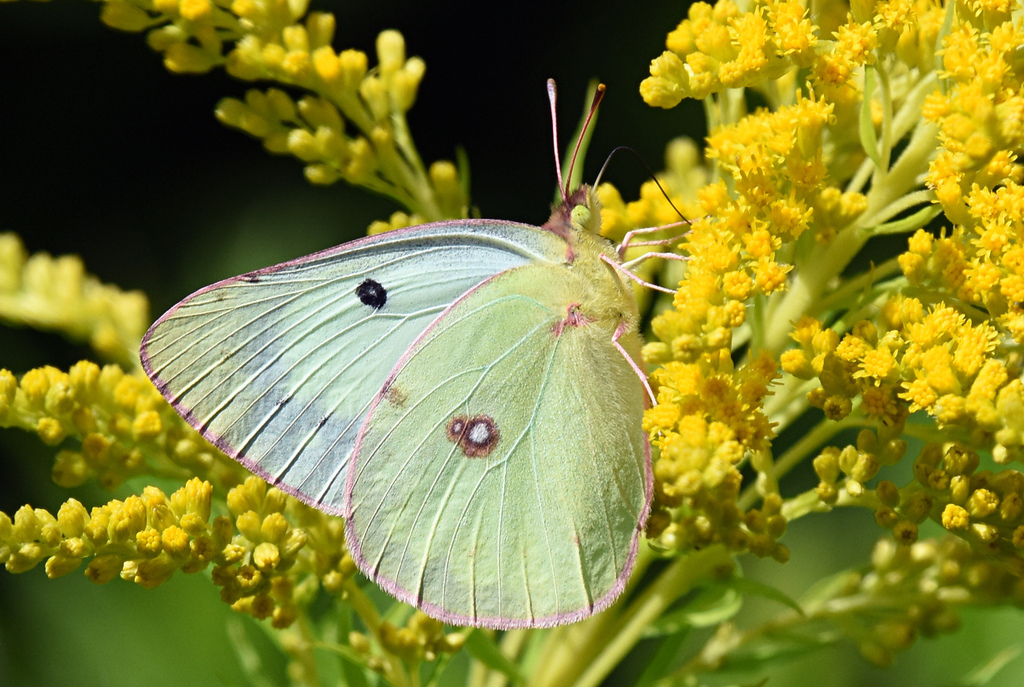
Clouded sulphur
Colias philodice
≠The key differences
Clouded sulphur is generally paler yellow with less orange tint; males usually lack the strong orange of male C. eurytheme and wing borders are often thinner. Range overlaps, so check color intensity and wing markings.
Orange sulphur often has more orange tones on the upperside and a more extensive dark border with pale submarginal spots; Clouded sulphur is usually more uniformly yellow and the 'alba' female is common in C. philodice.
⚖︎Side by side
| Orange sulphur | Clouded sulphur | |
|---|---|---|
| To humans | Non-toxic | Non-toxic |
| Size | Wingspan 32-61 mm | Wingspan 32-50 mm |
| Colours | Bright orange, Lemon yellow, Black, Pale yellow-green (underside) | Lemon yellow, Golden yellow, Pale cream, Dark brown border |
| Family | Pieridae | Pieridae |
| Habitat | Open areas: fields, meadows, roadsides, pastures, gardens and agricultural land where legumes grow | Open fields, meadows, roadsides, disturbed areas, pastures, gardens |
| Range | Widespread across North America from southern Canada through much of the United States and into Mexico | Widespread across North America from southern Canada through the United States and into Mexico in suitable habitats |
| Active | Spring through fall (depends on latitude); diurnal, most active on sunny days | Spring through fall in most of its range; multiple broods in warm months; most active during warm sunny daytime |
| Pest? | Yes | No |
🔍How to spot an orange sulphur
- Males: orange upperwings with a solid black border and a small black spot in the center of the forewing
- Females: variable yellow to orange (or whitish), with yellow spots inside the black border
- Underside: yellow with a silver, red-rimmed spot (often doubled) in the center of the hindwing
- Wingspan 32-61 mm; flight is fast and direct, often low over the vegetation
🔍How to spot a clouded sulphur
- Small sulphur with wingspan 32-50 mm; males bright lemon/yellow with narrow dark wing borders
- Single dark disc spot on the upper forewing (both sexes) and pale spot on the underside hindwing
- Females more variable and sometimes white ('alba' form); check underside and border pattern to separate from similar species
- Habitat: look in sunny, open areas, low over fields and near nectar flowers
?Frequently asked questions
What is the difference between an orange sulphur and a clouded sulphur?
Clouded sulphur is generally paler yellow with less orange tint; males usually lack the strong orange of male C. eurytheme and wing borders are often thinner. Range overlaps, so check color intensity and wing markings. Orange sulphur often has more orange tones on the upperside and a more extensive dark border with pale submarginal spots; Clouded sulphur is usually more uniformly yellow and the 'alba' female is common in C. philodice.
Is an orange sulphur or a clouded sulphur more dangerous?
Orange sulphur: Non-toxic. Clouded sulphur: Non-toxic. Not dangerous. Harmless to people.
Identification from photos is never certain: don't handle insects you can't identify, and get medical advice for bites, stings or allergic reactions.