
Pearl crescent vs Variegated fritillary
These two are easy to mix up. Here's how to tell a pearl crescent from a variegated fritillary, and whether either one bites or stings.

Pearl crescent
Phyciodes tharos
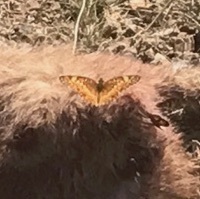
Variegated fritillary
Euptoieta claudia
≠The key differences
Pearl crescent is smaller and has a more checkered pattern on the underside; variegated fritillary is more uniformly orange with broader wings.
⚖︎Side by side
| Pearl crescent | Variegated fritillary | |
|---|---|---|
| To humans | Non-toxic | Non-toxic |
| Size | 25-38 mm wingspan | About 45-75 mm wingspan |
| Colours | Orange, Black, Pale cream, Brown | Orange, Dark brown, Cream, Black |
| Family | Nymphalidae | Nymphalidae |
| Habitat | Open fields, meadows, roadsides, weedy clearings and disturbed sites where asters grow | Open sunny places: fields, meadows, roadsides, gardens, open woodland edges and disturbed areas |
| Range | Widespread in eastern and central North America, from southern Canada through the United States and into parts of Mexico | Resident from the southern United States through Mexico and Central America into South America; spreads north each summer across much of the United States and occasionally into southern Canada |
| Active | Multiple broods from spring through fall (May to October in much of its range); active during daylight hours | Spring through fall (longest in southern regions); active during daylight, especially late morning to afternoon |
| Pest? | No | No |
🔍How to spot a pearl crescent
- Small wingspan (25-38 mm) with orange upperwings and bold dark margins and markings
- Hindwing underside paler with a row of small pale crescent-shaped spots near the margin
- Found in open, weedy habitats where asters grow; often seen fluttering low over flowers
- Compare location and subtle wing-pattern details to separate from similar crescent species
🔍How to spot a variegated fritillary
- Bright orange upperwings with bold dark markings and scalloped wing margins
- Mottled underside of hindwing with a mix of orange, brown and cream (the 'variegated' look)
- Smaller submarginal spots and less-silvery underside compared with some other fritillaries
?Frequently asked questions
What is the difference between a pearl crescent and a variegated fritillary?
Pearl crescent is smaller and has a more checkered pattern on the underside; variegated fritillary is more uniformly orange with broader wings.
Is a pearl crescent or a variegated fritillary more dangerous?
Pearl crescent: Non-toxic. Variegated fritillary: Non-toxic. Pearl crescents are harmless to people. Harmless to people.
Identification from photos is never certain: don't handle insects you can't identify, and get medical advice for bites, stings or allergic reactions.