
Great spangled fritillary vs Variegated fritillary
These two are easy to mix up. Here's how to tell a great spangled fritillary from a variegated fritillary, and whether either one bites or stings.
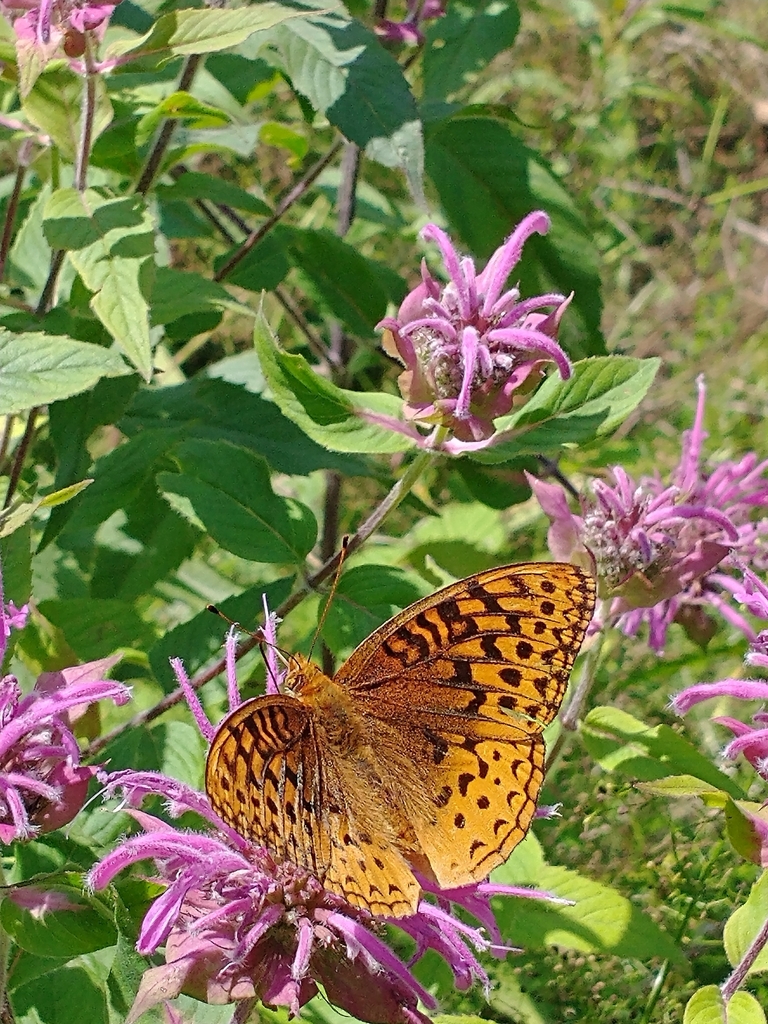
Great spangled fritillary
Speyeria cybele
Variegated fritillary
Euptoieta claudia
≠The key differences
Smaller, with a mottled hindwing underside that lacks silver spots entirely; variegated fritillary also has a different wing shape and more checkerboard patterning.
Great spangled fritillary is larger, has more silver spots on the underside of the hindwing and stronger, more regular silvering than the variegated fritillary.
⚖︎Side by side
| Great spangled fritillary | Variegated fritillary | |
|---|---|---|
| To humans | Non-toxic | Non-toxic |
| Size | 60-90 mm wingspan | About 45-75 mm wingspan |
| Colours | Orange, Dark brown, Black, Cream (silvery spots) | Orange, Dark brown, Cream, Black |
| Family | Nymphalidae | Nymphalidae |
| Habitat | Open, sunny habitats: meadows, prairies, fields, roadsides, and woodland edges, often where violets grow. | Open sunny places: fields, meadows, roadsides, gardens, open woodland edges and disturbed areas |
| Range | Widespread across southern Canada and much of the United States, from the Atlantic coast west to the Rockies, Great Basin and Pacific Northwest; scarce or absent in the arid Southwest, Florida and the Gulf Coast. | Resident from the southern United States through Mexico and Central America into South America; spreads north each summer across much of the United States and occasionally into southern Canada |
| Active | Late spring to early autumn depending on region; one generation per year, with females flying into late summer and autumn; active during daylight, especially sunny hours. | Spring through fall (longest in southern regions); active during daylight, especially late morning to afternoon |
| Pest? | No | No |
🔍How to spot a great spangled fritillary
- Large wingspan (60-90 mm) with orange upperwings and bold black markings.
- Underside of hindwing has large cream or silvery spots set in reddish-brown background.
- Row of conspicuous silver/cream spots (great spangled pattern) distinguishes it from smaller fritillaries.
- Habitat: look in meadows and edges where violets grow, especially during warm, sunny days.
🔍How to spot a variegated fritillary
- Bright orange upperwings with bold dark markings and scalloped wing margins
- Mottled underside of hindwing with a mix of orange, brown and cream (the 'variegated' look)
- Smaller submarginal spots and less-silvery underside compared with some other fritillaries
?Frequently asked questions
What is the difference between a great spangled fritillary and a variegated fritillary?
Smaller, with a mottled hindwing underside that lacks silver spots entirely; variegated fritillary also has a different wing shape and more checkerboard patterning. Great spangled fritillary is larger, has more silver spots on the underside of the hindwing and stronger, more regular silvering than the variegated fritillary.
Is a great spangled fritillary or a variegated fritillary more dangerous?
Great spangled fritillary: Non-toxic. Variegated fritillary: Non-toxic. Not harmful to people. Harmless to people.
Identification from photos is never certain: don't handle insects you can't identify, and get medical advice for bites, stings or allergic reactions.