
Orange sulphur vs Cloudless sulphur
These two are easy to mix up. Here's how to tell an orange sulphur from a cloudless sulphur, and whether either one bites or stings.
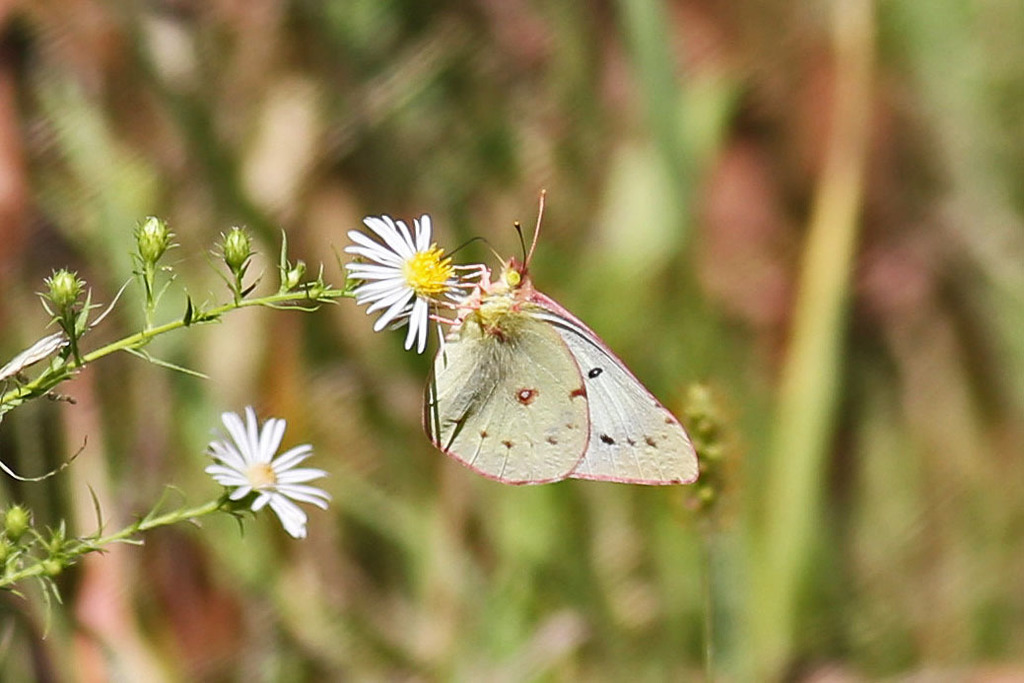
Orange sulphur
Colias eurytheme
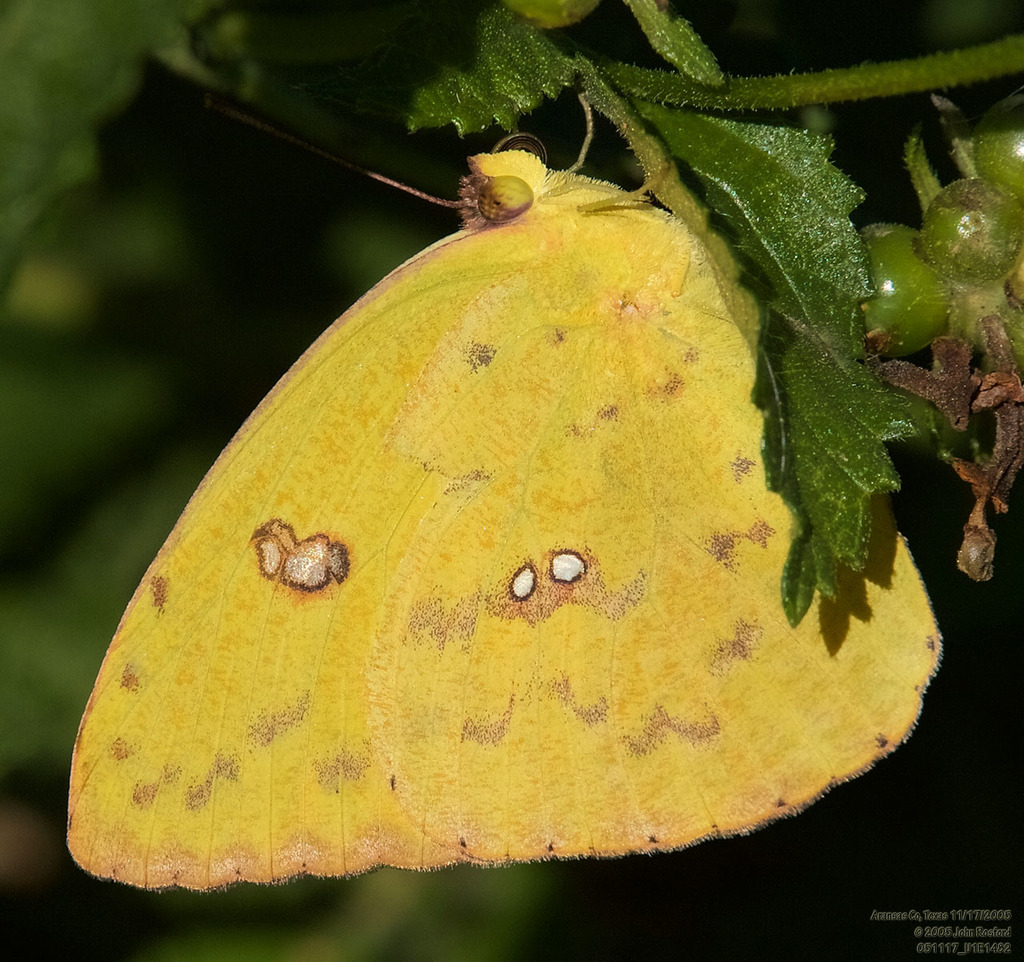
Cloudless sulphur
Phoebis sennae
≠The key differences
Colias species often have distinct dark wing borders and more pronounced underside patterning; they are generally smaller and belong to a different genus.
⚖︎Side by side
| Orange sulphur | Cloudless sulphur | |
|---|---|---|
| To humans | Non-toxic | Non-toxic |
| Size | Wingspan 32-61 mm | 5.5-8.0 cm wingspan |
| Colours | Bright orange, Lemon yellow, Black, Pale yellow-green (underside) | Bright yellow, Pale yellow, Orange yellow, Brown (markings), Black (tiny spots/veins) |
| Family | Pieridae | Pieridae |
| Habitat | Open areas: fields, meadows, roadsides, pastures, gardens and agricultural land where legumes grow | Open, sunny areas: fields, roadsides, gardens, scrub and disturbed sites; also suburban plantings with host plants. |
| Range | Widespread across North America from southern Canada through much of the United States and into Mexico | Widespread from the southern United States through Central America and South America; some populations migrate northward seasonally into temperate North America. |
| Active | Spring through fall (depends on latitude); diurnal, most active on sunny days | Spring through fall in temperate zones; year-round in tropical regions. Diurnal, most active in warm daylight. |
| Pest? | Yes | No |
🔍How to spot an orange sulphur
- Males: orange upperwings with a solid black border and a small black spot in the center of the forewing
- Females: variable yellow to orange (or whitish), with yellow spots inside the black border
- Underside: yellow with a silver, red-rimmed spot (often doubled) in the center of the hindwing
- Wingspan 32-61 mm; flight is fast and direct, often low over the vegetation
🔍How to spot a cloudless sulphur
- Large sulphur with a 5.5-8.0 cm wingspan and uniformly bright yellow to orange upper wings in males.
- Females may be paler or whitish; check underside for paler tones and faint spots.
- Lacks the heavy dark border or strong spotting seen in some other sulphurs; overall smooth, unbroken wing color.
- Observe host plants: larvae on Senna species strongly suggest Phoebis sennae.
?Frequently asked questions
What is the difference between an orange sulphur and a cloudless sulphur?
Colias species often have distinct dark wing borders and more pronounced underside patterning; they are generally smaller and belong to a different genus.
Is an orange sulphur or a cloudless sulphur more dangerous?
Orange sulphur: Non-toxic. Cloudless sulphur: Non-toxic. Not dangerous. Cloudless sulphurs do not bite or sting and are not poisonous.
Identification from photos is never certain: don't handle insects you can't identify, and get medical advice for bites, stings or allergic reactions.