
Monarch butterfly vs Milkweed tussock moth
These two are easy to mix up. Here's how to tell a monarch butterfly from a milkweed tussock moth, and whether either one bites or stings.
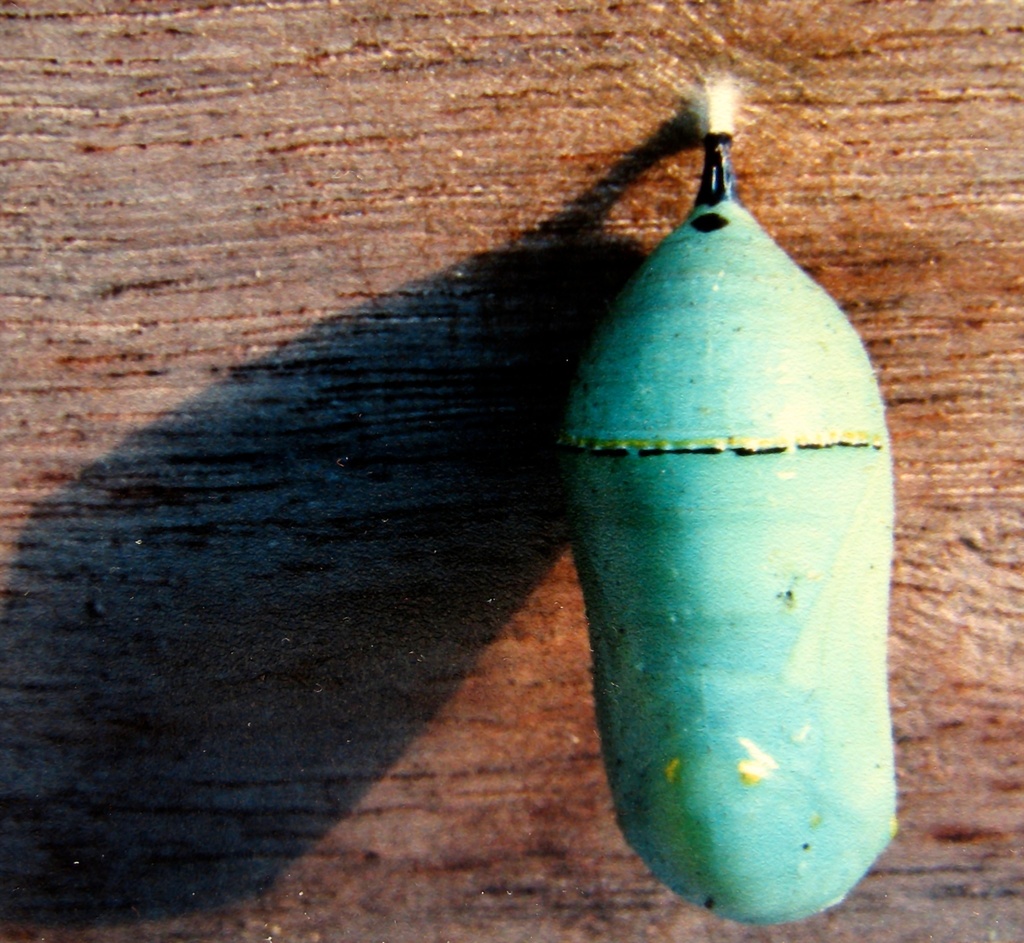
Monarch butterfly
Danaus plexippus
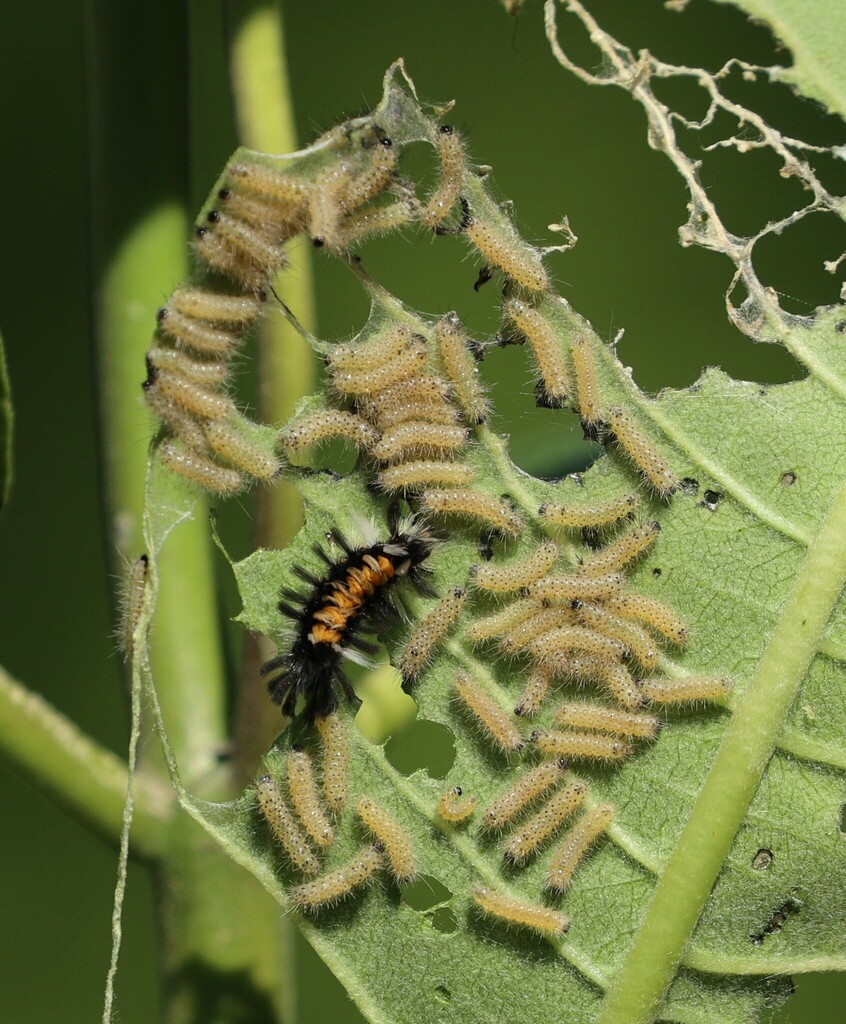
Milkweed tussock moth
Euchaetes egle
≠The key differences
Monarchs are smooth-bodied with distinct black white and yellow striping, not hairy tussocks; monarch caterpillars lack the dense tufts of hairs.
⚖︎Side by side
| Monarch butterfly | Milkweed tussock moth | |
|---|---|---|
| To humans | Harmless to touch | Irritating hairs |
| Size | 8.5-10 cm wingspan | Wingspan about 30-40 mm |
| Colours | Orange, Black, White, Green (chrysalis), Gold (chrysalis spots) | White, Light grey, Black, Orange |
| Family | Nymphalidae | Erebidae |
| Habitat | Open fields, meadows, roadsides, gardens and wherever milkweed and nectar plants grow; forested overwintering groves in Mexico and coastal California. | Open fields, meadows, roadsides and gardens where milkweed (Asclepias) grows; also edges of woodlands. |
| Range | Native to the Americas; migratory populations in North America. Introduced or established in Europe, Australia, New Zealand, Hawaii and parts of the Pacific and Atlantic islands. | Much of eastern and central North America, from southern Canada through the United States; records extend into parts of the central plains. |
| Active | Active spring through fall in temperate zones; year-round in some tropical and subtropical regions. Diurnal (active during daylight). | Larvae most often seen late spring through summer; adults fly in late spring and summer (varies by latitude). Mostly nocturnal but can be found at rest by day. |
| Pest? | No | No |
🔍How to spot a monarch butterfly
- Large orange wings with thick black veins and a black border dotted with white spots.
- Males have a distinct pair of black scent patches on the hindwings; females lack these and have heavier black veining.
- Caterpillars with alternating bands of white, yellow and black and three pairs of fleshy filaments (two near the head, one near the rear).
🔍How to spot a milkweed tussock moth
- Look for dense tufts of long hairs on caterpillars with a pattern of black, orange and white tufts arranged along the body.
- Larvae often feed gregariously on milkweed leaves and may be seen in groups on the same plant.
- Adults are plain mouse-grey moths with a yellow, black-spotted abdomen; they lack the bright wing patterns of many related tiger moths.
?Frequently asked questions
What is the difference between a monarch butterfly and a milkweed tussock moth?
Monarchs are smooth-bodied with distinct black white and yellow striping, not hairy tussocks; monarch caterpillars lack the dense tufts of hairs.
Is a monarch butterfly or a milkweed tussock moth more dangerous?
Monarch butterfly: Harmless to touch. Milkweed tussock moth: Irritating hairs. Monarchs are not dangerous to humans. Caterpillar hairs can cause mild skin irritation or a rash in sensitive people if handled; not known to be venomous.
Identification from photos is never certain: don't handle insects you can't identify, and get medical advice for bites, stings or allergic reactions.