
Clouded sulphur
Colias philodice · Sulphurs and yellows
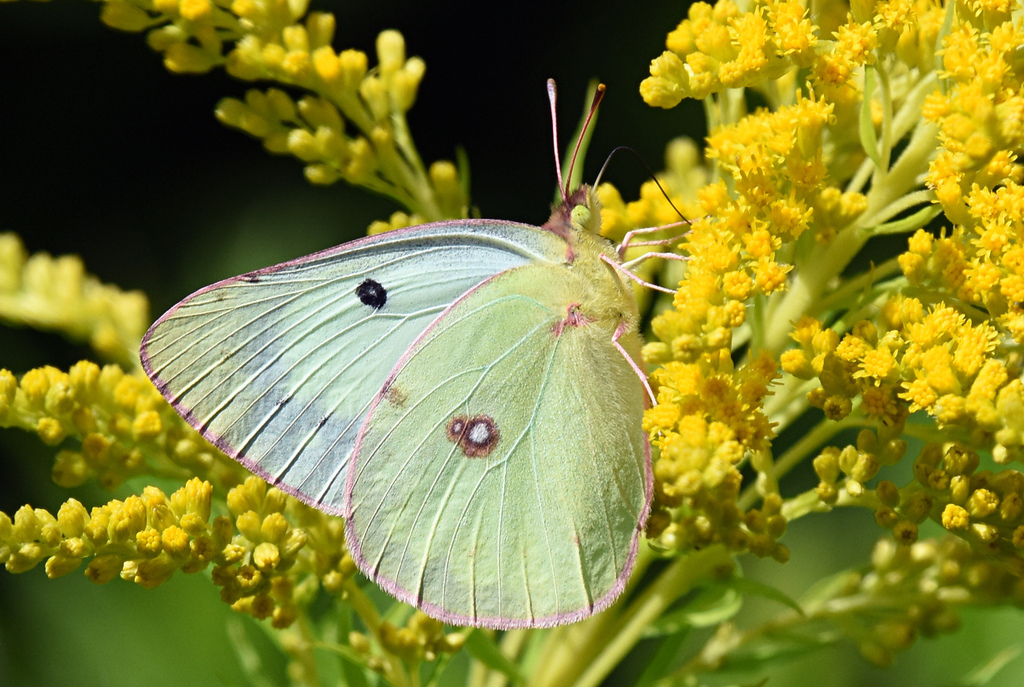
A widespread small yellow butterfly in North America with multiple broods, males bright yellow and females often variable, including a white 'alba' form.
!Is the clouded sulphur dangerous?
No. Harmless to people. Adults do not bite or sting. Handle gently if needed; scales on the wings can rub off but are not harmful.
Pets
Not toxic to pets. Large numbers of caterpillars could be unpalatable but are not known to cause poisoning in dogs or cats.
📖Overview
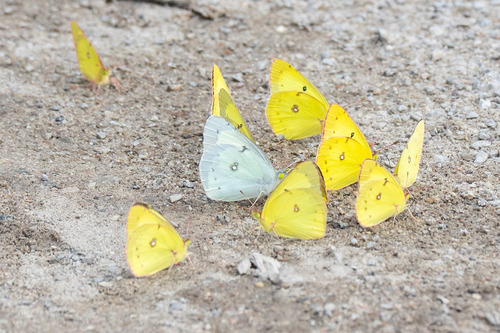
Colias philodice is a common, fast-flying butterfly found across much of North America in open, sunny habitats. It produces several broods per year in warm regions and is often seen feeding at flowers, puddling on wet ground, or fluttering low over fields and roadsides. Females show more variation than males, including a pale or white 'alba' form that can be confused with related species.
This species is not dangerous to people. Caterpillars feed mainly on legumes and related plants; they can be locally numerous but are not usually a serious agricultural pest. The species is well adapted to disturbed habitats and benefits from gardens and edge habitats with nectar plants and host legumes.
🔍How to identify a clouded sulphur
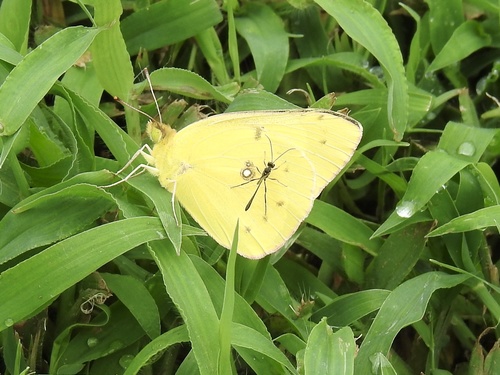
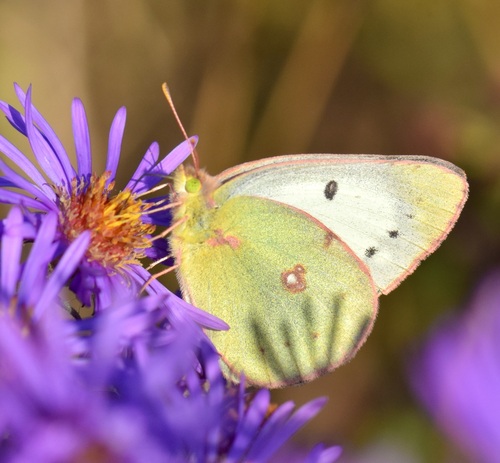
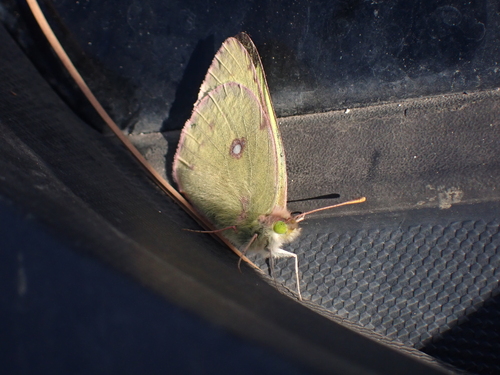
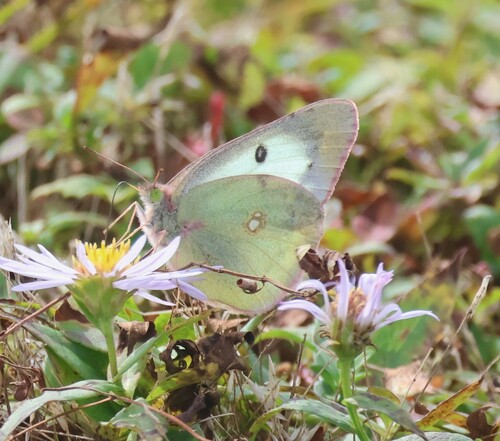
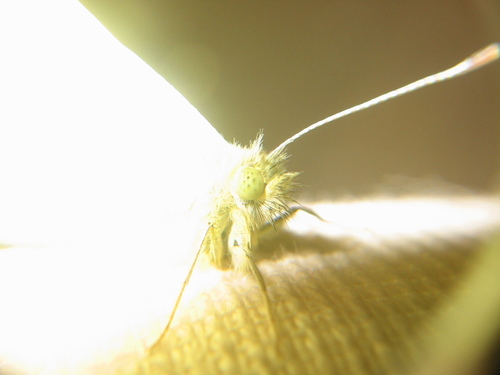
Wingspan about 32-50 mm. Males are typically bright lemon to golden yellow on the upperside with a narrow dark border and a single dark spot near the center of the forewing. Females are variable: many resemble males but with larger dark borders and more diffuse markings; some females are extensive pale yellow or white (the 'alba' form). The underside of the hindwing is paler yellow to greenish with a pale central spot. The dark wing border may contain small pale spots on the hindwing.
- Small sulphur with wingspan 32-50 mm; males bright lemon/yellow with narrow dark wing borders
- Single dark disc spot on the upper forewing (both sexes) and pale spot on the underside hindwing
- Females more variable and sometimes white ('alba' form); check underside and border pattern to separate from similar species
- Habitat: look in sunny, open areas, low over fields and near nectar flowers
Lookalikes
Orange sulphur Colias eurytheme
Orange sulphur often has more orange tones on the upperside and a more extensive dark border with pale submarginal spots; Clouded sulphur is usually more uniformly yellow and the 'alba' female is common in C. philodice.
Cabbage white Pieris rapae
White 'alba' clouded sulphur females have a dark border on the upperside and a silvery spot on the hindwing underside; cabbage whites have dark forewing tips with one or two black spots and plain, unbordered hindwings.
↻Life cycle
Egg
Small, rounded, pale yellow eggs laid singly on host plant leaves and stems; hatch in about 3-10 days depending on temperature.
Larva (caterpillar)
Green caterpillars with fine longitudinal stripes that feed on leaves of legumes; they go through several instars over 2-4 weeks.
Pupa (chrysalis)
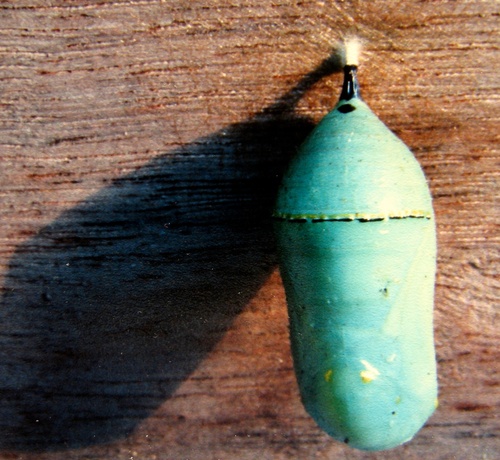
Green or pale chrysalis attached to low vegetation; pupal stage typically lasts about 1-2 weeks but can be longer in cooler conditions.
Adult (butterfly)
Winged stage that feeds on nectar, mates, and lays eggs; multiple broods per year in warm regions.
🍃Diet and predators
Young eat
Leaves of legumes and related plants, especially clovers, alfalfa, vetches and peas
Adults eat
Nectar from a wide variety of flowering plants such as asters, clovers, goldenrods, and thistles; also puddles for salts (puddling)
Predators of the young
Parasitic wasps and flies, predatory insects, birds
Predators of adults
Birds, spiders, dragonflies, and insectivorous mammals
🌱Effect on plants and gardens
Caterpillars feed mainly on legumes (Fabaceae) such as clovers, alfalfa, peas and vetches. Adults visit a wide range of nectar flowers and can act as general pollinators.
📍Where and when to find it
Adults: flying low over sunny fields, gardens, roadsides and meadows, visiting flowers. Eggs and larvae: on leaves and stems of legume host plants such as clover and alfalfa.
Best time
Spring through fall, with peak activity on warm sunny days; best observed mid-morning to mid-afternoon when temperatures are warm.
Observation tips
Walk slowly in sunny weather near patches of clover and nectar flowers. Use a fast shutter speed for photos—they often fly in a low, erratic pattern. Look at the underside of the hindwing to confirm ID.
✨Fun facts
- Some female clouded sulphurs occur in an 'alba' form that is white instead of yellow and can be mistaken for other white butterflies.
- They commonly 'puddle'—gather on wet soil or mud to drink and absorb salts and minerals.
- Clouded sulphurs often produce multiple broods per year and quickly colonize disturbed areas and gardens.
?Frequently asked questions
Do clouded sulphurs bite?
No. Adults do not bite or sting; caterpillars feed on plants but are not known to bite people.
Are clouded sulphurs harmful to gardens or crops?
Caterpillars feed on legumes and can be locally numerous on clover or alfalfa but they are rarely a serious agricultural pest.
Why are there white sulphurs in my yard?
Some female clouded sulphurs occur in an 'alba' white form, and orange sulphurs also have white females. Cabbage whites are another common white butterfly in yards.
How can I attract clouded sulphurs to my garden?
Plant nectar-rich flowers (asters, clover, goldenrod, thistles) and include legumes like clover or vetch as host plants. Provide sunny open areas and occasional damp soil for puddling.
How do I get rid of them if they eat my crops?
For minor damage tolerate them or use physical removal. In agricultural settings, monitor populations and use integrated pest management; chemical control is rarely necessary for Clouded sulphur unless population outbreaks occur.
📷Photos of the clouded sulphur
More butterflies & moths
This guide was written with AI assistance and fact-checked, last updated 2026-10-10. Identification from photos is never certain: don't handle insects you can't identify, and get medical advice for bites, stings or allergic reactions. More about the clouded sulphur: iNaturalist, Wikipedia.